One Platform. Four Analyst Recognitions across Modern Infrastructure and AI.
Saveen Pakala, VP Product Management
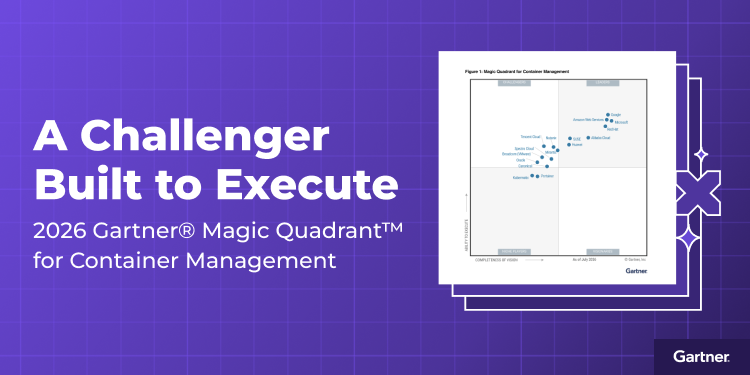
Organizations today need a consistent way to manage applications, data, and AI across increasingly distributed environments. At Nutanix, our vision is to deliver a unified platform spanning infrastructure, virtualization, containers, storage, and AI. We believe recent Gartner recognition reflects the progress we've made toward that goal, including recognition in the Gartner® Magic Quadrant™ evaluations for Distributed Hybrid Infrastructure, Server Virtualization Platforms, and Container Management.
Separately, Nutanix was recognized as a Leader in the Forrester Wave™ for Object Storage Solutions and named a Customer Favorite.
"Our customers are navigating unprecedented complexity as they scale applications and data across hybrid cloud, edge, and AI environments. They need an operating model that tames that complexity. That unified experience is exactly what we deliver. We view this recognition as a testament to our rapid pace of innovation, continuing to evolve our architecture to help organizations adapt to changing requirements and support their efforts as they transform their businesses for an AI-enabled world, including secure, sovereign Agentic AI deployments across hybrid cloud and edge environments."
Thomas Cornely, EVP Product Management at Nutanix
A Unified Platform for Infrastructure, Data, and AI
Together, these recognitions span the foundational technologies required for modern hybrid cloud and AI environments, including distributed infrastructure, virtualization, Kubernetes® management, and object storage. We believe they reflect the breadth of the Nutanix portfolio and the value of a unified platform approach. The Nutanix Cloud Platform, combined with Nutanix Enterprise AI, helps organizations manage applications, data, and AI through a consistent operating model across distributed environments.
A Unified Operating Model for a Distributed World
As organizations support a mix of traditional applications, cloud-native services, and AI workloads, operational complexity continues to grow. Nutanix capabilities help customers to manage VMs, containers, and AI applications through a common operating model, helping simplify operations and governance across datacenter, cloud, and edge environments.
Addressing New Hybrid Cloud and AI Requirements
As organizations move AI initiatives into production, infrastructure flexibility, security, and governance become increasingly important.
Over the past year, Nutanix has expanded hybrid cloud capabilities through broader support for Nutanix Cloud Clusters (NC2) across public, government, and sovereign clouds, while adding innovations such as Multicloud Snapshot Technology, expanded cloud storage integrations, and cloud-native file services.
Nutanix has also introduced new AI capabilities, including Nutanix Enterprise AI, Agent Gateway for LLM governance, integrated model security, and NKP Metal for bare-metal Kubernetes deployments (in development). Additional security enhancements help organizations strengthen protection, improve governance, and maintain consistent controls across VM, Kubernetes, and AI environments.
Together, these capabilities help organizations:
- Run any workload anywhere
- Address compliance and sovereignty requirements
- Operate consistently across cloud, datacenter, and edge environments
- Accelerate AI adoption
- Maintain security and governance at scale
Architectural Flexibility with External Storage
Most organizations need to modernize while preserving existing investments.
Nutanix's support for external storage integrations with Dell PowerFlex and Dell PowerStore, Everpure Storage, and NetApp (in development) gives customers the flexibility to adopt modern operating models without requiring wholesale storage replacement. This approach can help organizations modernize at their own pace while helping manage complexity while preserving selected existing investments.
Looking Ahead
More than a decade ago, Nutanix helped simplify infrastructure through hyperconverged infrastructure. Today, organizations need a unified platform for applications, data, Kubernetes, and AI across distributed environments.
We believe our recognition across Gartner Magic Quadrant™ evaluations for Distributed Hybrid Infrastructure, Server Virtualization Platforms, and Container Management reflects the progress we've made toward that vision.
To us, being recognized as a Leader in the Forrester Wave™ for Object Storage Solutions further demonstrates the strength of our data platform.
Together, the Nutanix Cloud Platform help organizations simplify operations, accelerate innovation, and maintain control wherever applications, data, and AI reside.
Gartner, Inc, Magic Quadrant for Distributed Hybrid Infrastructure, Julia Palmer, Daniel Bowers, Adrian Wong, Elaine Zhang, 7 September 2026
Gartner, Inc., Magic Quadrant for Container Management, Dennis Smith, Tony Iams, Wataru Katsurashima, Lucas Albuquerque, Carolin Zhou, Bhuvie Chhabra, 2 September 2026
Gartner, Inc, Magic Quadrant for Server Virtualization Platforms, Tony Harvey, Daniel Bowers, Paul Delory, Tony Iams, Owen Marino, 14 September 2026 September 2026
Forrester Research, Inc, The Forrester Wave™: Object Storage Solutions, Q2 2026
©2026 Nutanix, Inc. All rights reserved. Nutanix, the Nutanix logo and all Nutanix product and service names mentioned are registered trademarks or trademarks of Nutanix, Inc. in the United States and other countries.
Kubernetes is a registered trademark of The Linux Foundation in the United States and other countries. All other brand names mentioned are for identification purposes only and may be the trademarks of their respective holder(s).
Gartner and Magic Quadrant are trademarks of Gartner, Inc. and/or its affiliates.
Gartner does not endorse any company, vendor, product or service depicted in its publications, and does not advise technology users to select only those vendors with the highest ratings or other designation. Gartner publications consist of the opinions of Gartner’s business and technology insights organization and should not be construed as statements of fact. Gartner disclaims all warranties, expressed or implied, with respect to this publication, including any warranties of merchantability or fitness for a particular purpose.
Forrester does not endorse any company, product, brand, or service included in its research publications and does not advise any person to select the products or services of any company or brand based on the ratings included in such publications. Information is based on the best available resources. Opinions reflect judgement at the time and are subject to change. This report is part of a broader collection of Forrester resources, including interactive models, frameworks, tools, data, and access to analyst guidance. For more information, read about Forrester’s objectivity here .
Frequently Asked Questions
Nutanix was positioned in the Leaders Quadrant of the 2026 Gartner® Magic Quadrant™ for Distributed Hybrid Infrastructure. To us, it means that Nutanix continues to focus on delivering a unified platform that provides a consistent operational experience across infrastructure, applications, and data, regardless of location, emphasizing how workloads are managed rather than where they run.
Recent Nutanix innovations include Nutanix Enterprise AI, Agent Gateway for LLM governance, integrated model security capabilities, and NKP Metal for bare-metal Kubernetes deployments. These capabilities are designed to help organizations support AI initiatives as they move from experimentation into production.
Nutanix supports integrations with external storage platforms including Dell PowerFlex, Dell PowerStore, Pure Storage, and NetApp, as well as cloud-native storage services such as AWS EBS and S3, Azure Elastic SAN and Blob Storage, and Google Cloud Hyperdisk and Cloud Storage (GCS). These integrations allow customers to adopt modern operating models without requiring a wholesale storage replacement, giving organizations greater choice in how they evolve their environments while protecting prior infrastructure investments.
Nutanix provides capabilities designed to support workloads across public cloud, datacenter, and edge environments. Capabilities include consistent operations, policy-based governance, support for compliance and sovereignty requirements, and access to specialized resources such as GPUs for AI workloads through a unified operational model.
