Streamline Your VMware Cloud Foundation to Nutanix Cloud Platform Migration
Introduction
VMware Cloud Foundation (VCF) is an integrated virtualization suite that many organizations depend on for their core operations.1 Other organizations, while not using VCF today, continue to operate on standalone VMware vSphere licensing. However, the landscape is changing. Broadcom has mandated a transition to VCF 9.0, placing older VCF versions and stand-alone vSphere on a defined timeline. This means that the General Support for older versions will soon end, creating a risk that users will no longer receive security patches, bug fixes, or hardware updates, especially as renewal costs continue to rise dramatically.2
Moreover, upgrading to the VCF 9.0 platform is not a simple process. Large-scale environments often require extensive planning, architectural changes, and in many cases, the support of professional services, particularly given tight deadlines.
The Nutanix Cloud PlatformTM (NCP) provides a comprehensive virtualization portfolio that offers a clear, alternative path to a hybrid multicloud future. In addition, Nutanix Professional Services offers services that simplify and accelerate large scale transformations, migrations, and cloud adoption while reducing risk, minimizing disruption, and maximizing return on investment of new platforms.
The Nutanix Professional Services team can assist you in planning and executing a VMware to Nutanix migration strategy tailored to your business requirements and designed to minimize disruption to critical operations and deliver a successful transition.
1 Nutanix, Inc. is not affiliated with VMware by Broadcom or Broadcom.
2 "The VMware deadline that could reshape your IT strategy”, CIO.com, Apr 20, 2026, Joan Goodchild
Fast, Risk-Managed VMware Transition
While Nutanix technology simplifies transitions from VMware, migrations often require careful planning and execution. Nutanix Professional Services has assisted with thousands of VMware migrations across all major industries and customers of all sizes. Our team brings unparalleled expertise, an understanding of best practices, and close relationships with channel partners to help ensure a successful transformation that satisfies your business requirements. Our services expertise is not new; we’ve been doing this for more than 10+ years.

Minimize Risk
Partner with your teams to keep your systems running smoothly and reliably.
Reduce Complexity
Work alongside you to establish a secure, scalable and easy to maintain infrastructure.

Accelerate Time-to-Value
Use speed and automation to streamline migrations and deliver exceptional time-to-value.

Achieve Self-Reliance
Enable teams to confidently own the enterprise and reduce reliance on consultants.
Figure 1: How Nutanix Professional Services Supports Your VMware to Nutanix Transition
Start Your VMware to Nutanix Transformation
Transitioning from VCF to NCP is more than a simple workload migration, yet well worth the effort given the uncertainties around VMware and the tremendous upside of NCP. It involves moving functionality of an integrated stack including compute, storage, networking, and operations while continuing to run critical production workloads. While you can manage this on your own, you do not have to.
Let’s consider a typical environment:
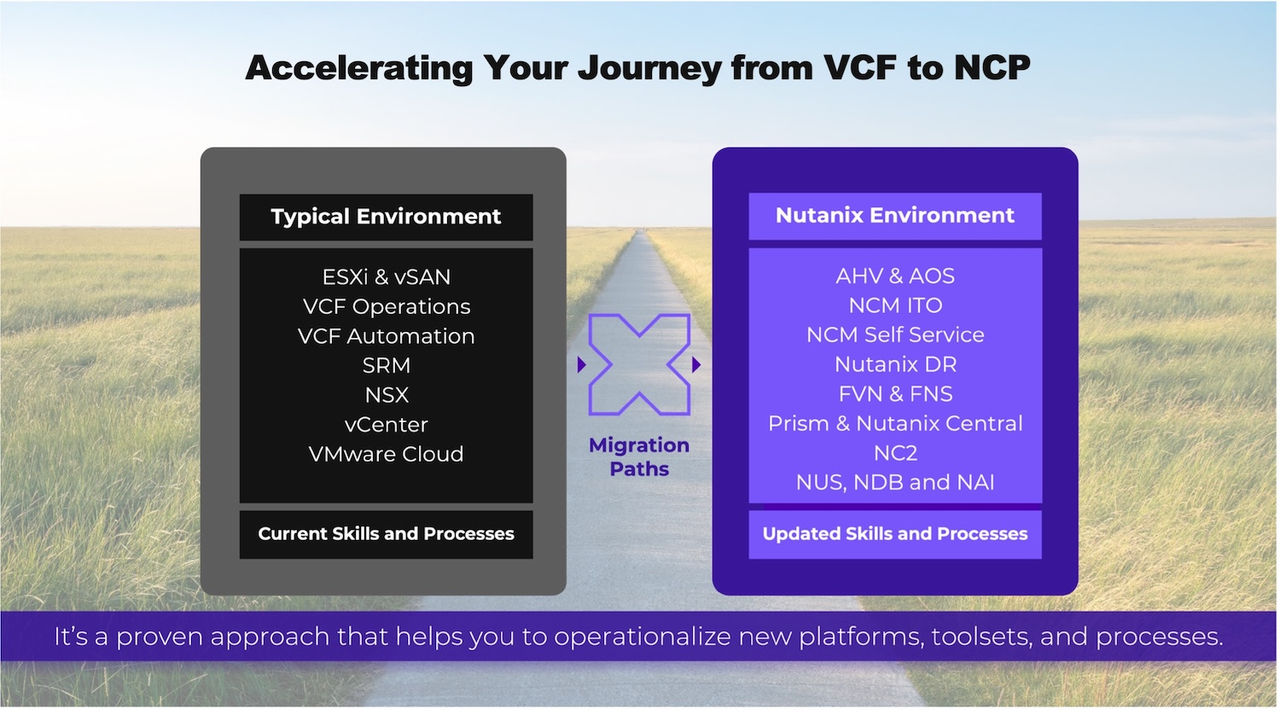
Figure 2: Transitioning From a Typical VMware Environment to a Nutanix Environment
Nutanix Professional Services delivers a proven, repeatable methodology designed to reduce risk and simplify execution across every layer of the stack in these environments. Through a structured journey spanning planning, assessment, migration, and ongoing optimization, we help you move from your current environment to a modern target architecture efficiently. The goal is a low-risk transition with fast time to value that leaves your IT team confident and ready to operate and realize the full benefits of NCP.
The VCF-to-NCP Transformation Journey
Nutanix delivers end-to-end services across your transformation journey, beginning with expert planning and architectural design to support a seamless functional transition from legacy VMware environments to modern Nutanix architecture including customer specific policies and automation. Our teams then guide the migration of workloads, data, containers, followed by services that help ensure stable, optimized operations after the platform transition.
Our VCF-to-NCP transformation journey comprises nine key stages:
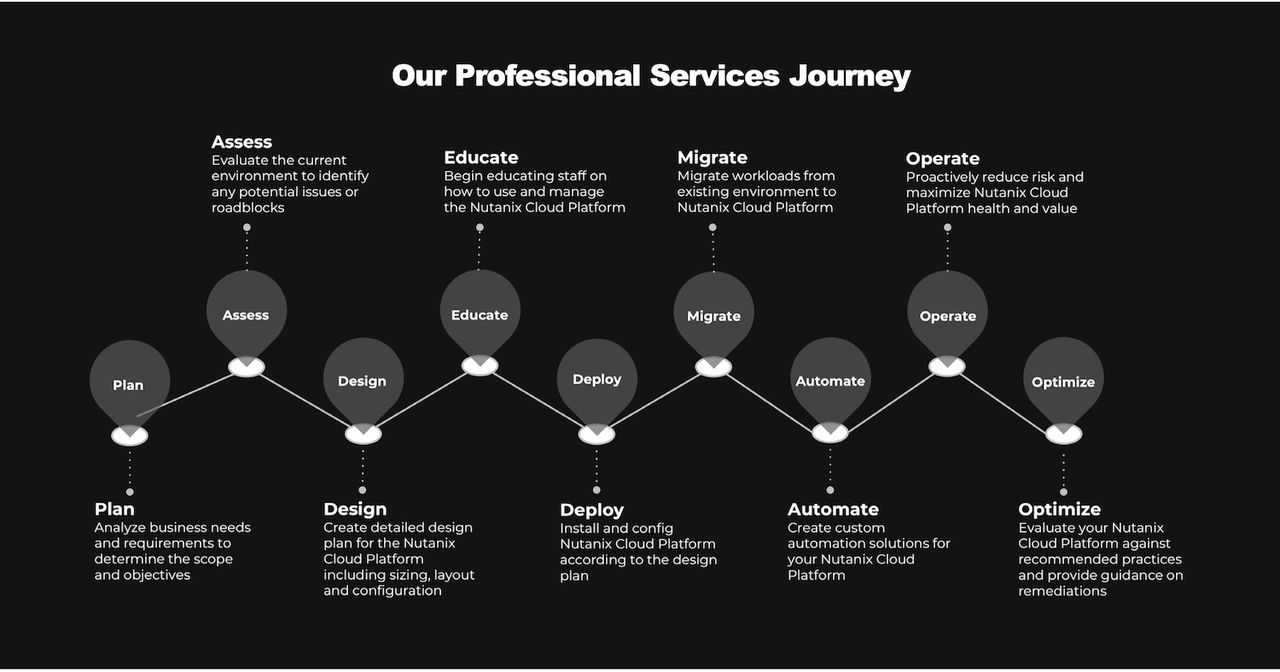
Figure 3: The Nutanix Professional Services Transformation Journey
We have the flexibility to deliver only the services you need, based on your priorities and business goals. We are here to partner with you.
Your Destination: The Nutanix Cloud Platform
To help ensure a truly holistic transition, Nutanix Professional Services experts leverage their deep mastery of NCP environments to bridge the gap between legacy stacks and modern infrastructure. NCP, as illustrated below, serves as the unified foundation for workloads, applications, data, containers, and AI initiatives at scale. This robust architecture is built for ultimate portability. Designed to "run anything, anywhere" across the Edge, Core, and Public Cloud, the platform reflects Nutanix's strategic ecosystem investments. By partnering with and complementing your existing technology stack, Nutanix provides a future-proof environment that removes silos and maximizes operational flexibility.
One Platform to Run Apps, Data, & AI Anywhere
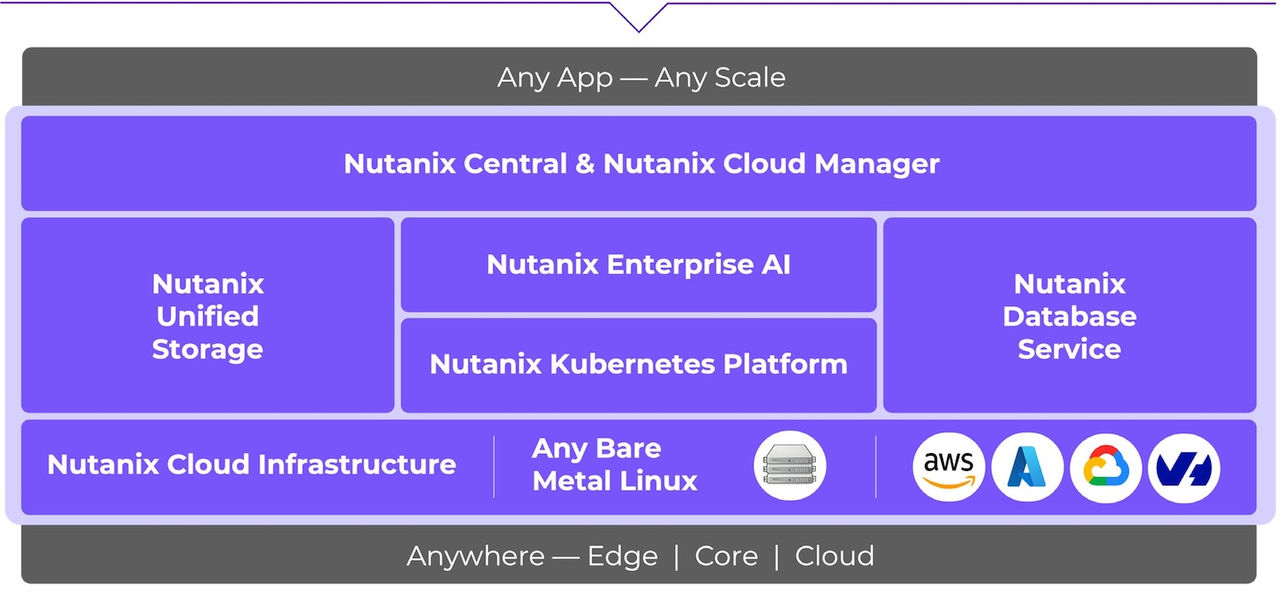
Figure 4: Nutanix Cloud Platform: One Platform to Run Apps, Data, and AI. Anywhere.
The Path Forward: A Proven Methodology for De-Risking Your Full-Stack Migration
Our approach to transitioning from VCF to NCP is grounded in proactive infrastructure readiness, helping remove many of the technical risks typically associated with full stack migrations. Nutanix Professional Services begins with a pre-implementation strategy where existing policies, configurations, and network architectures are carefully mapped and end state architecture is deployed before the workload migration phase begins.
To reduce uncertainty and accelerate design, we leverage Nutanix Validated Designs (NVDs), which are pretested, integrated blueprints of hardware and software that provide a predictable, repeatable, and high-performance foundation for the target environment which are then modified based upon your needs to help ensure a perfect match.
By building a production ready environment in advance, we ensure critical frameworks and configurations are in place and fully operational. This allows workloads to transition with minimal disruption and without the need for complex reconfiguration or manual intervention during migration.
We recognize that every platform transition introduces its own technical and operational considerations. Our methodology is designed to address these differences directly, with a consistent focus on stability, transparency, repeatability, and precision at every stage.
Now let’s walk through several of the most common areas of focus.
Transitioning VMware NSX Environments with Total Confidence
We map legacy NSX overlays and security policies into Nutanix Flow Virtual Networking and Nutanix Flow Network Security during the solution design and deployment phases. By establishing a production-ready environment in advance, we help ensure that existing security and connectivity frameworks are fully operational. This approach is designed and executed so that workloads can migrate seamlessly without complex reconfiguration or IP changes.
NSX to Flow: Transition Framework
Plan and Access
- Evaluate current NSX networking and security, including segmentation, governance, and future-state requirements.
- Analyze NSX networking and security constructs, including gateways, segments, firewall rules, dependencies, and traffic flows.
- Determine approach, assess policy and network conversion effort, validate scope assumptions, and identify risks.
Design
- Define the target Flow architecture, including FVN and Flow Network Security design, policy mappings, categories, address groups, and governance model.
Deploy
- Deploy and enable Flow Virtual Networking and Flow Network Security components within the Nutanix environment.
- Create, configure, and validate Flow networking constructs and security policies based on the approved design and NSX source configuration.
Enablement
- Provide targeted enablement on Flow Virtual Networking and Flow Network Security operations, policy management, and Day-2 administration.
Figure 5: The Nutanix Professional Services Framework for Transitioning from NSX to Flow
Fast, Risk-Managed Transition of VCF Operations and Automation to NCM
Modernizing operations and automation platforms from VCF to Nutanix Cloud Manager (NCM) introduces complexity, particularly where custom workflows, integrations, governance models, and operational dependencies are deeply embedded. Nutanix Professional Services addresses these challenges through a structured, execution-led migration approach designed to reduce risk and help accelerate time-to-value. This approach is focused on identifying the intent and outcomes delivered from existing automation and operations workflows and building functional equivalents within Nutanix’s framework. Where practical, existing configurations, code, and logic can be reused and often help inform and accelerate the transition.
VCF Operations and Automation to NCM: Transition Framework
Plan and Access
- Evaluate VCF automation and operations capabilities, including workflows, data flows, dashboards, alerts, integrations, telemetry, and governance.
- Analyze automation and operational artifacts to identify orchestration logic, integrations, dependencies, usage patterns, and operational baselines.
- Define approach, assess refactor or rebuild effort, validate sizing, identify risks, and establish execution requirements.
Design
- Define the target NCM architecture, including construct mappings, RBAC, tagging, integrations, and operational standards.
Deploy
- Deploy Prism Central and enable NCM, integrating identity and telemetry sources and establishing core platform services such as high availability and disaster recovery.
- Implement selected automations, dashboards, reports, workflows, and DSL/ Python enhancements.
Enablement
- Provide targeted enablement on Prism Central and Nutanix Cloud Manager to support effective Day 2 operations and ongoing platform management.
Figure 6: The Nutanix Professional Services Framework for Transitioning from VCF Operations and Automation to NCM
Expert-Led Migrations for Every Environment and Workload
Applications run business. They provide the processing, data, intelligence, workflows, and processes that enable businesses to function, and frankly allow us to “take care of business.” Disruption of applications creates real, measurable impact on user productivity and on the business. Hence the term “Business Critical Application.”
Application and workload migration is perhaps the most critical portion of the transformation journey, because it’s at this stage where the most potential for business impact occurs. Done right and nobody knows anything happened, perhaps applications run a bit faster. Done wrong and the dollar signs start adding up quickly.
We create migration strategies designed to align tightly with your business priorities and operational goals and use a proven methodology that emphasizes repeatability, speed, and precision. Thus, enabling fast, predictable migrations while reducing risk through minimized downtime and business disruption.
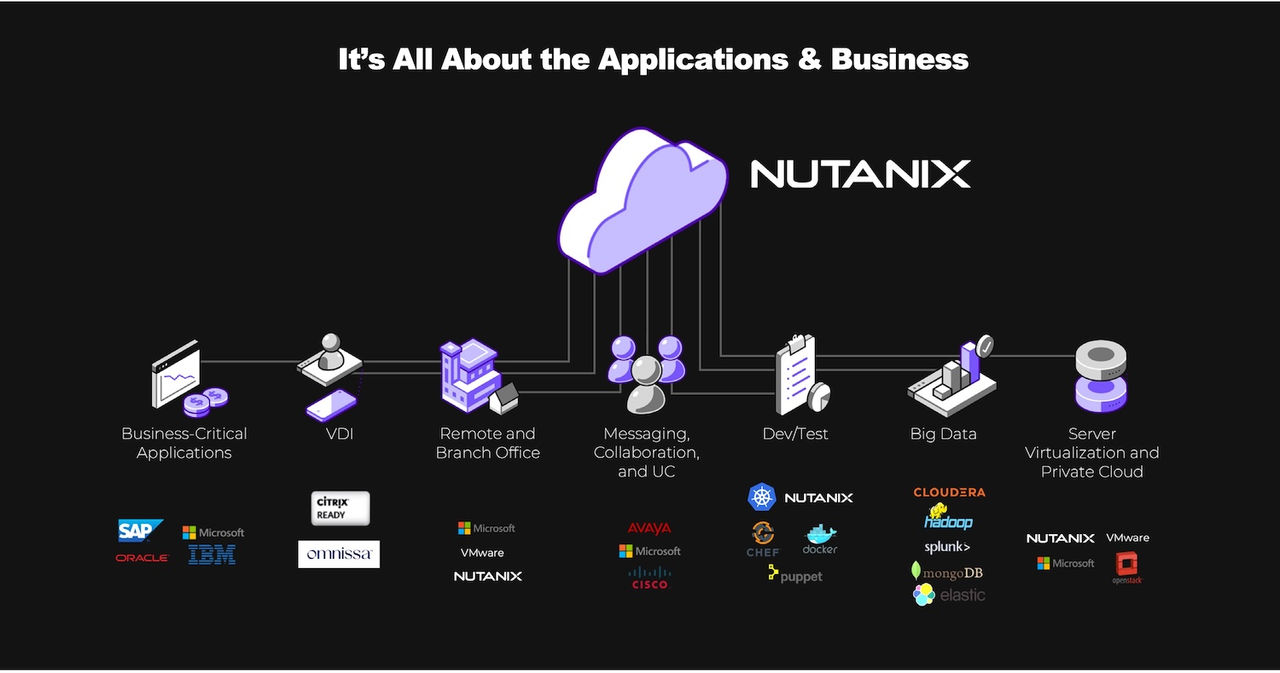
Figure 7: Migration Starts With Understanding the Application Environment
Each specific application will introduce its own set of requirements and dependencies for its migration, ranging from timing of cutovers, required staff, or recertification procedures. They may be dependent upon infrastructure features like MAC addresses or services like load balancing, or they may be dependent upon databases, or even upon other services such as pipelines or backups. They may also have capabilities which can be leveraged to minimize downtime during migration such as those provided by Always-On Availability Groups or through the use of Application Delivery Controllers or Network Load Balancers.
It’s key that, when planning migration, each application and its relationship to Virtual Machines (VMs), Containers, Databases and other applications is considered. This dependency mapping enables efficient planning so that applications and processes and the other things they depend upon can be kept together and migrated as a group.
Ultimately, the goal is to do the right thing for each application. To identify patterns and repeatability. And to create predictable runbooks to migrate each pattern.
Our migration framework is designed to align with the overall customer journey taking place during the Plan, Assess, Design and Migrate phases.
We begin with an Assessment and Discovery effort to identify all existing workloads and their unique requirements, allowing us to formulate a strategy for how each will be migrated.
Next, we move into Migration Planning in earnest where we start grouping applications by migration pattern and creating detailed runbooks around how each pattern will need to be addressed, step by step. Runbooks are then vetted against non-production application instances and the expected target infrastructure to confirm that no steps are missed, including expected acceptance testing procedures and rollback. At this point, final reviews of the runbooks and application dependencies will be reviewed with application and business owners for sign-off prior to requesting approvals for change control and governance processes.
With these approvals and a proposed schedule, change controls are requested and approved. Then, we move on to Migration Execution. In a perfect world, this is as simple as following the migration runbooks and planned schedule. A final pre-flight is conducted for each application, the runbook is initiated, steps completed and verified, the application is migrated, UAT conducted, and the application is released back to production. When problems do arise, a triage is conducted to determine if rollback is required or if the issue can be corrected in place. In either case, the issue is documented, and correction or rollback executed. Runbooks are updated to avoid future issues. And migration status is reported continuously to business and application owners.
Throughout this process, timely education and training is key. It’s critical that staff are prepared to troubleshoot and support the applications on the new platform before they are required to do so; but also, that the training occurs at the proper time so that the knowledge is retained and not lost to disuse. For this reason, focused workshops and formal training are offered throughout the migration phase.
Nutanix Professional Services Migration Framework
 | Assessment, Discovery & Strategy |
Fully assess current environment, discover dependencies
Integrate assessment findings into the migration strategy
Analyze current processes and business objectives
Document datapoints, requirements, and the migration strategy
 | Planning and Target Architecture |
Comprehensive planning for all migration patterns
Align with business and application owners on the migration plan, including cutover and downtime windows
Create end-to-end migration runbooks, including order, steps, rollback plans, and final UAT and sign-off
Target Architecture, Complete end to end architecture, including all integration points
 | Execution |
Deploy migration tooling and submit needed change requests
Validate that pre-requisites are met
Execute the migration runbooks
Continuous reporting throughout the Program
Stakeholder sign-off
 | Education and Enablement |
Training and certification planning and execution
Custom workshops and bootcamps to address skillset gaps
Identification of processes to be updated
Continuous knowledge transfer to optimize new processes
Nutanix provides continuous knowledge transfer, training and boot camps in conjunction with channel partners throughout the migration journey to ensure optimal management of the new environment.
Figure 8: A Proven Migration Framework from Nutanix Professional Services That Minimizes Risk and Accelerates Execution
VMs
Migrating VMs follows the migration framework workflow. Once a determination is made that the workload is best addressed as a VM level migration, a strategy of “VM Migration” will be assigned. From there, we identify the operating system and any driver or kernel dependencies which need special handling.
During detailed planning, tooling (such as our Nutanix Move migration tool) will be assigned to the pattern and tested. The end result of these workflows is a copy of the original VM is created on the target environment. During cutover, the original VM is powered off and the AHV copy is powered on. UAT and verification procedures are conducted, and assuming success, the VM and contained application are released to production. Rollback, if required, is typically handled by powering off the AHV copy and then powering the original source VM back on.
Many tools can be used to support this, including: Nutanix Move, Nutanix Image Service, and Carbonite Migrate
Databases
Migrating databases also follows the migration framework workflow. When a determination is made that a DB level migration is most appropriate for the specific application, a strategy of “DB Migration” will be assigned. From there, we look at the database and evaluate its license level and feature set. With that information known, a detailed migration runbook will be created which typically includes provisioning a new Nutanix AHV VM and deploying the database software. While the next steps can vary, the end result is to transfer the database data and state from the source VM to the AHV VM. This could be done via a database backup and restore method, via a data streaming method, or via database HA capabilities such as Always-on Availability Groups. The latter are particularly useful as they can allow for near zero downtime failovers. Rollback often takes the form of a reverse migration due to the potential for data and state to change once cutover happens. The runbook is documented, vetted, and tested. When the migration event occurs the runbook is followed, UAT completed, and the database is released to production.
Common tools to support this include vendor provided database backup and restore, Oracle Data Pump, SQL Server Always On Availability Group (AAG), Oracle Data Guard, and Oracle RAC. Nutanix Database Services (NDB) is often used to automate provisioning of new database VMs.
Containers
Containers and Cloud Native Applications will also follow the general framework and be tagged with a strategy of “Container Migration”. The pattern for these is typically a case of leveraging the ephemeral nature of most K8 applications allowing them to be re-deployed on the target infrastructure. In some cases, existing stateful containers or data may need to be transitioned using a backup-restore tool. At cutover, the source containers may be shut down and target containers powered up. Alternatively, if network load balancing is utilized a new container may be deployed alongside an existing container and the operational workload shifted, after which old containers are decommissioned. Depending on the application, this can provide near-zero downtime cutovers. UAT is then completed before the new deployment is released to production.
Common tools in addition to the respective container registries include backup and restore tools such as Velero and Nutanix Data Services for Kubernetes (NDK) to support persistent data.
Engaging with Nutanix Professional Services
Professional Services offers three engagement models designed to align with your varying needs, solution complexity, and organizational maturity. All models operate with the same delivery cadence and rigor; they differ in scope definition, ownership, customer involvement, and governance structure. Together, they enable you to achieve clear, measurable outcomes with confidence and accountability.
Outcome Based Offerings
Outcome Based Offerings are prepackaged engagements with clearly defined scope, success criteria, timelines, and deliverables. Built on proven delivery patterns and validated methodologies, these offerings drive predictable, repeatable outcomes while minimizing delivery risk.
Professional Services owns execution and accountability end-to-end, helping you achieve the intended outcomes consistently. This model is well suited for organizations early in their journey or those seeking standardized deployments across environments.
Tailored Engagements
Fully customized, high touch solutions designed for the largest, most complex, and most time sensitive initiatives. These engagements include formal project governance and senior expert oversight to manage risk, dependencies, and organizational alignment.
Professional Services assumes full end-to-end ownership, including solution design, planning, execution, validation, and closeout, supported by structured governance, escalation paths, and executive visibility. This model provides precision, accountability, and alignment to strategic business outcomes throughout the engagement lifecycle. This model is ideal for enterprise critical programs where complexity, scale, or business impact demand comprehensive delivery ownership and governance. It is also ideal when timelines are tight and missed deadlines are costly.
Enablement-Led Engagements
Enablement-led engagements emphasize knowledge transfer through guided execution and progressive ownership. Professional Services provides architecture, design, migration strategy, detailed planning, and executes a defined portion of the solution deployment and migration alongside customer teams to establish patterns, validate approaches, and demonstrate recommended practices.
Following this initial execution phase, Professional Services formally hands off the remaining migration work to your internal teams. You complete the remainder of the deployment and migration independently, using the designs, documentation, and hands on experience gained during the engagement.
This model is well suited for customers with strong internal teams seeking capability development, direct ownership, and scalable, independent execution.
Summary
Together, these engagement models support a wide range of customer needs—without differences in delivery pace:
- Outcome Based Offerings deliver predictable outcomes with full services execution.
- Tailored Engagements provide end-to-end delivery with governance and expert oversight for the most complex initiatives.
- Enablement-Led Engagements combine guided execution with a formal handoff, enabling customers to complete migration independently and build long-term capability.
Outcome Based Migration Bundles Supporting the VCF to NCP Journey
To further support customers transitioning from VCF to NCP, Professional Services offers a set of outcome-based migration bundles that address key platform dependencies with clearly defined scope, deliverables, and success criteria. These bundles are designed to reduce risk, standardize outcomes, and align critical platform transitions with the NCP operating model.
NSX to Flow Migration Bundle
Provides a structured transition from NSX networking and security constructs to Flow, preserving network and security intent while aligning policies and configurations to the Flow networking architecture.
VCF Operations / Automation to NCM Migration Bundle
Enables the transition of operational, automation, and governance capabilities from VCF Operations and Automation to NCM, ensuring continuity in day-to-day management, monitoring, and automation workflows.
VMC to NC2 Migration Bundle
Delivers a defined path for migrating workloads from VMware Cloud on AWS (VMC) to Nutanix Cloud Clusters (NC2), supporting consistency across infrastructure, networking, and operational controls throughout the transition.
Together, these outcome-based offerings complement the core VCF to NCP migration by addressing adjacent platform component transitions that are critical to realizing the full value of NCP as part of a comprehensive cloud platform transformation.
Discover more about our VMware-to-Nutanix services and explore our full portfolio at: www.nutanix.com/services.
A Legacy of Customer Success and Impact
Ultimately, your vSphere or VCF to NCP transformation journey is about more than completing a migration.
It is about ensuring that your transition to the Nutanix Cloud Platform can deliver measurable business impact.
By combining proactive infrastructure readiness with the precision of Nutanix Validated Designs, we turn what is typically a labor-intensive, time-consuming process into a streamlined, high value modernization of your environment.
Our methodology is tailored so that, as you migrate from legacy frameworks, you are aligning IT capabilities with business objectives, reducing operational overhead, and actively managing risk. This structured, repeatable approach provides a strong foundation to support regulatory requirements while significantly accelerating time to value, giving you the confidence to guide your organization into its next phase of innovation.
Trusted Migration Expertise, Wherever You Are
Nutanix Professional Services has facilitated thousands of VMware migrations worldwide across a wide range of industries. No matter how complex your systems are, our Professional Services team is ready to assist. Explore one of many migration success stories, including recent examples from Mitsui Sumitomo Insurance Group (MSIG) Asia and Golding Contractors, demonstrating over a decade of expertise in perfecting the art of migration.
...we wanted to work with a provider like Nutanix whose approach is customer-centric to build a long-term relationship. Nutanix’s Professional Services team is a great example of this. They provided timely and proactive guidance on best practices, helping us achieve all our business goals. We are glad to have found a partner in Nutanix who’s invested in our success.
I receive a lot of calls from my peers asking what we are using. I tell them that our migration to Nutanix was not a problem, and I advise them to perform their cost-saving calculations. However, the biggest factor is not the cost– it’s the seamless integration and Nutanix being customer-centric.
We were able to hand back migrated workloads successfully within about 24 hours," says Johnston. "The workloads themselves were up and running in the target environment within about 3–4 hours.
10+ Years of Trusted Migrations
Nutanix has over 10+ years of experience delivering migrations
90+NPS
Customers agree that we are the best at what we do
New and Emerging Offers
Specific offers for VMware Customers
Getting Started
To learn how Nutanix Professional Services can help your company accelerate and simplify VMware-to-Nutanix migrations visit www.nutanix.com/vmware-alternative/transition.
©2026 Nutanix, Inc. All rights reserved. Nutanix, the Nutanix logo and all Nutanix product and service names mentioned are registered trademarks or trademarks of Nutanix, Inc. in the United States and other countries. Nutanix, Inc. is not affiliated with VMware by Broadcom or Broadcom. VMware and the VMware product names recited herein are registered or unregistered trademarks of Broadcom in the United States and/or other countries. All other brand names mentioned are for identification purposes only and may be the trademarks of their respective holder(s). Customer statements and reports on outcomes depend on a variety of factors and should not be construed to be a promise or obligation to deliver specific outcomes.