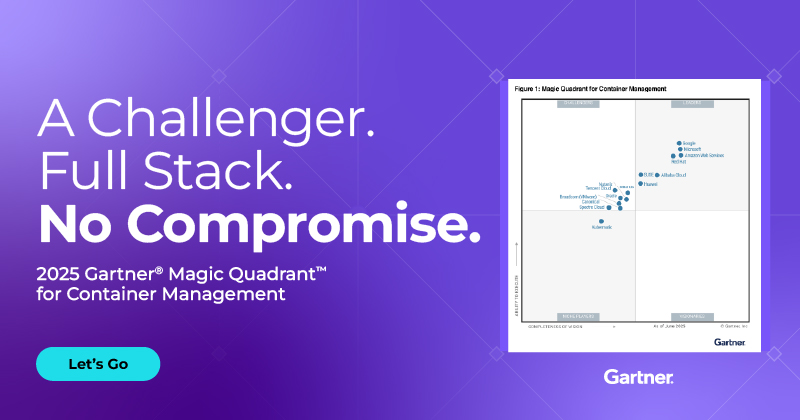
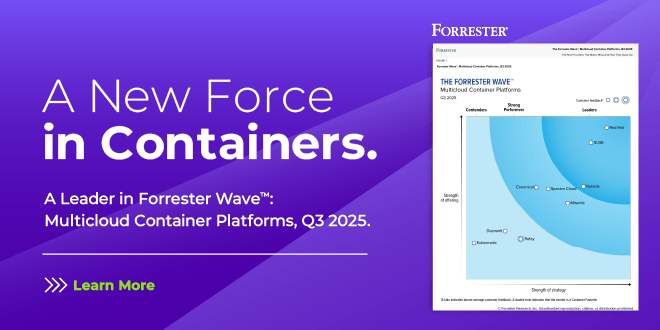
First-wave platforms were primarily developer-focused, leading to operational complexity. Second-wave platforms are designed for both developers and operations teams, offering a more unified, VM-like experience with centralized management and integrated security.
The Second Wave of Container Management: Are You Ready for Next-Gen Kubernetes?
IDC says that, by 2029, 95% of organizations that run on-premises will use containers.
By Lee Caswell, SVP Product & Solutions Marketing at Nutanix
Key Takeaways
The Shift from Dev to Ops: While first-generation Kubernetes platforms revolutionized development, they created operational complexity. The second wave of container management is focused on simplifying operations and providing a more VM-like experience.
Second-Wave Benefits: Expect centralized management, integrated security, and consistent data services across on-premises, cloud, and edge environments. This reduces the need for specialized Kubernetes expertise.
Strategic Platform Choice is Crucial: Not all Kubernetes platforms are equal. Enterprises must carefully evaluate solutions to avoid getting locked into first-gen platforms that are difficult to scale and secure.
The Future is Hybrid and AI-Driven: The rise of AI and edge computing will accelerate container adoption. A modern container management platform is essential for managing these new workloads efficiently.
The Developer's Advantage: How Kubernetes Started a Revolution
There’s no doubt that containers bring big advantages to enterprise IT departments, particularly when it comes to simplifying work for application developers.
Unfortunately, that simplicity doesn’t always translate to the operations side of the house--at least not with the first generation of container runtime platforms. But the second wave of container management platforms is on the horizon, and administrators and operators will finally gain these benefits as well.
The arrival of containerization and Kubernetes has been a blessing for developers, as it automates much of the nitty-gritty work that previously went into developing, testing, deploying, and scaling applications. Instead of meticulously packaging applications with all their dependencies—like libraries, databases, and APIs—developers can now focus purely on writing quality code using microservices.
This is the core reason why the DevOps movement has gained so much steam. Kubernetes, originally created by Google but open-sourced and adopted across the industry, has created a de facto standard for deploying containers in production. DevOps and Kubernetes made it possible for every developer to be as productive as a Google developer.
The Operational Challenge: Where First-Gen Platforms Fall Short
But that’s where the advantages of Kubernetes end. Once a containerized application is deployed, it must be managed, secured, and updated over time. Unfortunately, that’s where organizations find surprises lurking in this new abstraction layer.
The challenge with first-wave Kubernetes platforms is that individual DevOps teams ran them, which resulted in a cacophony of platforms, with different components and upgrade cycles. Ambitious first-gen platform adopters may have gladly jumped into the Kubernetes waters at first, but over time, the need for personnel with a particular set of skills became a burden. Security also became a concern, since every Kubernetes cluster was unique, making it difficult to detect vulnerabilities.
The Public Cloud Trade-Off: Simplicity vs. Lock-In
If a customer is running Kubernetes in the public cloud, much of that day-to-day management is handled by the public cloud platform, whether it’s Amazon’s Elastic Kubernetes Service or Google Kubernetes Engine. Customers don’t have to worry as much about data connectivity, security configurations, or privacy and compliance issues, because the cloud provider is handling all that for them. But that simplicity comes at a cost, as the Kubernetes environments of these cloud providers are essentially proprietary. Even if they opt for a hybrid cloud Kubernetes deployment, these container solutions are bespoke.
The On-Premises Imperative: Control and Independence
The reality is that not everyone can run in the cloud, or wants their data tied up in a cloud or a managed Kubernetes environment. Organizations often demand the independence and control of running Kubernetes on-premises or in a private cloud environment.
The good news is that these customers have a number of enterprise Kubernetes solutions to choose from. The upshot is that customers should spend the time to carefully research on-premises and hybrid cloud Kubernetes platforms to find the one that best fits their needs, because they’re not all the same.
The Next Evolution: What to Expect from Second-Wave Kubernetes Platforms
Just as the Palm Pilot and Blackberry in the early 2000s eventually gave way to the iPhone and Android smartphones, we’re in the midst of a transition from rudimentary, first-gen Kubernetes platforms to the second wave of intelligent container platforms. The good news is that the second wave of Kubernetes platforms will provide a Virtual Machine (VM)-like experience that administrators are already used to.
A Unified, VM-Like Experience
In fact, customers will be able to manage all the new container-based Kubernetes applications right alongside their existing VM-based applications, from the same pane of glass, if they want to. No PhD in Kubernetes required.
Centralized Management Across Hybrid Environments
These second-wave Kubernetes platforms will provide centralized management of containers running on-premises, in the cloud, and at the edge. Retailers that want to adopt containers to run in-store applications, or manufacturers that want to deploy containerized apps in a new facility, for example, can count on a second-wave Kubernetes platform to help deploy those environments and manage them centrally using the tools and processes they’re already familiar with.
Integrated Security and Data Services
The capability to deploy Kubernetes images out to the edge brings security challenges, which an enterprise Kubernetes platform can help mitigate. Kubernetes excels in many areas, but it lacks its own security model. For organizations with strict compliance requirements, Kubernetes security in isolated environments relies on approaches like air gapping to enforce network boundaries and reduce attack surface.
Helping to implement and enforce security and privacy policies is an area where third-party Kubernetes platforms can provide real-world benefits. Finally, containerized applications running across hybrid cloud environments benefit from consistent data services, including snapshots, replication, and disaster recovery, so that stateful containers can be consistently protected and restored as necessary.
Are You Ready for the Future of Containerized Applications?
Surveys indicate strong cross-industry adoption of DevOps techniques and technologies, including containers and Kubernetes. For example, IDC says that, by 2029, 95% of organizations that run on-prem will use containers. Clearly, the DevOps trend is not slowing down. At the same time, platform engineers benefit when containers are managed centrally at the platform level, rather than on an ad-hoc basis by Dev or DevOps teams. Finding a way for Dev, DevOps, and enterprise professionals to coexist is critical.
The Rise of AI and Edge Computing
For some companies, AI applications will be the seminal moment for container adoption since new AI apps are typically deployed in containers and managed with Kubernetes. For instance, NVIDIA supports Kubernetes with its NVIDIA Inference Microservices, a deployment methodology for a new generation of AI factories.
Choosing the Right Platform for Your Enterprise
There’s no question that Kubernetes applications are coming; the question is what enterprises will do about it. Enterprises that don’t adequately research the latest development in Kubernetes platforms may be stuck with first-gen platforms that require specialized skills, where VMs are not ready for enterprise environments, and with security treated as a bolt-on afterthought. On the other hand, enterprises that invest their time and energy in a second-wave Kubernetes platform will benefit from managing containers and VMs consistently using an integrated security model. This built-in data services foundation supports a true cloud-native approach, enabling efficient deployment of containerized applications now and in the future.
Check out the original blog on Cloud Native Now.