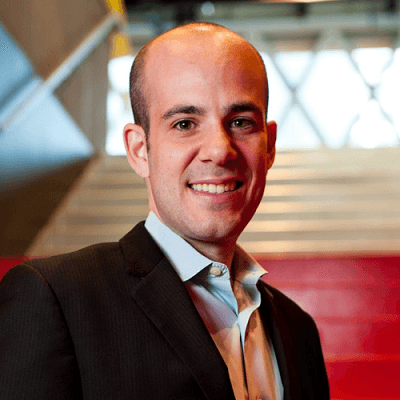
They’ve built careers on successive waves of technology innovation. It forged their understanding of digital disruption and transformation. Keenly aware of the current hype around AI, these two men see a future taking shape in which every business and organization uses AI as they see fit, on any infrastructure they choose. Just as the telephone, the internet and virtual machine technologies did, they believe the widespread use of AI will bring paradigm shifts to societies and economies around the world.
As massive investments continue to pour into AI models and infrastructure innovation, Nutanix CEO Rajiv Ramaswami and Nutanix Chief AI Officer Debo Dutta are looking ahead and around corners. They’re finding pain points that software can abstract and simplify, so it’s easier to manage AI across data centers, cloud services and different IT infrastructures. They see AI quickly moving from one-request-at-a-time inferencing to agentic, where more functions are done autonomously by agents that can talk to each other and carry out complex tasks.

In a recent conversation, the two tech industry veterans volleyed candid insights, covering AI safety standards to the changing nature of work itself. For them, it's not the time to wonder whether there's an AI bubble. They're too busy helping IT leaders harness and unlock AI capabilities.
"I've lived through multiple bubbles in my career," said Ramaswami, an IT industry veteran who worked at IBM, Cisco, Broadcom, and VMware before becoming CEO of hybrid multicloud and cloud native platform company Nutanix in 2020.
But on the horizon, Ramaswami sees opportunity in the rising AI inference market, which is “really in its infancy at this point," he said.


He sees the industry moving from standard "Inference" to "Agentic AI,” where more functions are done autonomously across digital ecosystems. While standard inference handles one request at a time, Agentic AI involves multi-step reasoning. One user action can trigger tens or hundreds of requests. This requires high performance from an "AI Factory" that treats intelligence as a manufactured output in the form of tokens. These agents will eventually communicate with each other and automate complex tasks, decoupling the labor force from productivity.
Ramaswami and Dutta are focusing on ways to innovate around inference, something they believe will speed the spread of AI as more organizations move from experimenting to deploying AI capabilities.
"Using our Enterprise AI product and the standards work we're doing, customers can easily determine if a large language model is safe for their use," he said.
The AI Agent-Powered Economy
As more enterprises adopt AI at scale, Dutta said it will fuel an "agent-based economy that will fundamentally change how work gets done."
The two raced back and forth about AI agents.
"We are going to see increasingly more functions being done autonomously across the entire landscape," Ramaswami explained.
“Every function across organizations will run over time through these agents.”

Dutta expects this to have a profound impact on the workforce and productivity.
"If you look at today's human-based economy versus an agent economy, we humans can only work a certain amount of time," he said. "But with an agent-based economy, you're decoupling the labor force from productivity because you can have more agents."
Ramaswami pointed to debt collection as one example, where agents are already replacing human workers who traditionally made phone calls and collected on bad debts.
Dutta described conversations with peers about radically different team structures.
"There'll be 2-3 product and AI engineers, plus a bunch of AI agents," he predicted.

Dutta has strong opinions about where the technology is heading. He expressed convictions about AI safety, economic transformation, and the urgent need for industry standards.
"I helped build an enterprise AI product,” he said, referring to GPT-in-a-Box and Nutanix Enterprise AI software. “I work with product stakeholders to infuse AI into our products. I've been helping different business functions drive efficiency using AI productivity tools.”
He also represents Nutanix on standards bodies. All of these efforts are coalescing, and productivity gains are becoming visible, he explained.
"We're seeing anything from 20 to 30% productivity improvements across the software development lifecycle" from coding tools alone, Dutta said, describing how Nutanix's engineering organization is benefiting from AI capabilities.
Ramaswami widened the lens.
"What we're helping create is a set of standards to gauge the safety of an LLM through a variety of test prompts that can be standardized. We believe that's very important because you want to make sure this technology is put to good use, not bad use."
Power Consumption and Innovation
Their discussion of AI's future also confronted its voracious appetite for electricity.
"AI requires massive compute farms that consume massive amounts of power," Ramaswami noted, identifying energy access as a critical bottleneck.
Dutta jumped in with an explanation of how Nutanix Enterprise AI can help. He described shared inference capabilities that allow "many use cases to leverage a limited pool of GPUs, thus limiting the amount of power needed."

It's another way the inference market diverges from the training process.
"The power required to infer will be significantly less at the edge with small models," he argued.
Both executives point to ongoing work through ML Commons on power standards and other AI systems benchmarks, which will help the industry progress scientifically and safely.
While the race to build bigger models and faster training infrastructure continues, Ramaswami and Dutta are focused on the inference economy and building on industry standards rather than creating proprietary solutions that lock IT teams into one provider vs. another.
"Organizations will adopt AI over the next 10 years," Ramaswami said. "We can help them adopt AI for all their internal use cases."
Related:
The CIO’s Guide to Unlocking Scale with Enterprise-Grade GenAI;
Inference Is Coming Home: The Quiet Reversal from Cloud-Only to On-Prem + Edge AI
Beyond the Hype: Scaling GenAI into a Competitive Edge
Tension Mounts Between Supply Chain Challenges and AI Adoption
Futurist Mike Bechtel Sees AI Shifting From Push to Pull in 2026
Agentic AI Reconfigures Customer Service
AI Is Expanding Cyber Threats and Tightening Cybersecurity
AI Trends to Watch in 2026: Finding the Right Compute Platform for Each Workload
Study Shows Big Uptake of Enterprise AI and Cloud Native Technologies
Editor’s Note: This article is part of a series based on conversations with Nutanix CEO Rajiv Ramaswami and Chief AI Officer Debo Dutta exploring the evolution of enterprise AI.
Ken Kaplan is Editor in Chief for The Forecast by Nutanix. Find him on X @kenekaplan and LinkedIn.
© 2026 Nutanix, Inc. All rights reserved. For additional information and important legal disclaimers, please go here.
Related Articles