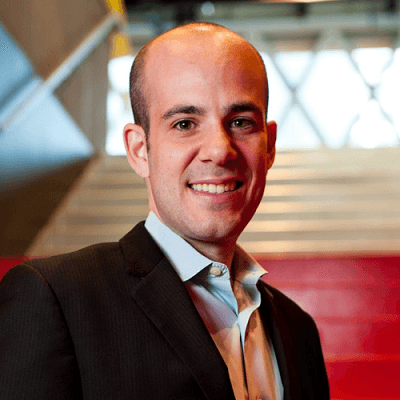
The AI model bubble is real, but the inference economy is just getting started.
While huge investments and market valuations grab the world’s attention, Nutanix CEO Rajiv Ramaswami looks for bellwethers. He sees companies that are already deploying and scaling their AI efforts as pioneers of what’s to come.
For him, the AI bubble is catalyzing the big changes that will surface in the years ahead. Today’s focus on building will expand to using AI. Some forecasters expect to see a $300B global market around inference, which encompasses the hardware, software and services used to apply AI models to specific datasets.
“There’s clearly massive investments going on,” Rajiv Ramaswami, president and CEO of Nutanix, said in a January 2026 CNBC interview, referring to how tech giants have poured over $2.5 trillion into training and infrastructure.
“Not all of that is going to be realized. There’s going to be winners and losers.”

Ramaswami’s believes AI’s economic impact will roar past fears or fallout from the bubble. His perspective is grounded in decades of enterprise technology cycles and conversations with customers deploying AI across Europe and beyond. As more organizations move from experimenting to using AI for things like customer service, software development and analysis, AI will move to the other side of the hype cycle.
The impact of the rising inference economy, driven by the widespread use of AI, will differ from big bets pouring into infrastructure for GenAI models.
“When it comes to using the models, those investments are actually much less,” he said.
“So if you're a company or an organization looking to use AI, you don't have to make that level of investment. You're going to be investing in relatively small compute clusters and looking for very specific use cases that matter to you.”
Ramaswami expects these smaller investments to multiply as more organizations get tangible benefits from AI capabilities.

It’s already underway. McKinsey projects that inference will become the dominant AI workload by 2030. Grand View Research expects the global AI inference market to more than double over that period, growing from $113.5 billion in 2025 to $253.75 billion.
“The real $300B opportunity isn’t in building smarter models; it’s in the physical infrastructure that runs inference,” wrote Tony Grayson, president and general manager of Northstar Enterprise + Defense.
Ramaswami explained how organizations will get this next wave moving.
“You’re going to be investing in relatively small compute clusters and looking for very specific use cases that matter to you,” Ramaswami explained, describing the practical reality for most businesses.
“Some of the use cases that generate positive returns very clearly so far have been around customer service and all aspects of customer service, around coding and software development, around document summarization and analysis. “These kinds of use cases are pervasive."

“And then as you get to more complex use cases, like multi-agent use cases, those are going to be something that again, you’re going to have to bet on an application-by-application basis to determine whether that’s a good return on the investment.”
He sees many companies still experimenting.
“They’re trying out the frontier use cases and they’re taking to production the use cases that make sense,” he said. “Those investments are also going to be much more measured than these big training investments.”
“You’ve got to have a balance between putting controls in place, but also enabling innovation to happen,” Ramaswami said.
AI’s future will be shaped by technology innovation and how people and organizations use it.
“In the long run, AI is going to be embedded into almost everything we do,” Ramaswami said.

Editor's note: Read The CIO’s Guide to Unlocking Scale with Enterprise-Grade GenAI.
Ken Kaplan is Editor in Chief for The Forecast by Nutanix. Find him on X @kenekaplan and LinkedIn.
© 2026 Nutanix, Inc. All rights reserved. For additional information and important legal disclaimers, please go here.
Related Articles