As AI power demands push server racks to their limits and specialized "NeoClouds" disrupt the market, enterprise IT leaders face critical decisions about infrastructure investments and avoiding the hype cycle.
In a Tech Barometer podcast recorded at the 2026 Nutanix .NEXT conference in Chicago, Matt Kimball, vice president and principal analyst at Moor Insights and Strategy, and Steve McDowell, principal analyst at NAND Research, reunited to examine the rapid transformation of data centers since GenAI hit the scene. Their conversation reveals a landscape grappling with the physical realities of AI, such as two-kilowatt chips and immersion cooling, while enterprises still search for the "killer app" to justify massive infrastructure overhauls.


One of the reasons their conversations work so well is that they're not pretending to do a point-counterpoint performance. At the same time, they're not pretending to be friends because they are. From 2018 to 2023, they hosted over 100 episodes of the DataCentric podcast, covering the world of enterprise IT. They still have a knack for finishing each other’s sentences.
The Physical Reality of Enterprise AI
The data center landscape has shifted dramatically in just three years, driven largely by the insatiable power demands of artificial intelligence, explained McDowell. He sees the industry moving rapidly toward advanced thermal management.
"The next generation of servers are gonna be liquid cooled top to bottom," McDowell said, pointing to the massive power requirements of upcoming hardware like NVIDIA's Rubin architecture, which approaches two kilowatts per chip.


"Immersion cooling has taken over the world. You can't go to a show now without looking at spigots coming out of the back of your rack."
He said this shift has given CPU manufacturers permission to increase their amperage, effectively breathing new life into Moore's Law as thermal caps are lifted.
Searching for the Enterprise "Killer App"
Despite massive investments in AI infrastructure, the enterprise sector remains somewhat unsettled, Kimball explained. He is surprised at the current state of enterprise adoption.
McDowell agreed, noting that while AI is changing SaaS offerings like cybersecurity and observability, the enterprise is still waiting for a definitive use case. "The only killer app we've found so far is IT Ops and software development," McDowell said. "I'm not going to build a cluster for that."

The debate centers on whether enterprises will build their own agentic AI systems or rely on established vendors. While Kimball suggested organizations might deploy master agents to span departments, McDowell maintained a more conservative outlook, predicting that IT leaders will lean on their existing SaaS providers to deliver AI capabilities rather than roll their own solutions.
Assessing the AI Bubble in Chips and Storage
As valuations soar, the analysts tackled the inevitable question: Is AI in a bubble? Both agreed that while AI itself is a transformational technology akin to the early internet, certain sectors are experiencing artificial inflation.
Kimball pointed to the chip craze as a potential bubble that will eventually level out as the market matures. Meanwhile, memory prices are currently sky-high, a situation McDowell attributes to a mix of supply chain scarcity and the prioritization of HBM and DDR5 for AI infrastructure.
The Rise of NeoClouds and the Control Plane
The conversation also highlighted the emergence of "NeoClouds," specialized cloud providers have risen to address GPU scarcity. The two analysts discuss how these bespoke architectures operate differently from traditional hyperscalers, focusing heavily on bare metal and AI training workloads.
As these NeoClouds mature, they face challenges in multi-tenancy and distributed storage. McDowell said this presents a potential opportunity for companies that help control workloads across different IT architectures.
"What Nutanix excels at is control plane for workloads," McDowell explained. "If I have a vast number of resources, I need to manage workloads across them."
As NeoClouds evolve and potentially become more general-purpose, the analysts believe the need for robust, cloud-native management software will only intensify.

Transcript:
Matt Kimball: Oh yeah, the Steve and Matt show. Let's talk about 2PIC, Steve.
Steve McDowell: 2PIC, first let's talk about us. We are Steve and Matt, host of the Data Center Podcast.
Matt Kimball: Yes. Who are you? Are you Steve or Matt?
Steve McDowell: I'm Steve McDowell, Principal Analyst.
Matt Kimball: Look at you. I'm Matt Kimball.
Steve McDowell: Are you also a Principal Analyst?
Matt Kimball: Principal Analyst. I'm a bunch of things.
Jason Lopez: That's an excerpt from the Data Centric Podcast featuring Matt Kimball, Principal Data Center Analyst at More Insights and Strategy and Steve McDowell, now Chief Analyst at NAND Research. It ran six seasons from 2018 to 2023 for more than a hundred episodes and covered enterprise IT and data centers. This is the Tech Barometer Podcast. I'm Jason Lopez. One of the reasons their conversations work so well is because they're not pretending to do a point counterpoint and at the same time, they're not pretending to be friends as evidenced in exchanges like this at .NEXT 2026 before they knew we'd hit the record button.

Steve McDowell: So you're agreeing with me. Thank you.
Matt Kimball: I think I said that. I think you tried to repeat what I said but make it more contrarian. See, this is why we'll never be married or this is why we should be married. I don't know, one or the other.
Steve McDowell: I miss our podcast
Matt Kimball: Do you? Yeah, that's good.
Jason Lopez: But once they did know, here's what we got. A wide ranging discussion from the idea of their doing a podcast to begin with to whether AI is in a bubble to the evolution of data centers in three short years since their last data centric podcast.
Matt Kimball: We used to do these things regularly, right? So it's been about three years or so. Almost to the day actually. Yes. Since we last did one of these podcasts and we were talking about things like cooling, sustainability and we were talking about chips as well. How much has the world changed in the last three years?
Steve McDowell: We were way ahead of our time. Last time we were talking about why the world might need liquid cooling and the potential. Yep. Now we kind of back the wrong horse on that one but the next generation of servers are gonna be liquid cooled top to bottom. Yep. Right? AI's enabled that. Jensen said you can't, I mean have you seen the power numbers for Rubin? Oh yeah. They're coming up on two kilowatt. Yep. Right? So, you know, immersion cooling has taken over the world. You can't go to a show now without looking at spigots coming out of the back of your rack. Yeah. It still gives me the shivers. You know, and that's given permission I think for the CPU guys to also up their amperage. So when they start merging these things they're not capped by watts anymore. Right? So Moore's law kind of comes back a little bit.

Matt Kimball: It's funny though because a lot of what we were talking about was leading up to where we're at today. And you're right.
Steve McDowell: As industry analysts, we're paid to look forward, son. We, if we can't predict two years in the future with 70% probability we need to go back to our other jobs, right? I need to start writing code and you start writing the requirements for that code.
Matt Kimball: It's a different world. I'm not surprised that AI becoming more of a center focus. And by the way, we were talking about that during the liquid cooling discussion. I may be a little surprised at kind of how unsettled it is in the enterprise still.
Steve McDowell: We're still waiting for that killer app for the enterprise. AI is changing how a lot of our SaaS offerings work. I'm doing observability differently. Cyber security has completely changed how I do cyber. Right? On both sides of that wall. But those are things as an enterprise guy I'm buying from Palo Alto or whomever, Oracle. Why do I need inference in the enterprise outside of the apps I'm using? The only killer app we've found so far is IT Ops and software development. I'm not going to build a cluster for that.
Matt Kimball: Is it that we haven't found the killer app or we're just not able to enable the killer app?

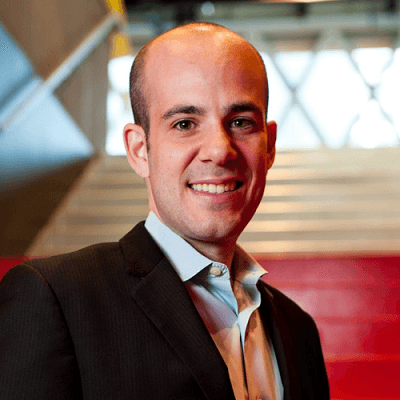
Steve McDowell: No, I go on Reddit and I read Reddit. It's where an industry gets his best source of information. I read all of the things around IT. People are doing experiments with AI. And the number one question I see in all of these forums is, all right, I built thisogenic rack. Now what the hell do I do with it? I'm building virtual assistant. How much email summarization do I need?
Matt Kimball: I will tell you this. I don't necessarily buy into people who've built aogenic environments and don't know how they're going to extract them.
Steve McDowell: I have one in every day. It just sends me a new summary, right?
Matt Kimball: Sure. Are you…
Steve McDowell: I'm not going to buy a GPU for that.
Matt Kimball: Are you trying to do supply chain optimization? Are you trying to…
Steve McDowell: If I'm doing supply chain optimization, am I going to... I don't even know supply chain software. Am I going to... My ERP system should have that built in. How much am I rolling my own on supply chain optimization?
Matt Kimball: I think you're going to have master agents that work with folks in the organization.
Steve McDowell: I think I'm going to buy those from my logistic software provider. I don't think I'm writing them as an IT guy.
Matt Kimball: Oh, I think you are a wholly optimistic kind of guy. I am. I think you're looking at this in a super kind of redactive way. And you're assuming that SAP is going to be SAP. Yes. And that… Absolutely. And that they're going to have the same footprint in the enterprise 10 years from now that they do today.
Steve McDowell: Maybe it'll be a different SAP. It'll be SAP's follow on SAP Prime. I don't think I'm doing it internally.
Matt Kimball: No, but you might be buying an agentic based system from another company.
Steve McDowell: Oh, a hundred percent.
Matt Kimball: Where's that sit, son?

Steve McDowell: In your agentic rack. How much software am I running on-prem right now? It depends. Right, I'm buying that as a SaaS. Depends on the company. I'm buying it as a SaaS. And if I run it on-prem, I don't know.
Matt Kimball: All right.
Steve McDowell: I'll buy a beefy server from Dell. All right. And I say all this, Dell has a $50 billion backlog in AI servers.
Matt Kimball: They most certainly do, don't they? By the way, anybody who's on Reddit trying to develop an IT strategy has a credit.
Steve McDowell: That's where they go to vent. That goes to vent. I think I'm relying on my software vendors to give me this because I have enough headaches. Okay. So is AI a bubble? No. Is any part of AI a bubble?
Matt Kimball: Yes. I think the chip craze is a bubble. It's going to burst at some point, but that's a maturity thing, right? Companies are absolutely over-invested in NVIDIA, absolutely over-invested in AMD, and eventually that's going to level out.
Steve McDowell: Are they over-invested in data centers?
Matt Kimball: No. Look, was the internet bubble in the late nineties into 2000, was that a bubble or was that just a normalization? Exactly.
Steve McDowell: I look at it in the same way, but in a more compressed timeframe.
Matt Kimball: Yes.
Steve McDowell: Right? I mean, the dot-com bubble was, we had a technology that ultimately proved that it was transformational. Yeah.Right? It's changed everything we do, but at the time we over-invested in what we thought would be short-term gains. That was the bubble.I think AI is similar. It's a transformational technology that's going to change how we do everything, but there are pockets where we're over-investing. You talked about NVIDIA chips, right? I think whatever processor we're going to end up using for inference, that's wide open. So NVIDIA might be in a little bit of a bubble in certain markets, but not as a whole. Agree, yeah.Memory is clearly in a bubble right now. It's not sustainable, although it might redefine normal, because I don't know that if I were a memory company, I'm going to let the prices come back down all the way, right?

Matt Kimball: Let me ask you though, I mean, because this is interesting, right? Because memory is priced high because of supply chain. That's the reason why, right?When I think of bubble, I think of overpriced because of hype. So is memory really in a bubble, or is it?
Steve McDowell: Go ahead, sir. No, I mean, there's some artificial inflation, right? And yes, there's scarcity, but it's also a balance, right?The memory companies are prioritized in HBM and DDR5 to solve AI infrastructure problems. So I guess if you believe that AI infrastructure at that scale, data center scale, is a bubble, the memory is a bubble. But if you don't, then maybe not.Maybe you're right. Maybe it's just supply chain scarcity.
Matt Kimball: So when I think of bubble, I think of pets.com. I think of books.com. I think of these great ideas that had no real business behind them and no real revenue behind them.
Steve McDowell: Oh, then no, I don't see that in AI, outside of my image generator software I use to make funny videos, yeah.
Matt Kimball: So if there is a bubble, it's a bubble that's created because of supply chain, first and foremost, right? If there was enough NVIDIA chips out there, if TSMC could pump out enough chips and pump out enough, and Samsung and TSMC could pump out enough memory, then we wouldn't see these prices that we're seeing today. Fair enough.So let's talk about bubble, okay? So talking about storage, right? Let's look at some of these data companies and these incredible valuations they have, right?They're very highly priced. And when you look at normal kind of pricing to revenue ratios, they're valued a lot higher than they probably should be. And part of it's because of anticipation.
Steve McDowell: No, you're right. You're right. I don't know that AI moves the needle on storage at all, honestly.And I mean, yeah, there's some data management problems we have to go solve. And the companies that are solving those just because they're attached to AI are seeing inflated valuations, 100%. That to me is a bubble.And even, you know, you talk about NetApp and Dell and AI factory storage, they're not making a nickel right now, right?
Matt Kimball: All right, so. Even as, you know, they get pulled into this, like, let's focus more on data, let's focus more on data, because that's kind of the shiny object, right? Even as they do that, they're still at the end of the day selling storage.Oh, sure. Yeah.
Steve McDowell: And I like the data stuff, it has secondary benefit of, it's a smarter way to manage my enterprise, regardless where that data is going to land.
Matt Kimball: Without a doubt, yeah.
Steve McDowell: Yeah. So it's a step function for storage guys. But you're right, I think some of the AI specific storage companies, yeah, their valuations and across the board are just really high.


Matt Kimball: They're very high, but you've got some publicly in, not publicly traded companies that are in that AI data space that have valuations that, you know, I was, I think you and I were having this conversation a few weeks ago about, when you were at a startup before, you know, a lot of money invested was $10 million, $20 million. You got a hundred million dollars, it was crazy. You're seeing billions of dollars being invested in tens of billions of dollars in valuations for companies that are not generating the revenue that would necessarily warrant that valuation.
Steve McDowell: So if I'm an IT guy, and I'm building out an infrastructure for AI, do I avoid the ones I think are overvalued and in a bubble because either they're not going to go away or they're going to be consolidated? Should I worry about that? Should I make the safe bet and call the guys I've always called for storage and compute?When do you roll the dice on somebody you think is overvalued? You used to run a data center.

Matt Kimball: That's a tough one. When you think about, so enterprise IT are, they're a conservative bunch, right? When it comes to adopting technology.And you know this, we go with what we know, we go with what's proven and we go with what we know is not be supported over time. In order for me to go with a new entry, there has to be something super compelling. There has to be that killer app for that thing that I'm going to bring into my data center.
Steve McDowell: Or I have to need it right now.
Matt Kimball: Or I have to need it right now and my trusted vendor does not have it. And that's the question, right? Are we at that point?And is there something Dell doesn't do that another company does or a net app doesn't do that one of these newer company does? And do I actually need it? That's the other.I'll be sold on needing it, but do I really need it at the end of the day?
Steve McDowell: The Neo clouds might need it, but does an enterprise guy?
Matt Kimball: Neo clouds are interesting. So how do you see storage in Neo clouds and data in the Neo clouds? Because they're different than the hyperscalers, right?They're more like a large enterprise in the way they deploy. A very large enterprise. But it's AI from the ground up.It's very bespoke architecture.
Steve McDowell: The only place AI touches storage in a meaningful way right now is on KB cache to give me a larger context window and minimize my GPU resources. If I'm a Neo cloud, I have other things I care about around multi-tenancy and distributed namespaces and things like that, that the CSPs, the AWSs of the world figured out a long time ago, right? And are using internal solutions. When you look at some of these software stacks that Neo clouds are deploying, whether it's Weka or Vast, they're duplicating a lot of functionality that already exists in the public cloud. Take AI out of the equation, these Neo clouds just have to solve a cloud storage problem. These guys like Weka and Vast come out in DDN, come out of the HPC world, so they know how to do big distributed storage. And where you see Vast in particular kind of innovating is around how to make that friendly for a cloud-like multi-tenant environment. But I don't think that's related to AI.

Matt Kimball: Speaking of the Vasts and the Wekas and the DDNs, tie this to Nutanix, right? We see announcements from Nutanix around partnerships with NetApp. Oh yeah. With Dell, with Everpure. They have a strong partnership with Lenovo. We don't hear about how Nutanix works with a Weka or a Vast. Part of it is because they're not in that market segment. They're not in the enterprise. Right. But there is aspiration for these companies to be in the enterprise.
Steve McDowell: That'll happen over time. I think Nutanix has taken a very deliberate approach to their partnership. They came out of the gate with Dell and Pure. This conference, they announced NetApp. I think we all know that the NetApp products trickle down into Lenovo. They're solving an enterprise problem. For Nutanix to grow out of its kind of HCI heritage, it's a problem they have to solve. I mean, say what you will about VMware, but vVols and vSAN, valuable technologies. If I'm going to move forward from that legacy kind of infrastructure, I have to go solve those problems. And while they're not working with Weka and Vast and DD, they're not in the same markets today. I think Nutanix is ultimately going to wind up in NeoCloud. It's a natural next step for them. And we both talked to Weka and Vast and their ilk on a daily basis. They have enterprise aspirations. So eventually those two are going to meet. I think first we're going to see Nutanix and HPE, right? So they're kind of moving down the priority list of what impacts revenue in the nearest term, right? That's a decision I would make.
Matt Kimball: Do you think there's a Nutanix play in the NeoClouds?
Steve McDowell: Yeah, I mean, what Nutanix excels at is control plane for workloads. I have a vast number of resources. I need to manage workloads across them. I need a control plane that understands that and deals with that. So, you know, the announcements that most excited me, and I think this points directly to a NeoCloud future at .NEXT, is the bare metal options, the multi-tenancy. These are things that they have to have. Some IT departments also need that as you do more self-service. I don't know that the NeoClouds are investing in that kind of control software.
Matt Kimball: Do you not think they have their own tooling already?
Steve McDowell: I think they have some scaffolding. The NeoClouds today, I think they look a whole lot more like an advanced rack space. They're running full CPUs, full clusters. It's mostly bare metal. I don't know they're sharing a lot of resources, but as we move into the age of inference, I think they will, and they're going to have to solve that. Can I do that with KVM and Kubernetes? Maybe. But if I look at something like a Nutanix, or even VMware Cloud, it gives me so much more. So I think that's a natural play.
Matt Kimball: There's also a lot of cost associated with that. The reason why the hyperscalers have moved to their own tooling is for cost. Well, cost because they have very bespoke architectures that require very bespoke tooling.
Steve McDowell: Well, a more interesting conversation might be, do NeoClouds exist in five years? They rose up because of a GPU scarcity problem that may not exist as we move forward.
Matt Kimball: I think they do. I will say, I've been a skeptic a long time of the Lambdas, the Coral Weaves, you know, the... I don't have an opinion yet. I'm seeing Coral Weave, and when you look at their revenue mix, shifting over the last few quarters and having conversations with them, I see the path. I kind of equate them to almost like an Oracle Cloud. They built a very specific infrastructure for a very specific set of customers and use cases, and it works really well for them. And if you believe that inference is going to be the size that it's going to be, they're really well prepared to do that better than the major CSPs today.

Steve McDowell: But from an enterprise side, it's not always about the best technology or the best technical capabilities. If I already have, you know, I'm running Exadata at Oracle, or I'm running RDS at AWS, why do I want to move that data back and forth just because they have a better GPU cluster? It's often about simplicity. But if I do, maybe I have a control plane like Nutanix that helps me migrate those workloads. The reality, though, is most enterprises have their data everywhere, right?
Matt Kimball: I mean, AWS just... They prefer not to. But they do, right? And AWS, not just. They have a interconnect, the spec they created. Oracle just announced that they're supporting it. Google supports it. It's an open spec that the NeoClouds are going to support it. So if I can move my data and minimize my latency and assure security, so on and so forth, does that being in four clouds distributed matter as much? But to what you're saying, though, a little bit, kind of, I'm going to go off on this a little bit, is when we talk about bubbles, right? NeoClouds are another example of bubbles. I think there are something like 200 NeoClouds right now that are being tracked. Five years from now, there ain't going to be 200 NeoCloud. And this is maybe more kind of aligned to the dot-com bubble. You're going to see a lot of these fade away. I think companies like CoreWeave that are expanding globally and are building out, kind of, this bigger footprint, they're going to do well. But there are a lot of these others that are getting investment and getting dollars just because.

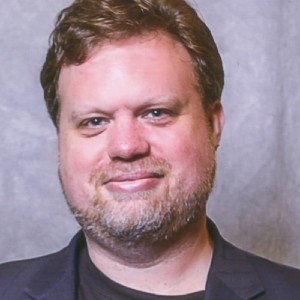
Steve McDowell: I'm with you. I think CoreWeave, ultimately, is going to move and become more general purpose cloud-like, because that's what their customers want. And maybe there's another CSP and we're a little more distributed.
Matt Kimball: I think they'll become general purpose because AI will become that common in the enterprise. That AI workloads, because they're so normalized, CoreWeave and what they do becomes normalized. Not that they start taking on other kind of AWS, database as a service.
Steve McDowell: But the bulk of their money right now is not coming from any enterprise. No, but it's starting to shift. It's going to be training. And there'll always be a place for big training clusters. And I think that's where they're going to sit. But I don't know. I'll watch. It's early. It's going to be fine.
Jason Lopez: Steve McDowell is Chief Analyst at NAND Research. Matt Kimball is Principal Data Center Analyst at More Insights and Strategy. Their show, Data Centric, ran for more than 100 episodes from 2018 to 2023. This is the Tech Barometer podcast produced by The Forecast. I'm Jason Lopez. Thanks for listening. If you like this podcast and you want to discover more stories about technology, head on over to The Forecast by Nutanix. That's theforcastbynutanix, all one word, dot com.

Jason Lopez is executive producer of Tech Barometer, the podcast outlet for The Forecast. He’s the founder of Connected Social Media. Previously, he was executive producer at PodTech and a reporter at NPR.
Ken Kaplan contributed to this podcast. He is Editor in Chief for The Forecast by Nutanix. Find him on X @kenekaplan and LinkedIn.
© 2026 Nutanix, Inc. All rights reserved. For additional information and important legal disclaimers, please go here.
Related Articles