A significant shakeup often sparks an immediate situation analysis and deeper conversations about the future. This can peak curiosity for alternative paths or speed up decisions slow-simmering on the backburner. It’s what many CIOs and IT teams experienced prior to and after Broadcom's acquisition of IT virtualization software pioneer VMware in 2023. Since then, licensing and bundling as well as partner changes created confusion, raised the prospects of higher costs, and led to growing dissatisfaction among VMware customers, according to industry reporting in recent years.
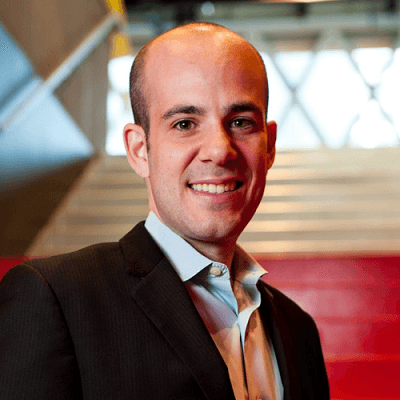
The Forecast interviewed NAND Chief Analyst Steve McDowell and Daemon Behr, Field Chief Technology Officer at Nutanix in 2025 to learn about concerns VMware customers have, including managing costs and understanding reliable migration processes. But beneath it all, there is a strong desire to have a new IT software platform that not only manages virtual machines but also modern applications capabilities across different IT infrastructures.
“The disruption that Broadcom is bringing to the market with their license and bundling around VMware, it's absolutely driving a discussion about how I move forward,” McDowell told The Forecast in an interview at the 2025 Nutanix .NEXT conference.

The concerns have grown sharper over time. According to reports, Broadcom has announced the end of general support of vSphere 8 in October 2027. For many, this is a cause for urgency. Forced migration could pressure IT teams to compress existing timelines and require hardware changes. CIO.com reported that industry analysts project that more than one-third of VMware workloads will move to alternative platforms by 2028.
If VMware price hikes and new bundled licensing were enough, CIOs have to deal with supply chain delays and rising hardware costs driven by the AI boom. These can squeeze an organization's ability to pay for migration expenses, especially if it doesn't enable future capabilities. This has many IT teams exploring new options, according to Lee Caswell, SVP of Product and Solutions Marketing at Nutanix.
"Customers are asking if they can get out of VMware or not," Caswell said in a video interview published on CIO.com. "They could shrink their footprint (use of VMware) by 50% and still have to pay the same amount going forward."
He said for those who can't get out, they're looking at "putting a ring fence" around what they need to run on VMware, then run new workloads elsewhere.
"Things have changed irrevocably," he said, pointing to higher prices and the bundling of VMware products.
This builds on what McDowell and Behr described in 2025: there's a growing consensus that VMware is not a long-term solution for new application development. The difference now is that the vSphere 8 deadline gives that consensus a date. For organizations willing to act before that window closes, Caswell and others argue the mandated transition is less a forced disruption than a catalyst — a chance to rebuild infrastructure around the next decade's demands, from hybrid cloud operations to AI-ready architecture
When McDowell looks at where IT innovation is rapidly evolving, he said it's not clear how much Broadcom VMware is investing in what's next.
“As I look at things like containers and the evolution of HCI with external storage, these are moving forward,” he said “When I'm looking at whose infrastructure management software I'm going to deploy, I need somebody who will go on this journey with me.”
The IT world has evolved beyond traditional virtualization, and it’s past time for enterprises to modernize their application platforms, McDowell wrote in Understanding VMware Alternatives, a 2025 report commissioned by Nutanix. In his report, McDowell explained that transitioning away from VMware offers an opportunity to embrace technologies and architectures better suited to current and future demands.
“Rather than viewing migration as a challenge, IT organizations should see it as an opportunity to leapfrog into the next generation of enterprise IT,” McDowell wrote in the report.
In McDowell’s interview at the 2025 .NEXT conference, he said that, for many legacy applications, it's not worth the investment to move those to new architectures.
“But as people deploy new applications, VMware is not your first choice,” McDowell told The Forecast. “There's more awareness that VMware is not the long-term answer necessarily for new workloads.”


He said it’s forcing IT organizations to step back and ask big questions.
“What's the right architecture to deploy my apps?” McDowell asked in the interview. “It drives you to think about application modernization that maybe was a back burner topic treated as technical debt. But most VMware customers are on three or five year service agreements, so this is going to continue to unfold for the next half decade.”
He sees many IT teams are actively exploring alternatives, driven by frustration with Broadcom VMware and the need to future-proof their IT environments. And there’s a growing stream of companies that are well on their way to switching IT software platforms.
McDowell said he met customers at the .NEXT event who had thousands of virtual machines (VMs) they needed to migrate from VMware software. To do this, they used Nutanix Move.
“They were up and running,” he said. “They moved all of their VMs except one, which is remarkable for an IT migration.”
Understanding Migration Steps and Modern IT Capabilities
Soon after Broadcom announced the deal to acquire VMware, The Forecast began reporting on the early industry apprehension, uncertainty, risks, migration considerations and opportunities that arose for alternative technology providers. Interviews with IT teams working in a variety of industries described how many dealt with migrating from VMware to Nutanix. Some used hypervisors from both companies, while others moved to Nutanix to use modern infrastructure for faster innovation.

At the 2025 .NEXT conference, companies such as Micron Technology, Toshiba, Tractor Supply, global market research firm Moody’s and the U.S. Navy shared how they moved from VMware to Nutanix. Transitioning away from VMware presents an opportunity to embrace modern platforms and architectures that unlock greater efficiency, performance, and agility, explained McDowell.
While hosting a Technology Bootcamp series of webinars for people curious about alternatives to VMware software, Behr discussed common needs IT teams have today.
“Hybrid cloud and AI are top of mind for most,” Behr said.
He said the general mindset for participants was forward-looking as they fixated on taking the right next steps to managing resources that power VMs and cloud native applications.
Reports of changes to VMware product offerings sent many enterprise IT teams searching for VMware alternatives, Behr said.
“They are spending a lot of time trying to validate these solutions,” Behr said. “Some solutions help address costs but they don't hit all the other things that may have been taken for granted previously, such as enterprise grade scalability, lifecycle management and having operational expertise to run it.”

Behr said the Bootcamp webinar series aimed to show Nutanix understood companies’ migration challenges and had the tools, professional services and ecosystem to support moving to a new platform. But it also explained how the worlds of VMs and container-based solutions can be managed together. He said containers are designed to package an application along with all its dependencies, ensuring it can run consistently across different computing environments. Although containers share the host operating system kernel, they are highly portable across systems with compatible OS kernels, making them ideal for deploying cloud-native applications that serve web and mobile users.
“Whether they like it or not, they have to have a means of running those containers,” Behr said.
He explained that containers typically operate in clusters requiring sophisticated orchestration tools. Many developers prefer the Kubernetes® platform for container orchestration because its open-source license makes it easy to acquire and experiment with. But operating Kubernetes at enterprise scale is another matter altogether.
Broadcom completed its VMware purchase about a year after ChatGPT’s introduction. Since then, large organizations have been scrambling to find ways to integrate generative AI into their service offerings.
“GenAI apps are being built in containers and Kubernetes,” Behr said.
That means IT teams must be able to manage these modern apps along with existing infrastructure and legacy applications.
“If you don't have a means to deploy and manage your environment as table stakes without a lot of operational overhead, then there's no way that you're able to layer on AI and get the benefit out of that,” he added.

He said this is the newer challenge IT teams face. Many have decades of technical debt locked into legacy hardware, tools and applications created before GenAI apps hit the market.
“They have to try to layer new AI constructs on top of legacy infrastructure and that’s very, very difficult,” Behr said. “They have to manage so much more, and they don't have the ability or time to figure out how to navigate that mess.”
He said that IT teams need to facilitate building and managing modern applications.
“It’s a new infrastructure where apps developed from an AI perspective can be deployed in the same way you would go to an app store for your tablet or smartphone,” Behr said.
“Nutanix can provide the underlying virtualization, Kubernetes, storage services and the inferencing capabilities for AI — the entire stack soup to nuts. And then it is very easy to build on top of that.”

This is an updated version of the article originally published on July 8, 2025. It was first updated on October 8, 2025.
Editor's note: Learn how to Simplify Your Hybrid Multicloud: The VMware to Nutanix Migration Guide. Read two related blog posts: The Broadcom Reckoning: Why Infrastructure is a Strategic Financial Decision and Nutanix Delivers a Uniform Experience Across Datacenter, Edge and Cloud.
Ken Kaplan is Editor in Chief for The Forecast by Nutanix. Find him on X @kenekaplan and LinkedIn.
Tom Mangan contributed to this story. He is a veteran B2B technology writer and editor, specializing in cloud computing and digital transformation. Contact him on his website or LinkedIn.
© 2025 Nutanix, Inc. All rights reserved. Nutanix, Inc. is not affiliated with VMware by Broadcom or Broadcom. For additional information and important legal disclaimers, please go here.
Related Articles