The fast-moving, technology-driven business world requires leaders to remain agile. While grounding themselves in operational reality, decision-makers must act quickly to brace against threats and seize opportunities.
Design Thinking dates back to the 1960s as a niche method for physical product design. It has evolved into a cross-industry strategic framework for solving a wide range of problems. Firms like IDEO popularized its use for consumer goods, but the methodology has evolved beyond aesthetics to system-wide problem-solving. Today, industries from healthcare to finance use it to change how they work. IT leaders specifically leverage it to bridge the gap between human needs and complex technical feasibility in cloud and AI environments.
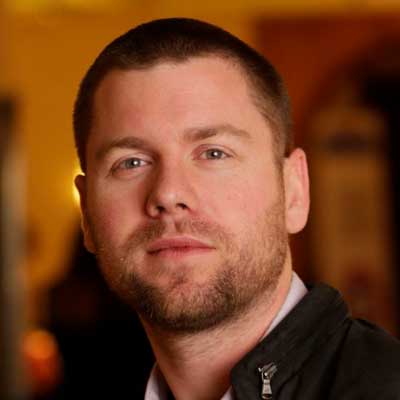
For CIOs and IT decision-makers, this approach is the key to evolving from a back-office utility to a strategic value-driver. Applying Design Thinking to the tech stack can help shrink the "adoption gap" and transform IT into a hub for business value creation. This is especially important for people working with enterprise AI innovation, according to Manosiz Bhattacharyya, CTO for Nutanix.
“The basic building blocks of technology are changing faster than ever and are becoming far more malleable and adaptable with each passing day,” Bhattacharyya told The Forecast.

“True IT resilience isn’t just surviving change. It's harnessing it as fuel for growth.”
He said that enterprise leaders are rethinking IT systems to bring cloud-like speed and simplicity to high-tech infrastructures of all kinds. While cloud native innovation and AI capabilities are delivering operational benefits, IT leaders are always looking ahead to understand how they can handle the new complexities that will come their way.
Decision Framework for Shaping the Future
Bhattacharyya’s insights align with many of the principles outlined in the new book, The Shape of the Future, that I co-authored. A forward-focused, Design Thinking approach can help IT leaders build data systems that preserver through uncertain times.
A framework outlined in my book is dubbed FORMA and emphasizes five critical capabilities for systems planning and product architecture:
Flexibility, Optimizability, Resilience, Modularity and Adaptability.

Bhattacharyya sees these concepts as relevant to IT professionals who must build complex, flexible systems that respond to new threats, learn and optimize, remain resilient under stress, and feature modular subsystems.
“More than ever, IT systems need to be adaptive to new challenges,” he said. “Those who build and manage them need to do the same. They have to think holistically and design for change.”
Flexibility: Bending Without Breaking
In IT systems, flexibility means maintaining a core purpose while allowing for extensive adaptability in form. Much like trees that survive a storm by bending with the wind, technology designed with true flexibility can undergo rapid pivots to meet new threat landscapes or business needs without losing its essential character.

Bhattacharyya sees IT teams investing in secure yet flexible hardware and software that can quickly add new capabilities.
“Enterprise leaders are increasingly looking to bring greater consistency and flexibility to business processes and high-tech points of interaction,” he said.
Optimizability: The Engine of Continuous Improvement
Traditional IT optimization often aims for a fixed target, such as a specific level of uptime. However, in rapidly changing environments, yesterday’s optimal solution can become today’s bottleneck, Bhattacharyya explained.
As described in my book, designing for optimizability involves building mechanisms for ongoing learning. For technology leaders, the Nutanix CTO recommended implementing:
- Robust feedback loops to surface performance data quickly.
- Agile learning mechanisms to extract actionable insights from experiences.
- Pattern recognition and predictive technologies that allow systems to improve every day.
Resilience: Turning Stress into Growth
While many IT solutions focus on avoiding disruption, resilient systems treat disruption as raw material for evolution. True resilience is about "bouncing forward," Bhattacharyya said. One example is turning a system vulnerability into a team or technology response that strengthens cybersecurity.

He explained that resilience emerges from purposeful redundancy and diverse thinking that prevents single points of failure. It requires treating every incident or ticket as a rapid-fire learning opportunity to update strategies in real time.
Modularity: The Power of Independent Evolution
Monolithic IT solutions can require wholesale replacement when a single component fails. In contrast, modular systems allow components to be swapped or evolved independently for any reason.
“When looking at high-tech tools and vendors, you want to avoid getting locked into a specific solution,” Bhattacharyya cautioned.
He noted that modern IT leaders are choosing “best of breed" solutions for each operating layer, selecting partners who can collaborate with other technology providers.


Modular design leverages APIs and plug-ins to add features quickly. However, Bhattacharyya cautions that it also needs standard connections and governance mechanisms to ensure that localized innovation doesn’t sacrifice global coherence.
Adaptation: Integrating Agentic AI
Adaptability makes evolution a core competency rather than a reaction. Adaptive systems use sensing mechanisms to detect change and experimentation capabilities to test new approaches.
Bhattacharyya said that Agentic AI, autonomous systems capable of executing complex goals, is making the construction of high-tech tools more personalized and productive.
“New hybrid cloud technologies and agentic AI solutions are making the process of constructing high-tech tools and architectures more flexible,” Bhattacharyya said.
“At the same time, it’s also important to design solutions with guardrails in place to keep you more secure.”
FORMA principles can help IT teams build stable, reliable systems that continuously transform. Bhattacharyya advises IT leaders to spot meaningful market shifts and exercise their freedom to choose the right cloud, hypervisor, or application, all underpinned by robust oversight protocols.
Related stories:
Turnkey IT Platforms Unlock Enterprise AI Success
Futurist Mike Bechtel Sees AI Shifting From Push to Pull in 2026
AI Trends to Watch in 2026: Finding the Right Compute Platform for Each Workload
New U.S. Policy for AI Seeks Less Regulation, More Innovation

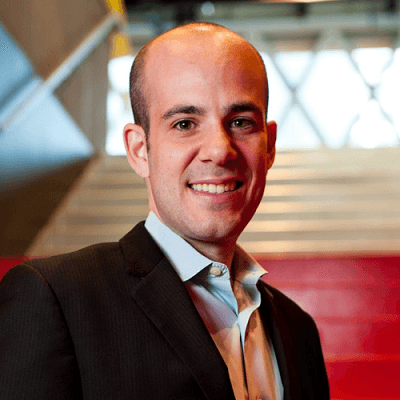
Scott Steinberg is a business strategist, award-winning professional speaker, trend expert and futurist. He’s the bestselling author of Think Like a Futurist; Make Change Work for You: 10 Ways to Future-Proof Yourself, Fearlessly Innovate, and Succeed Despite Uncertainty; and Fast >> Forward: How to Turbo-Charge Business, Sales, and Career Growth. He’s the president and CEO of BIZDEV: The International Association for Business Development and Strategic Partnerships™. Learn more at www.FuturistsSpeakers.com and LinkedIn.
© 2026 Nutanix, Inc. All rights reserved. For additional information and important legal disclaimers, please go here.
Related Articles