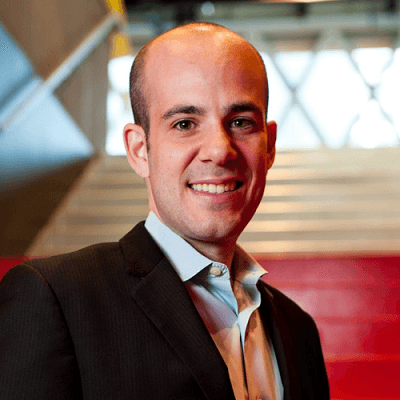
Over the past three years, consumers and businesses have embraced generative AI as though the technology were a “genie lamp that can fulfill every wish,” says Mike Bechtel, keynote speaker, author, and futurist.
By contrast, he says, agentic AI has felt more like “vendors pushing a rope.”
“I don’t see many business stakeholders saying, ‘Boy, I sure could use more silicon employees,’” Bechtel said in an interview with The Forecast. "That’s just not uttered. The people who are uttering things like that tend to be the vendors. So far, it feels a little bit more like a vendor push than a customer pull.”
Bechtel sees enterprises taking a more sober view of AI, similar to what Lee Caswell, senior vice president of marketing at Nutanix, calls a “AI-smart” approach: treating AI as a mission-critical service that solves a clear business challenge and is reliable, governable, and designed for the long haul.
Bechtel does expect AI agents and robotics to make inroads in 2026. But that won’t mean companies can simply drop automated workers into their existing environments and set them loose. Rather, he sees leaders rethinking their operating models to align with an emerging new reality.
“The agents and the robots are coming, but they won’t be a cure-all that solves for all of your existing roles and responsibilities,” Bechtel said. “At the moment, the talk is dramatically outpacing the walk.”
AI Agents Get AI Managers
Reliability is a key concern surrounding AI agents, especially since nearly all users of large language models (LLMs) have at least occasionally experienced outlandish “hallucinations” with almost no grounding in reality. Or, as Bechtel put it: “You don’t want your digital interns to go off on a donut-fueled bender, get lost in the woods, and deliver suboptimal outputs.”
Bechtel pointed to a November article from Anthropic (the company behind Claude) about AI “harnesses,” which help agents work effectively across multiple sessions. He expects to see vendors developing more software tools that help keep AI agents on track, including those that coordinate the actions of multiple agents.

“We’re going to need another set of silicon staff that wrangles an acceptable standard of performance out of each individual agent, so that instead of a cacophony, you get something more like a piece of music,” Bechtel said.
Businesses Aim for ‘Better,’ Not ‘Perfect’
“AI is just statistics on steroids,” said Bechtel. “It’s a guessing machine that, given enough data, electricity and time, it’ll take a stupid guess, to a lousy guess, to a decent guess, to a 90% guess, to a 99.99% guess. At some point, it equals or exceeds our human perception of what good looks like.”
While accuracy remains a concern for businesses using AI, Bechtel notes that humans are also fallible. Rather than aiming for perfection, he says, businesses will rely on human review to make sure that AI outputs represent “wisdom out of a crowd and not mayhem out of a mob.”
“People make mistakes, and AI makes mistakes,” he said. “You’ll never get perfect, but you can damn well get better than good.”
Agents Eliminate Steps, Not Jobs
In conversations about agentic AI, people often assume that agents will become one-to-one replacements for human workers. But that’s not how Bechtel sees this transition playing out. “The idea of replacing Toby with a T-1000 is probably a losing gambit,” he said.
Rather, Bechtel said, agents will represent an opportunity for businesses to rethink business-as-usual and optimize operations for a mix of “silicon brains” (AI agents) and “carbon-based brains” (humans).
“You might as well use this as an opportunity to rebuild your processes, to see if you can reduce your billing process from 17 steps down to 11 steps,” he said.

“That mix of silicon and carbon-based brains is where you start to unlock the value. Half of the savings is going to come from needing less carbon in a particular process, and hopefully that carbon gets deployed to higher-order pursuits. But the other half of the savings is going to come from the fact that you eliminated steps in your existing business processes.”
C-3PO Wins Headlines, R2-D2 Creates Value
The past year has seen growing attention being paid to humanoid robots, from 1X Technologies’ home robot Neo to Tesla’s Optimus. In the short term, though, Bechtel expects to see most businesses getting more value from purpose-built robots (which he likens to the rolling, beeping R2-D2 from “Star Wars”) than from humanoids more similar to the film franchise’s golden protocol droid C-3PO.

“There’s something about anthropomorphizing servos and actuators that makes us pay attention,” Bechtel said. “Those will continue to get our attention. But the things that end up being sold and delivered at scale are going to be at first mono-taskers, and then duo-taskers.”
Imagination Becomes the Limiting Factor
Bechtel said that an “imagination deficit” will keep some organizations from making the most of emerging AI tools.
“Senior executives are literally being told, ‘This thing can produce anything you want,’” Bechtel explained. “And bosses are not used to having to be creative like that. If leaders take all the existing orthodoxies for granted, they’re not going to have a great time with these tools.
“You can’t perform the same play with robot understudies. What you need is a new play, with a new plot, that lends itself to robots.”
Read past predictions from Futurist Mike Bechtel:

Calvin Hennick is a contributing writer. His work appears in BizTech, Engineering Inc., The Boston Globe Magazine and elsewhere. He is also the author of Once More to the Rodeo: A Memoir. Find him on LinkedIn.
© 2025 Nutanix, Inc. All rights reserved. For additional information and important legal disclaimers, please go here.
Related Articles