Even for a mature technology, a lot can change in a year or two. Virtual desktop infrastructure (VDI) and desktop-as-a-service (DaaS) have matured significantly over the years, moving from a novel concept to mainstream adoption. Together, they comprise of a so-called end-user computing (EUC) market that is expected to grow from $14.77 to $22.68 billion in between 2025 and 2029, according to some reports.
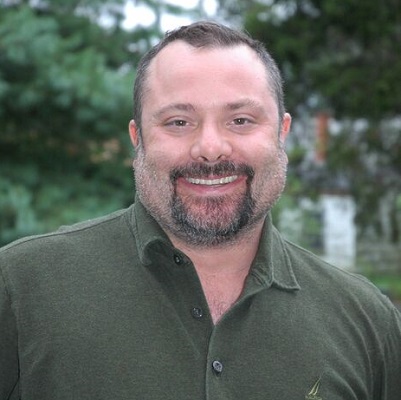
Use cases range from students accessing specialized software on Chromebooks to nuclear power plant designers working with high-security applications to retail offices running Windows apps. The common thread is the need for simple, secure, workplace-independent access to applications while reducing operational complexity, according to Ruben Spruijt, field CTO and vice president of product at Dizzion.

In this Tech Barometer podcast segment, recorded at the 2025 Nutanix .NEXT event in Washington, DC, Spruijt discussed the rapidly evolving landscape of end-user computing (EUC), the overarching term used to describe VDI and DaaS technologies.
Spruijt has been a prominent voice in the EUC community for two decades and has shared his insights with The Forecast for through the years. In this interview, he explained how to navigate through a pivotal time for the industry, following Broadcom VMware's spinoff of its EUC offering into Omnissa and significant changes across major vendors.
Editor’s note: Nutanix Expands Microsoft Azure Virtual Desktop Flexibility Across Hybrid Cloud
"It's like a massive plate of spaghetti,” he said, describing the current state of the market where customers are grappling with price increases or vendor changes that have many IT teams searching for alternatives.
Much has changed since Nutanix acquired Frame, where Spruijt worked before it spun out to become part of Dizzion two years ago. His new company combines Frame's cloud-native streaming engine with Dizzion's managed services expertise, both founded around 2012. This pairing addresses the ongoing demand for Windows applications, which Spruijt notes still account for 60-70% of end-user work, alongside growing SaaS and web-based tools.

To help organizations cut through the confusion, Spruijt developed the EUC Hexagrid, a framework that maps the entire end-user computing ecosystem across six main pillars and 22 sub-categories, featuring 220 vendors. The methodology emphasizes understanding customer challenges before jumping to solutions.

Looking ahead, Spruijt sees significant opportunities in AI integration, though he advises IT professionals to focus on what they can control rather than being paralyzed by uncertainty. He's particularly interested in how AI can simplify admin experiences and proactively solve issues before end users encounter them. The cloud's low barrier to entry, he noted, makes it easier than ever to experiment with new technologies.
Spruijt is deeply embedded in the EUC community, regularly participating in webinars and industry events. He encourages newcomers to engage with communities like World of EUC and E2EVC, emphasizing that the community is overwhelmingly supportive. For those looking to build careers in this space, his advice is clear: embrace the opportunity, experiment with emerging technologies like AI, and don't be afraid to reach out for help.
At the .NEXT event, Spruijt's influence was palpable. Attendees queued up to speak with him, seeking guidance on navigating an industry in flux. His combination of technical expertise, methodical approach, and genuine passion for helping others has made him a trusted voice during a period of significant transformation in the enterprise computing industry.
Editor’s note: Move Beyond VMware: Improve End-User Computing with Nutanix

Transcript:
Ruben Sprujit: It's like a massive plate of spaghetti. Where do I start? What's the challenge?What's the idea you have?
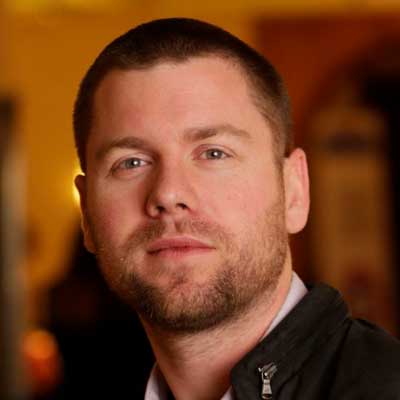
Jason Lopez: Ruben Spruit is the field CTO and VP of product at Dizion, a company that provides desktop as a service and cloud computing solutions to enable remote and hybrid workforces. He helps companies understand how to deploy end-user computing technologies, but not only companies. He's passionate, hands-on, and ready to help anyone in the EUC community.
Ruben Sprujit: First, you listen to peers, to customers, to prospects and understand, hey, what is their idea or challenge? And many of us listen for a couple of seconds and then, okay, this is the problem, this is the solution, this is the vendor. But it's good to step back and listen a little bit more.
Jason Lopez: Here at The Forecast, we've interviewed Ruben numerous times for articles and Tech Barometer podcasts to learn about end-user computing, virtual desktop infrastructure, and desktop as a service. In this interview at .NEXT 2025 in Washington, DC, he talked with The Forecast editor-in-chief, Ken Kaplan, about changes around EUC, such as new vendors and partnerships in the wake of Broadcom VMware's spinoff of its EUC offering, which became Omnissa. And he talked about AI and methodologies for helping IT teams build and evolve their EUC strategy, and offers tips for building a career around the EUC ecosystem. But he starts with the question, why are people using desktop as a service?
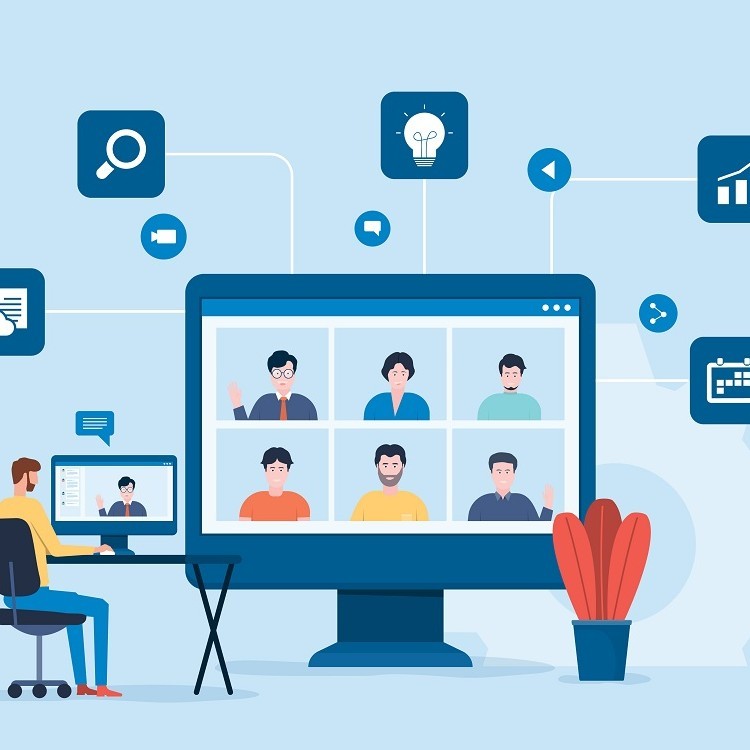
Ruben Sprujit: It could be students with their own Chromebook want to access SPSS, nuclear power plant designer and builder using high-secure, sensitive data with design apps to design a nuclear power plant. It could be a retailer or using a handful of Windows apps in their retail office. It could be government agencies using office productivity. So it's different reasons to use virtual apps and desktops. But it all starts with, OK, I want to have a simple access to apps and desktops. I want to be workplace independent, need to be secure. And simple is the key. How can I keep it simple so the operational complexity is sort of gone? And that's important these days because knowledge and people with skills is challenging nowadays. Keep them is challenging. Find them is challenging as well. So building a platform that's easy to run as an admin and easy to consume as a user, like both we are also end users, consumers of solutions, these are the main ingredients of a good platform.
Ken Kaplan: I met you seven years ago at Nutanix. It was explained as it's streaming your desktop experience from a server, from the data center, from the cloud. That idea, just how we would watch a Netflix video, it's streamed to you. So your apps aren't necessarily on your device. And there are lots of reasons for doing that. And it seems to be almost the status quo now. So what has changed in those seven years and what are you excited about today?

Ruben Sprujit: A lot of things changed. Like seven years is a long time. So if we go back maybe seven years, Nutanix acquired our company, Frame. We saw Corona and a surge of workplace independent work. That's one of the reasons why we grow like crazy also within Nutanix. So that changed. That's new normal nowadays, right? Hybrid cloud is new normal. So supporting on-prem, supporting NT2, supporting public cloud natively. Unified communications is normal as well, supporting that. High-end graphic apps, all kinds of apps supporting that. But still with a clear strategy, keep it simple. Like how can we make sure that admin experience and user experience is as simple as it can? Everyone is using today a browser. 70% of the work we do as end users is browser. And then the other 25% often is like Windows apps. So how can we deliver both web and Windows apps in a seamless way to users? What is happening as well, we spin out of Nutanix, a little bit more than two years ago. So Nutanix can focus on infrastructure, hybrid cloud, and we can focus on end-user computing. So Dijon acquired Frame technology. Look at Frame as the car engine, while Dijon is more like a sort of managed services company. Coincidentally, both companies, so Dijon and Frame started roughly in the same time, 2012. Dijon with focus on Horizon, nowadays called Onisa, build their own control plane to orchestrate and automate Horizon deployments. In the same time frame was built as, okay, how can we build in cloud native solutions to stream apps and desktops to end users? So fast forward today, 2025, Dijon is using the engine, the Frame engine, to stream desktops and apps, Windows and Linux, personal and pooled, that's technology, but also add a managed service on top of that to help customers when needed, not required, but when needed to add admin services to local admins with service we offer. It's a services company with a very strong engine called Frame.
Ken Kaplan: The ecosystem, you touched on it, can you talk a little bit more about the constellation that you're seeing out there, companies and changes that are happening?
Ruben Sprujit: It's a very exciting space, end-user computing. So end-user computing, I always explain as a massive umbrella, and end-user computing, in essence, is the solutions we, you, listener, are using to get work done. That could be a virtual app, virtual desktop, that could be unified communication, that could be an AI agent, it could be a web or SaaS app, it could be a mobile device, it could be cloud storage, all the things I just explained equals end-user computing. And virtual desktops and applications, my expertise, or one of the expertise I have, is a fundamental element in end-user computing, but end-user computing, as I mentioned earlier, is much broader than that. So if you look at the bigger picture of what is happening in end-user computing, AI is part of that, AI agents, SaaS tools, old tools but then sort of AI-infused is happening, unified communications, but still Windows apps, SaaS, software as a service, desktop as a service, application streaming, all these items combined is what is real today. People think, well, Windows apps are dead. That's not the case. They are kicking alive. Yes, it's slowly degrading from 100% usage, 15 years ago, 20 years ago, to maybe 70% or 60% nowadays. Yes, SaaS and web did pick up the other like the bucket, but it's a combination of SaaS, Windows, mobile applications which gets work done for us. So that's happening. The whole industry is evolving to as a service. If I zoom in a little bit into like the VDI, the virtual desktop infrastructure, and DAS, the desktop as a service space, that's evolving as well with private equity taking over like the Citrix part, same for Omnissa, spin out of Broadcom, VMware, refocusing, finding new alliances, including with Nutanix. That's good for the industry, gives more choice. If you look at from a vision perspective, all these developments are helping us big time because a lot of customers, I would say 60% of the conversation I had in the show for past days, are customers, partners, scratching their head, price increase, 2x, 3x. Some vendors are refocusing on like only top segment of customers, and they are not in that segment of their customers. So they are scratching their head, hey, what is next for us? And next could be a physical PC. Next could be alternative for Citrix or Omnissa. That's happening big time. It's a very interesting space right now. Combination of like hybrid cloud, on-prem, public cloud, workplace independent, building a secure workplace, security is super critical for many. So if there's no data on the endpoint, which is the case with virtual apps and desktops, that makes life much easier, not easy, but easier to build a secure workplace. That's happening in our space.

Ken Kaplan: There's not even a perfect storm, but it's certainly a storm of changes out there, from the vendor changes, the price hikes, to just the innovation that's coming across, the options that are out there. You add to that AI and people are thinking differently. How do you characterize this time in your career and what you're seeing? It seems like there's a lot of partnerships going on, a lot of working together. There's some urgency.
Ruben Sprujit: Yeah. On one side, it's super energizing, but it's also complex. It's like a massive plate of spaghetti. Where do I start? And to help customer with that conversation, and there's nothing to do with vision or product. My background is consulting, and I always try to explain the bigger picture and understand the why. What's the challenge? What's the idea you have and you want to sort of solve? Okay, then what kind of concepts fit with that, and then which vendors can help to fill in that concept to help with the idea or challenge. So what we did last year, we built an EUC Hexagrid. The EUC Hexagrid is a physical representation of our end-user computing space. It has main pillars, six of them, and 22 sort of sub-pillars. And the goal is you start, okay, what is EUC? What is end-user computing? What's the purpose of these six main pillars? What's the purpose of the 22 sub-pillars? First, you listen to peers, to customers, to prospects and understand, hey, what is their idea or challenge? And then you use the Hexagrid to plot maybe two of the main pillars and three of the sub-pillars to what their idea or challenge is. Before you talk about how the vendor landscape looks like, and many of us listen for a couple of seconds and then, okay, this is the problem, this is the solution, this is the vendor. But it's good to step back and listen a little bit more and then plot six pillars, 22 sub-pillars, and then talk about the vendors, what they can do. That's what the EUC Hexagrid is all about. So it's an infographic, a graphical representation, 220 vendors are in that picture. It took us three months to build, and there's a white paper as well. So EUC Hexagrid, if you go to edition.com, you will find the resources EUC Hexagrid. Just fill in the email address, you'll get the Hexagrid white paper. And that helps in understanding what's happening in this space from a higher or medium level and paints a picture what vendors are in this space and what are the relevant vendors in this in this space.


Ken Kaplan: So how do you describe where we are today versus when we met seven years ago, for people who might be interested in focusing their career in this area of IT?
Ruben Sprujit: Opportunity, I would say. Like, look at AI. But people are also scratching their head, hey, what does it mean for me? What does it mean for my business? What does it mean for products? I'm responsible for products. How can we leverage AI to make life simpler as an admin? How can we solve issues before the end user sees them? Would be great if that is possible, and it is possible, that's something we're building. So that's one angle to understand, hey, what the possibilities are. The beauty of cloud is that you don't need to spend a crazy amount of money to get started. And that applies to, well, Gemini, JetDVT, that whole theme of AI, that's where I would spend, if not spend already, time in understanding what the value is in your personal life, but also like with agents, communicating with agents, what it might look like in two, three, five years from now. No one knows. It's tough to predict. Also with this whole, like, global thing that's happening, tough to predict, but nevertheless, don't be shy, don't be sort of confused by that. It's not something you can control, and if it's not something you can control, just set it aside, focus on the things you can control. That's what I would do. And one of the things is understanding what's new. AI is newer, but still like the as-a-service cloud, hybrid cloud, I see customers moving from public cloud back to on-prem for different reasons, understand why, understand what kind of tools and vendors are key in that space. It's really exciting, exciting time.

Ken Kaplan: You're also so well known in the community because you're very involved. You're on webinars. I remember you'd be at your desk and talking with your hands in the air, or you had your home desk set up just perfectly for these kinds of interactions that you have with people. Where can people go to join the community or learn more about the community? How do they get in to follow what you do?
Ruben Sprujit: Well, the beauty is there are many different communities. So I would say my community is all around end-user computing, about GPUs, about remoting protocols, about VDI and that. So that's my community. One of the communities is World of EUC. So World of EUC is a massive community. There is a European community called E2EVC, not connected to any vendor. It's crazy guys like myself organizing it. And there are also online communities as well, like on BlueSky, on X it’s relatively easy to find the right folks and connect with them. So if you're new or newer to this space and want to learn, my experience in the past 20 years in that community is that I would say everyone, 99% is here to help. So if you're new and maybe new to writing or new to presenting or new to technology, just reach out. I'm still Ruben with two feet on the ground. I'm smiling, right? You can see.
Ken Kaplan: Even just to get you to sit down and sit with me, I waited in line because people just want to come and talk to you.
Jason Lopez: Ken Kaplan is editor-in-chief of The Forecast. He interviewed Ruben Spruid, field CTO and VP of product at Dizzion, a company that provides desktop as a service and cloud computing solutions. Learn more about end-user computing at Nutanix.com. Go to Nutanix.com slash solutions slash end-user-computing. I'm Jason Lopez. This is Tech Barometer produced by The Forecast. You can find many other technology stories at theforecastbynutanix.com.

Ken Kaplan is Editor in Chief for The Forecast by Nutanix. Find him on X @kenekaplan and LinkedIn.
Jason Lopez is executive producer of Tech Barometer, the podcast outlet for The Forecast. He’s the founder of Connected Social Media. Previously, he was executive producer at PodTech and a reporter at NPR.
© 2025 Nutanix, Inc. All rights reserved. For additional information and important legal disclaimers, please go here.
Related Articles