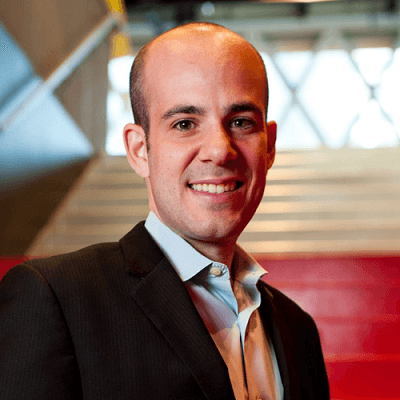
Every knob in the data center connects to another by a piece of string. Turn one and the rest drift where nobody wanted them to go. That’s how Juan Orlandini, chief technology officer for North America at Insight Enterprises, an Arizona-based IT solutions integrator, described the complexity that IT teams face today. He sees IT modernization as a set of connected decisions rather than a single platform choice.

In this Tech Barometer podcast, Orlandini explained how the rapid rise of artificial intelligence (AI) and the changes VMware customers have faced since that company was acquired by Broadcom are converging and putting pressure on IT decision-makers.
"We're going through a number of inflection points simultaneously," Orlandini said. "It wouldn't be a conversation without AI, obviously, so that's a big one. The other one is this post-Broadcom world that we're living in."
He sees these as opportunities for his company and others like Insight to help IT teams make the right decisions now to modernize their enterprise technology infrastructure, tools and processes in order to support new applications and workloads such as artificial intelligence.

Orlandini spoke with The Forecast prior to a CRN report that Insight, an $8.2 billion solution provider and award-winning VMware Pinnacle partner, could no longer resell VMware licenses or Broadcom-funded VCF Entitlement Services.
"This decision reflects Broadcom's strategy to narrow its partner ecosystem and is not a reflection of Insight's capabilities or our client relationships," an Insight spokesperson told CRN.
What Makes This Moment So Disruptive?
Broadcom acquired VMware in November 2023 and replaced perpetual licenses with subscription bundles. In its 2026 Magic Quadrant for Distributed Hybrid Infrastructure (DHI), analyst firm Gartner stated it expects 55% of enterprise VMware users will be investigating an exit by 2029, according to The Register. Orlandini explained that Broadcom wants customers to buy into its full VMware Cloud Foundation (VCF) ecosystem, and many cannot or will not deploy all the capabilities that come with it.
"Many customers either can't or don't want to do all of that deployment," Orlandini said. "It is a tall order. It's a big shift. If they don't, then the value proposition that Broadcom is bringing to the table goes out the window. It's too much, and you have consternation."

Orlandini sees these changes, maybe inadvertently, spurring technology innovation.
"A lot of innovation had stagnated because there was no competition [against VMware]," Orlandini said.
He sees a much more competitive market today.
"Innovation has really started to creep up, and we're seeing some amazing technology coming out from people like Nutanix and some competitors,” he said. “In the long term, I think as an industry, we're going to be in a much healthier spot. But until we get there, this is really, really painful."

Any inertia that may have held IT teams in place has given way to urgency.
“Now this Broadcom change has created a forcing function that is allowing IT organizations to relook at how they've built their processes and their tools and the services that they provide, and start reconsidering this to really build a true private cloud that happens to include virtual machines and containers as well,” Orlandini said.
What customers are not looking for is a catalog of things to buy, Orlandini said.
"They're looking for somebody to come in and understand their business, become a true partner and come with an informed opinion that says, hey, I have access to all of those technologies. But here's my opinion as to which one actually fits you best," he said
"It's not an agnostic approach. It's an informed opinionated approach that clients are looking for."
Related:

Transcript:
Jason Lopez: This is the Tech Barometer podcast, I’m Jason Lopez. When thousands of VMware resellers were deauthorized last year, many customers needed a new provider of VMWare licenses. One of those resellers was Insight Enterprises. It was reported by CRN in September of 2026 that Insight would no longer be authorized to resell VMware licenses in North America. But in an earlier interview prior to that CRN report we talked with Insight's CTO for North America, Juan Orlandini, who says this is the kind disruption they are built to handle.
Juan Orlandini: These are all knobs, and every knob is connected by a piece of string. And if you turn one knob, the other knob goes in the direction that you probably didn't want it to go. The job becomes, how do I adjust all these knobs that are linked together to find the optimal solution for each client? And that's not always obvious or easy or even clear until you're well into the process.
Jason Lopez: He mapped out the some of the big factors that make this so complex: dozen of decisions, tangled together, and none of them are happening on their own.
Juan Orlandini: We're going through a number of inflection points simultaneously. It wouldn't be a conversation without AI, obviously, so that's a big one. The other one is this post-Broadcom world that we're living in.
Jason Lopez: In the post-Broadcom world, how companies think about how they're running most of their data centers is being rewritten. When Broadcom bought VMware in 2023, it didn't just change who owned the company, it changed how the product got sold.
Juan Orlandini: The dynamics that Broadcom has introduced is that they want to bundle their products so that customers buy into more of the ecosystem that is included in the bundled package. Now, the challenge is that many customers either can't or don't want to do all of that deployment. They don't want to deploy all of the capabilities that are included in VCF. It is a tall order. It's a big shift. If they don't, well, then the value proposition that Broadcom is bringing to the table goes out the window. It's too much, and you have consternation. There's also arguments to be made that this was played a little bit heavy-handed by Broadcom, so that's caused some ill will. For some customers, it's not a matter of technology. It's just a matter of, like, hey, I'm going to find something else, flat out.
Jason Lopez: VCF is VMware Cloud Foundation, the bundle that Broadcom wants everyone to buy. But Orlandini's read on this moment goes past pricing and packaging. He sees it as the end of an era when VMware simply didn't have to compete for anyone's business.
Juan Orlandini: Right or wrong, while we were living in the pre-Broadcom days, VMware dominated the market like almost nothing else has ever before. In a large sense, a lot of innovation had stagnated because there was no competition. We were literally at the behest of what VMware thought was going to be next. Well, now that there is a healthier market, innovation has really started to creep up, and we're seeing some amazing technology and stuff that I don't think we would have ever seen before coming out from people like Nutanix and some competitors that are really pushing operations, optimization, performance, and all these other dynamics in ways that are just extraordinary. In the long term, I think as an industry, we're going to be in a much healthier spot. But until we get there, this is really, really painful.
Jason Lopez: Painful, yet Juan says it's also forcing a conversation a lot of IT departments had been putting off about what a modern data center is actually supposed to look like.
Juan Orlandini: For many organizations that wanted to transition from running that highly automated IT infrastructure to a private cloud, there is a big operational change that needed to be done. And without a forcing function, there was no impetus to change that because of that inertia that was there. And now this broadcom change has actually created a forcing function that is actually allowing IT organizations to relook at how they've built their processes and their tools and the services that they provide, and then start reconsidering this to really build a true private cloud that happens to include virtual machines and containers as well.
Jason Lopez: That was two, maybe three years ago. He says the mood has shifted since.
Juan Orlandini: Right now, the angry exits, the knee-jerk reactions have largely started to disappear. We're two, three years into this transition, and most people have already been through one refresh of their licensing model, at least, so they know what's coming. So it's not an angry decision anymore.
Jason Lopez: The exodus has not stopped, but it has moderated.
Juan Orlandini: You're probably going to see a smaller amount of exits, but the ones that do are going to be very public. And you can do your own research. There's tons of companies that are very large that have very publicly said, I'm out. But there's also very large ones that have not said. That doesn't make the news, but it's there. It's happened, If you go below the global 1,000, the number is probably going to be higher for exits because broadcom has very clearly said, hey, I'm really particularly interested in those really larger organizations. And for the smaller ones, it's actually much harder for them to adopt all of the capabilities that are built into the broadcom platform. So for them, it makes more sense to exit into something alternative that is a little bit more bespoke or tailor suited for their environment. So you're going to see a higher number for those.
Jason Lopez: Every one of those exits is a client sitting across the table from someone like Juan asking what comes next.
Juan Orlandini: For the customers that are choosing to exit from broadcom, the VMware technology stack, then for us, it's really an opportunity. And what we work with our clients is to understand what are their workloads really doing? What are the kinds of capabilities that are needed in order to support those workloads?
Jason Lopez: And where is the best place to put those? And what those clients want from him is not a list.
Juan Orlandini: What customers are not looking for is a catalog of things to buy. They're looking for an opinion. They're looking for somebody to come in and understand their business, become a true partner to them and come with an informed opinion that says, hey, I have access to all of those technologies. But here's my opinion as to which one actually fits you best. And it's not an agnostic approach. It's an informed opinionated approach that clients are looking for.
Jason Lopez: Juan Orlandini is the CTO for North America at Insight Enterprises, an Arizona-based IT firm providing services like cloud migration, cybersecurity and digital transformation. This is the Tech Barometer podcast, I'm Jason Lopez. Tech Barometer is a production of The Forecast. For more podcasts and stories on technology and also the people in tech, you can find them at theforecastbynutanix.com. That's all one word, theforecastbynutanix.com.
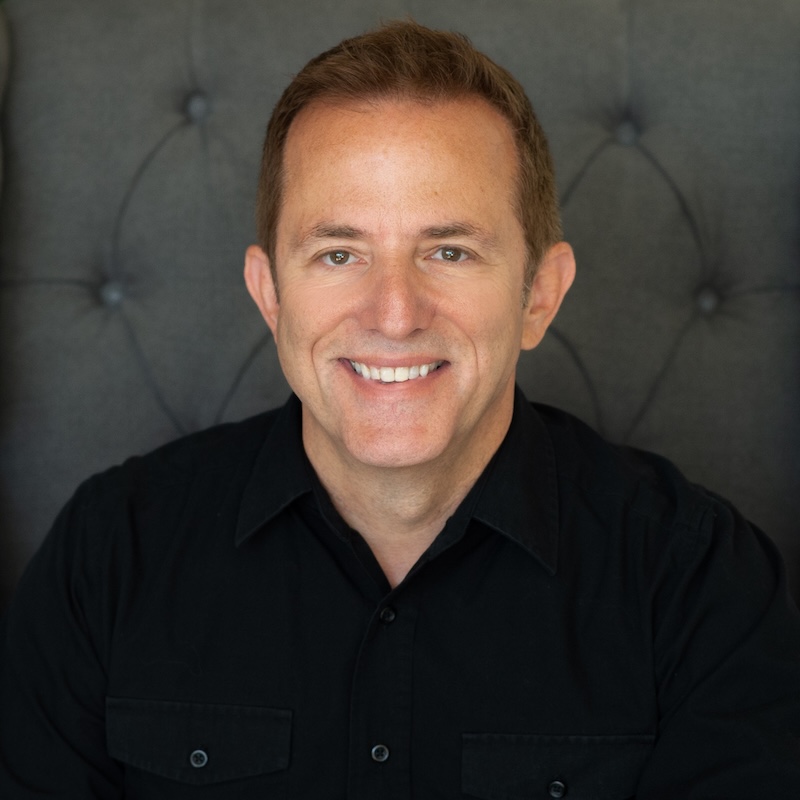
Jason Lopez is executive producer of Tech Barometer, the podcast outlet for The Forecast. He’s the founder of Connected Social Media. Previously, he was executive producer at PodTech and a reporter at NPR.
Ken Kaplan contributed to this story. He is Editor in Chief for The Forecast by Nutanix. Find him on X @kenekaplan and LinkedIn.
© 2026 Nutanix, Inc. All rights reserved. Nutanix, Inc. is not affiliated with VMware by Broadcom or Broadcom. For additional information and important legal disclaimers, please go here.
FAQs
Related Articles