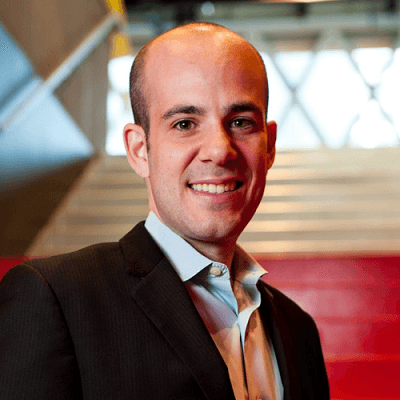
After 38 years in technology, Insight CTO Juan Orlandini says he has never seen this much disruption at once. AI, the Broadcom VMware shakeout and supply shortages are converging on IT leaders. He sees decision makers under pressure to move fast but frozen by new challenges at every turn. The shakeout from Broadcom's acquisition of VMware, he said, is a forcing function that could leave organizations stronger if they approach it with intention.
Broadcom completed its $69 billion acquisition of VMware in late 2023, replacing perpetual licenses with subscription bundles and narrowing its channel partner program to focus on its largest customers, prompting many customers to reassess their infrastructure strategy. Industry analyst firm Gartner project that 35% of VMware workloads could move to alternative platforms by 2028 as organizations weigh cost, complexity and the demands of AI.
"We're going through a number of inflection points simultaneously," Orlandini told The Forecast. "AI is the big one. Another is this post-Broadcom world that we're living in. Then, there's the supply chain shortage. All of these are conspiring to make things incredibly dynamic for our clients, and incredibly confusing."

He said he sees IT decision makers under pressure to move forward fast but hit by new challenges at every turn.
"It's really hard for clients to understand what they should be investing in, and how they should actually adapt to this new reality," he added. "It's a lot. As the old curse says, 'May you live in interesting times.' And these are most definitely interesting times."
Still, Orlandini said, he sees opportunity in what others might consider chaos. He expects the shakeout from Broadcom's acquisition of VMware, which was followed by reported price hikes for many customers, to spur vendor innovation and prompt organizations to reevaluate their IT architecture.
"In the long term, as an industry, I think we're going to be in a much healthier spot," Orlandini said. "But until we get there, this is really painful. This is really, really painful. And that's what we're helping our clients with."
How Should Organizations Respond to VMware by Broadcom Changes?
Orlandini recommends what he calls the "intentional exit," using the disruption as a forcing function to reassess IT architecture rather than storming out without a plan.
Many organizations were blindsided after Broadcom acquired VMware, Orlandini said. Some customers encountered contract changes or were offered bundled options at renewal rather than continuing with their prior standalone arrangements.
Orlandini has seen three broad responses. Some larger organizations chose to remain with VMware while reassessing their contract structures. Others opted for what Orlandini calls the "angry exit," storming out of the vendor relationship without taking the time to analyze their situation and plan what comes next.

A third group plans to move on but with more patience and greater intention. Orlandini calls them "the intentional exiters," who use the Broadcom acquisition as a "forcing function" to take a closer look at how they can build IT environments that truly serve their business goals.
"For the customers that are choosing to exit from Broadcom and the VMware technology stack, it's really an opportunity," Orlandini said.
"We work with our clients to understand: What are their workloads really doing? What are the kinds of capabilities that are needed in order to support those workloads?"
Insight also helps explore the best place to put particular workloads. Rather than assuming a single platform will replace every VMware workload, Orlandini said, organizations should inventory workloads and requirements, decide where each belongs and move toward a more cloud-like operating model such as Nutanix. With new integrations with storage partners like Everpure, Dell and NetApp, organizations that opt for Nutanix can use existing hardware rather than undertaking a potentially disruptive rip-and-replace.
"It's okay to choose to exit, but be intentional about it," Orlandini said.
"If you pick up a pile of trash and move it to another location, you still have a pile of trash. It's time to see: Can I clean this mess up before I put it somewhere else?"
What Do Customers Really Want From Channel Partners?
Customers want partners who understand their business and offer informed opinions, not just a catalog of products to buy.
In addition to seeking help with licensing agreements and vendor migrations, Orlandini said, customers are turning to partners to guide them through the economics of both infrastructure shortages and AI.
Orlandini said that some clients investing heavily in AI are moving away from “tokenmaxxing,” in which some organizations encourage AI resource consumption, especially as providers introduce more usage-based pricing.
"You have to be very intelligent about the tokenomics," Orlandini said, referring to the economics and governance of AI-token usage.
"Part of that conversation is, how do I meter and make sure that my tokens are being used wisely and appropriately, and being generated by the right model? Because there are different costs for different models."

The current shortage of memory and storage, which Orlandini calls "RAM-ageddon" and "Storage-ageddon" respectively, is hitting organizations at a particularly difficult time. Many have been "sweating" (extending the life of) their existing infrastructure since the COVID-19 pandemic, he said.
While partners cannot erase these challenges, they can help match organizations' needs with solutions suited to their requirements and economics, Orlandini said. More than ever, customers are counting on partners to go beyond simply providing a "showroom" of options and processing the order.
"Customers are not looking for a catalog of things to buy," Orlandini said. "They're looking for somebody to come in and understand their business, and to become a true partner with them. They want us to say: 'We have access to all of these technologies, but here's our opinion about which one actually fits you best.'"
Related:

Editor’s note: Find more about Nutanix software and capabilities in the The Nutanix Cloud Bible.
Calvin Hennick is a contributing writer. His work appears in BizTech, Engineering Inc., The Boston Globe Magazine and elsewhere. He is also the author of Once More to the Rodeo: A Memoir. Find him on LinkedIn.
Ken Kaplan contributed to this story. He is Editor in Chief for The Forecast by Nutanix. Find him on X @kenekaplan and LinkedIn.
© 2026 Nutanix, Inc. All rights reserved. Nutanix, Inc. is not affiliated with VMware by Broadcom or Broadcom. For additional information and important legal disclaimers, please go here.
Related Articles