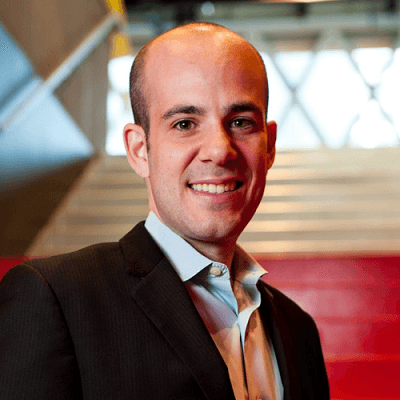
Artificial Intelligence is great for mechanical tasks like summarizing content, organizing numbers and streamlining workflows. But human resources (HR) is about people, and people are nuanced and often more complicated than data. Using AI in HR processes can actually bring fairness, claims Navneet Singh, chief marketing officer at Eightfold AI, maker of an AI-powered platform for HR processes like hiring and talent management.
“It's not whether AI is safer than humans,” Singh told The Forecast. “Typically, HR and recruiting has been done by humans. The real question is, is it fairer than humans, especially at scale? And the honest answer is that well-designed AI is.
Singh makes a strong case for using AI in HR in this Tech Barometer podcast, part of a series on AI leaders. He describes possible high-value use cases for AI in HR, including high-volume hiring.
“The current system is actually already deeply biased. The recruiter who sees 200 resumes by Friday afternoon, he or she is not evaluating the last 50 with the same rigor as the first 10. And this is not a character flaw. It's just human judgment, just degrades with volume and fatigue.”

He explained that Amazon had to hire 250,000 people for the 2025 holidays. Rather than turn to humans to process that many applications, the machine-scale capability of AI can speed the process and eliminate significant fatigue for HR team.
Likewise, organizations can use AI to assess skills and conduct top-of-the-funnel job interviews, allowing them to cast a wider net when they’re recruiting at job fairs or on college campuses. And for internal promotions, AI can look at available skills and map individuals to potential opportunities, Singh said.
Most important of all, AI in HR can actually be more fair and equitable than humans, Singh argued.
“The current system is … deeply biased,” he said. “The recruiter who sees 200 resumes is not evaluating the last 50 with the same rigor as the first 10.”
Nor are hiring managers who are conducting interviews at 5 p.m. hitting the same bar as they did at 9 a.m.
“Human judgment just degrades with volume and fatigue,” continued Singh.


And AI can bring a baseline of fairness to the hiring process. Singh said when AI is purpose-built for HR, the HR team “can apply the same standard to Candidate No. 1 as it does to Candidate No. 1 Million. The bar doesn’t move. The evaluation doesn’t drift.”
What are the Risks of Using AI for Human Resources?
AI in HR offers numerous potential benefits, such as speeding recruitment and screening of candidates, always-on employee support and more personalized onboarding support services. But Singh acknowledged that there are risks. He said AI should not be allowed to make fully autonomous HR decisions.
“AI should surface signals. Humans should make the judgment,” insisted Singh, who said that’s especially true in high-stakes areas like performance management, terminations and leadership assessments. In all these cases, “humans [should] own the decisions that carry any consequence.”

Given the potential pitfalls of AI in HR, regulations are growing. Singh cited the European Union’s AI Act as an example. It classifies AI used in employment hiring decisions as “high risk.” In the United States, Singh sees some states and cities are moving in the same direction. He said smart business leaders will put appropriate policies in place now instead of waiting for regulatory and compliance burdens to force their hands.
“An internal guardrail should be available,” Singh said. He advises companies deploying AI for HR functions to conduct pre-deployment audits for bias and be fully transparent with candidates.
“People should know when they are being evaluated by AI,” he said.
Also important are human review gates, strict data controls and vendor accountability.
“When you buy an AI system, you need to understand what it was trained on and what bias audits were conducted,” Singh said.
When it comes to using AI in HR, Singh is most concerned about what he calls “the governance gap.”

“The technology is moving faster than most legal, HR and accountability frameworks can keep up with,” he said. “Auditability, transparency and human accountability aren’t bureaucratic overhead. They’re what makes the technology trustworthy enough to sustain.”
What’s the Role of IT Around Using AI for Human Resources?
In companies that leverage AI for HR, IT teams will likely play an outsized role, suggested Singh. He said AI in HR requires a clean and integrated data layer. The best talent intelligence tools, for example, pull data from applicant tracking systems, learning systems, performance management systems and other tools.
“If those systems are siloed, AI will not be able to make the right decision,” Singh said.
As IT teams look to integrate myriad disparate sources of HR data, they may first look to the cloud, Singh explained that relying on cloud services could make things easier to manage securely and audit, if necessary.

Within cloud-supported integrations, HR and IT can collaborate to develop a shared governance framework. As HR defines the use cases, “the IT team then should assess the infrastructure, the security and the compliance requirements — and that integration requirement,” explained Singh.
“The vendor should have accountability in terms of that integration … More and more vendors are actually providing those APIs.”
How Will AI Agents Impact Human Resources?
AI in HR is growing with the rapid rise of agentic AI, Singh told The Forecast, arguing that even with regard to sensitive HR matters, autonomous activity by AI agents can be helpful and safe.
One particularly compelling use case for AI agents is interviewing. Singh said an agent can conduct effective interviews by looking at job requirements and matching evaluation criteria to resumes. Agents “can provide really thoughtful questions,” and hiring managers can later review the interview in detail, he explained.
That’s a big plus when it comes to high-volume hiring,” Singh said. “With AI agents always available, “candidates apply and interview at any time, on demand.”

Agentic AI can also support career coaching.
“It's possible that upskilling and reskilling can be taught by an AI agent, rather than the person’s manager,” said Singh.
At Eightfold AI, for example, AI has been trained on 1.6 million skills. Based on that training, an AI agent can say to employees, “Here are the skills you can acquire, and this is the best way to do it.”
Whether through agents or more traditional forms of AI, Singh believes that easier and more equitable HR processes ultimately will benefit employees and employers alike.
“What excites me most is the possibility of AI genuinely breaking the relationship between growth and overhead,” he said.
“For decades, scaling an organization meant scaling headcount and coordination cost in lockstep. AI breaks that equation. The organizations that figure it out first will have a compounding structural advantage.”

Audio podcast transcript:
Navneet Singh: The current system is actually already deeply biased. The recruiter who sees 200 resumes by Friday afternoon, he or she is not evaluating the last 50 with the same rigor as the first 10. And this is not a character flaw. It's just human judgment, just degrades with volume and fatigue.
Jason Lopez: Navneet Singh is the CMO for Eightfold. It's a company that provides AI-based HR tools, which they describe as talent intelligence. This is the Tech Barometer Podcast produced by The Forecast. I'm Jason Lopez. Today we're going to look at AI-based hiring. The gist of what Navnit tells us in this story is you can't just dump data into a typical AI engine and have it do the job of hiring. It won't turn out well. So one wrinkle Eightfold starts with is to focus on skills rather than resumes. A resume focus often overlooks the intangible capabilities of people which Eightfold's AI recruiting and tracking platform takes into account. It also matches people to open roles inside a company. Singh says it takes a lot of work to get AI recruiting like this right.
Navneet Singh: It's not whether AI is safer than humans. Typically, HR and recruiting has been done by humans. The real question is, is it fairer than humans, especially at scale? And the honest answer is that well-designed AI is.

Jason Lopez: His view is one that scientists hold about the unreliability of human perception. Scientists in other fields like biology or astrophysics use tools to measure findings. Tools that work the same regardless of what kind of day the scientist is having. It works the same in the hands of each scientist. A well-built tool such as an algorithm in the hands of an HR person can do the same thing.
Navneet Singh: It can apply the same standard to candidate one as it does to candidate one million. The bar doesn't move. The evaluation doesn't drift. So that's where critically every decision can be logged, it's auditable. You can actually see bias if there is one and correct it.
Jason Lopez: But here's where AI falls short. Yes, it makes calculations and machine decisions which are consistent, but ultimately not human decisions. Just as AI can identify what a joke is, analyze it and describe it. If you wanted to write a joke and the output to be actual humor, it requires a human in the loop. Singh draws a similar line in a human resources setting.
Navneet Singh: Where it should not be used is fully autonomous decisions. It should surface signals. Humans should make the judgment. Performance management, terminations, leadership assessments in terms of cultural nuances. So just simple principle is that AI executes on volume. It should surface signal. Humans own the decisions that carry any consequence.
Jason Lopez: That line matters because the scale he's talking about is enormous. He points to Amazon.
Navneet Singh: Was listening to Amazon, right? It was saying that last holiday season had to hire 250,000 people. It's just a mind-boggling number.

Jason Lopez: And he says that's exactly the kind of high volume hiring where AI is already being deployed. It's also being regulated more. The EU's AI Act classifies hiring algorithms as high risk, contending they require transparency and human oversight. New York City has its own laws on the books. Singh says companies shouldn't wait for regulation to force the issue.
Navneet Singh: Internal guardrails should be, for example, audit samples and audit bias before deployment. People should know when they are being evaluated by AI. There should be human review gates that should be very clear to candidates as well as the hiring people or committee. So data governance, data should reside in the country or state based on the laws and regulations. And all of these should be accountability of the vendor. When you buy an AI system, you need to understand what it was trained on, what bias audits were conducted. So all of that is really critical.
Jason Lopez: And this is what it looks like as Singh walked us through it.
Navneet Singh: Imagine an AI agent that you can deploy and candidates can interview with the AI agent at any time the candidate wants. You don't have to do scheduling. You don't have to look for when the hiring manager is available or the recruiter is available. Candidates apply an interview at any time on demand.
Jason Lopez: The agent doesn't just conduct the interview. It takes the notes that hiring managers used to have to chase down with a full recording of it that anyone can go back and review. And he says a similar model extends into an employee's career after they've been hired.
Navneet Singh: Our AI has been trained on 1.6 million skills that have been used over a billion career trajectories. We already have the data that if you have skills A, B, and C, you are much more likely to be able to acquire skills X.

Jason Lopez: For companies wondering where to begin, his advice is to not do a big rollout, but to start with a small project.
Navneet Singh: Start with a use case where the risk potentially is lower and the ROI is high. So as an example, we internally used to go to 10 colleges at universities for interns. Now we are able to go to 10 times that because we can deploy the AI interviewer agent to screen candidates. And just screening, it's just the first step. Humans are still involved in the next. You are just expanding the talent pool.
Jason Lopez: He's also blunt about what he thinks companies get wrong.
Navneet Singh: Don't just invest in the general purpose AI because it's not been deeply trained in HR and hasn't been audited for bias. And then you can't automate accountability. Humans still have to be accountable. Humans still have to use human judgment and any decisions of consequence must be made by humans.
Jason Lopez: As Singh returned to the idea of that guardrail of humans deciding what matters, he pointed out that most companies will be greatly challenged to even get there.
Navneet Singh: The MIT report, which said that only 5% of projects succeed in AI, the way to success is accountability at the exec level, but people who source AI, they should be people who are prosumers, which is people who are at the ground level, who are already using AI in their daily lives. They should be sourcing the enterprise technology for AI.
Jason Lopez: Navnit Singh is the CMO for Eightfold, which makes AI-based HR tools. This is the Tech Barometer Podcast produced by The Forecast. I'm Jason Lopez. Thanks for listening. The Forecast is a technology news publication from Nutanix covering a wide range of tech stories as well as people in technology. You can read more stories or listen to other podcasts by going to theforecastbynutanix.com. That's The Forecast by Nutanix, all one word.com.

Adam Stone contributed to this story. He is a journalist with more than 20 years of experience covering technology trends in the public and private sectors.
Jason Lopez is executive producer of Tech Barometer, the podcast outlet for The Forecast. He’s the founder of Connected Social Media. Previously, he was executive producer at PodTech and a reporter at NPR.
© 2026 Nutanix, Inc. All rights reserved. For additional information and important legal disclaimers, please go here.
Related Articles