The pressure to move fast on AI is colliding head-on with constrained supply chains and rising infrastructure complexity, forcing enterprise IT leaders to rethink how they plan, procure and manage computing resources…in real time. For organizations that have already committed to building AI capabilities, the strategic question is no longer how to afford the infrastructure. It is how to secure it.
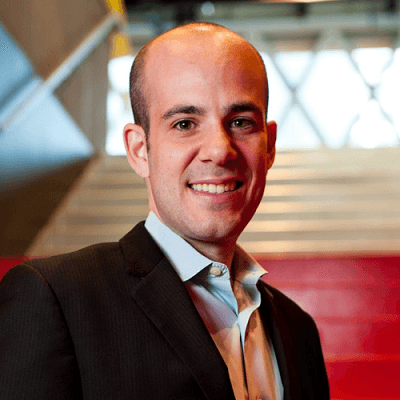
"The pricing conversation has been what's in the press," Todd Lieb, vice president of partnerships at Dell Technologies, told The Forecast in video interview recorded in April at the 2026 Nutanix .NEXT event in Chicago.
"But the reality is it's going to move from price to availability. Who actually has the parts, the components, the ability to deliver to customers over time?"

It is a question that more enterprise IT leaders are asking out loud. Lieb oversees AI infrastructure partnerships. He said Dell deployed more than 4,000 AI factories as of April, evidence that demand for enterprise AI is in full swing. He said buyers are no longer just large cloud providers and hyperscalers. They are banks, manufacturers, healthcare systems and retailers, organizations that have built their operations on predictable procurement cycles and are now navigating something far less orderly.
According to Gartner's May 2026 forecast, worldwide AI spending is on track to reach $2.59 trillion in 2026, a 47% increase over 2025. AI infrastructure alone, the servers, chips, networking and data center capacity required to run AI workloads, is projected to climb from $975.6 billion in 2025 to $1.89 trillion by 2027, nearly doubling in two years. Server spending is forecast to grow 36.9% year over year in 2026, with supply constraints identified as the primary limiting factor to even faster growth. That trajectory makes the supply chain calculus even more consequential: organizations that cannot secure the hardware they need on time risk falling behind competitors that can secure hardware or tap into AI factories or neocloud services.
"You may sweat for six months," he said. "But do you really sweat for two extra years? Now you're introducing different levels of risk."
Storage Becomes the AI Foundation
As enterprises build out their AI capabilities, storage has re-emerged as a strategic priority in ways that echo an earlier era of infrastructure investment. The phrase Lieb used to describe it is simple: "Good data is good AI. Bad data, bad AI."
That principle is reshaping how organizations think about their storage architectures. The three-tier storage model that defined enterprise IT for over a decade, in which compute and storage were tightly coupled, is giving way to disaggregated designs that allow each resource to scale independently. That architectural shift is also driving renewed investment in partnerships like the one between Dell and Nutanix.

Data sovereignty is accelerating the trend. Enterprises operating outside the United States are under increasing pressure, whether from regulators, customers or both, to keep data within defined geographic and jurisdictional boundaries. The result is growing investment in on-premises and sovereign cloud storage deployments.
"Customers are not interested in having the data leave their span of control," Lieb said.
Sustainability as an Operational Imperative
The sustainability conversation in enterprise IT has undergone its own transformation. What was once framed as a corporate responsibility initiative has become an engineering constraint.
Lieb pointed to server consolidation as one of the largest contributors to reduced power consumption in the data center. Compressing nine servers from an older generation into a single modern unit does more for an organization's energy footprint than almost any green initiative mounted from the boardroom.

But on the AI side, the scale of power demand is raising the stakes in a different direction. GPU clusters consume electricity at rates that have drawn opposition from communities near proposed data center sites, and the heat they generate requires active thermal management strategies, ranging from traditional air cooling to more sophisticated liquid cooling systems.
"The sensitivity is very high," Lieb said.
In response, he added, Dell has invested in hardware efficiency so that more computational work can be accomplished within the same power envelope.
The Rise of Operational Telemetry
The tools available to IT teams managing these environments have grown more sophisticated in parallel. The telemetry that once tracked storage capacity and basic performance metrics now captures power draw, heat output and predictive failure signals across components. AI models running on that operational data are helping teams identify optimization opportunities that would not have been visible through manual monitoring.
"The telemetry concept and the ability to read and see data is very different as it relates to what IT teams are looking at," Lieb said.
The result, as Lieb framed it, is an era of optimization that is just beginning to reach its stride.
"Optimization around power and cooling," he said, "not just capacity or speed or performance."

Video transcript:
Jason Lopez: For decades, American companies assumed the technology they needed would always be there. But that assumption is breaking down in the AI boom. The question is no longer what it costs, it's whether you can get it at all.
Todd Lieb: It feels like things are always moving fast in the world, but man, things seem to change almost on a daily basis, whether it's new things happening on the political front, regulatory supply chain changes, all the things that we're wrestling with day to day. And then AI is kind of an accelerator. I think there's a belief of you're either in it and moving quickly to implement it and make it a core part of your business, or you're falling behind. And so that has customers moving quickly.
Ken Kaplan: With a rush to AI, a lot of new stuff, it's expensive. There are also supply chain issues that have added to the complexity or the difficulty. Can you explain how you're seeing people handle this situation of wanting to grow, but also having these constraints come their way?
Todd Lieb: Yeah, for sure. So if you think about on the AI side, the use case conversation is a big one. So we've kind of moved from the Neo clouds and some of the hyperscales of the large buyers really into the enterprise. The enterprise is taking its time, but it is now starting to really move. I mean, as an example, Dell has over 4,000 AI factories that we've deployed, it is starting to pick up. And the key there is kind of getting the value out of the investment. I'm going to invest in a factory. What am I manufacturing? How am I going to take advantage of these capabilities? So that's been kind of the evolution of needs and energetic AI is playing into that. How do agents going to affect and make use of these infrastructure deployments we have? You add in the supply chain changes, and now it's a cost and delivery. And I think what's interesting is that the pricing conversation has been what's in the press. But the reality is it's going to move from price to availability. Who actually has the parts, the components, the ability to deliver to customers over time? And we're seeing customers shift from the cost conversation to the, I need to make sure I have these components, this equipment to help me run my business.


Ken Kaplan: Do you feel like it's more intense than it's been in the past years? And how are people dealing with that?
Todd Lieb: Yeah, so I would say more intense because in November, internally at Dell, we started, like we were really seeing it. It was starting to happen and move. And I feel like the market and the customers are now kind of in their acceptance phase, maybe. You know, before it was like, well, is this really happening? Now they're in acceptance. And so I think they're doing a couple of different things there. We have customers that are pulling in orders, like they're saying, okay, let me invest today so that I can maximize, I guess, my pricing, meaning, I guess, minimize my pricing, maybe there's a better way to say it, and make sure that I have access to assets. I think on the other side of the coin, customers are thinking, hey, I'm going to sweat assets a little longer. I may run something a little longer. But when you have a window that might be a couple of years in terms of supply chain challenges, you may sweat for six months. But do you really sweat for two extra years that now you're introducing different levels of risk? So, you know, we were talking earlier, the idea of de-risking is kind of a key concept that our customers are looking at as they make these decisions.
Ken Kaplan: As an alliance working with partners, how is that applying to storage now? We're seeing a lot of partnerships and new capabilities around storage.
Todd Lieb: Yeah. So there's kind of a phrase within the world of AI, which is good data is good AI, bad data, bad AI. So all of a sudden, data is sexy again, right? It's interesting. And that then ties back to storage. So what we're seeing is, you know, back in the day, we had three-tier storage, bare metal, et cetera, et cetera. Then we kind of went through the ACI phase. And what's required today is the ability to scale, compute, and storage separately. So you kind of have to pull them apart again so that you can grow them, separate them, apply what you need when you need it. That's now playing into our relationship with Nutanix and across the board. So storage now becomes kind of the key repository for the data that's needed for AI, rest of the business, as always. And then the other thing that's changed is sovereignty. So if you go outside of the US, Canada, Europe, Asia, wherever it may be, customers are not interested in having the data leave their span of control or the areas that they control it in and go into areas where they don't. And so we're seeing investment and focus on where that data lives and sits, i.e. storage, more so than we have in the past.

Ken Kaplan: Now let's talk about sustainability. How has that evolved, your perspective on it and what you're seeing happen? What's changing around sustainability, especially with AI and the rush to use more compute?
Todd Lieb: I think sustainability has always been important. I think it's moved from being kind of a green, feel-good-as-a-company type of perspective to an imperative as it relates to how you deliver compute and storage to the business. And I say that, and here's what I mean. You can take 14, 15G servers, a couple generations ago, nine of them you can compress into a single 17G. So what does that do? Well, it uses less power, less cooling, and it frees up data center floor space. So we see huge consolidation, which doesn't sound like a sustainability play, but it has big impact on the power consumption. Then on the AI side, the press is all about, you know, so-and-so wants to build a data center in my neighborhood, in my backyard. I don't want that. It's going to consume all of my power. And so the sensitivity is very high. So whether you choose to do air-cooled or liquid-cooled or whatever it may be, what Dell is doing is investing even more and more into the efficiency of the assets that we provide so that we can fit more into the same, let's call it, envelope of power usage or maintain heating and cooling within reasonable boundaries, et cetera, et cetera. But it's a hot topic everywhere, especially with how much heat the AI chips give off the GPUs and how much electricity they consume.
Ken Kaplan: And how about the IT team themselves? Are there more tools for them to manage the consumption that they need or will need?
Todd Lieb: A million percent. So this idea of telemetry used to be, you know, is my storage array full or not full, right? Half full, three-quarters full, whatever. Is it performing at a high level? Now it's how much heat is it giving off, how much electricity it's consuming, disks that may be out of line, chips that may be, right? So the telemetry concept and the ability to read and see data is very different as it relates to what IT teams are looking at. Then they're applying AI models on top of that log data, so to speak, to say, okay, what can I tweak to make it more efficient? So it's actually getting very sophisticated.
Ken Kaplan: That sounds like the optimization era is really kicking in.
Todd Lieb: But optimization around power and cooling, not just capacity or speed or performance.
Related:
From Vision to Reality: AI Factory Solutions for Government and Enterprise
AI in the Modern Enterprise with Dell and Nutanix
Nutanix CEO Stokes Surge in IT Ecosystem Partnerships

Jason Lopez is executive producer of Tech Barometer, the podcast outlet for The Forecast. He’s the founder of Connected Social Media. Previously, he was executive producer at PodTech and a reporter at NPR.
Ken Kaplan contributed to this story. He is Editor in Chief for The Forecast by Nutanix. Find him on X @kenekaplan and LinkedIn.
Related Articles