The 2025 Enterprise Cloud Index Report highlights the transformative impact of artificial intelligence (AI) applications on productivity and efficiency across industries. The report found that nearly 85% of responding companies already had a GenAI deployment strategy in place and 55% were actively implementing it. The shift to AI is happening in the public sector, too, including inside major education institutions. At Dartmouth College, IT modernization efforts are allowing the Ivy League school to onboard AI capabilities for research in fields like medicine, neuroscience and environmental science.
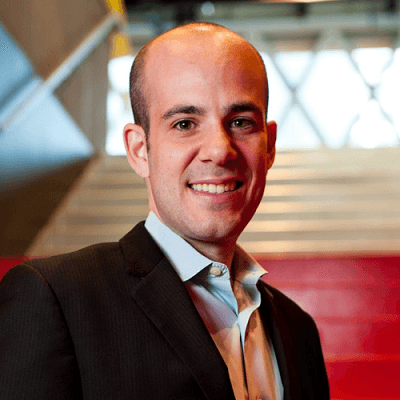
“We have some of the best faculty in the world that really have some challenging needs. They all want access to some sort of AI,” said Ty Peavey, director of Infrastructure Services at Dartmouth College, in an interview with The Forecast recorded at the 2025 .NEXT conference in Washington, DC.

“I really believe in treating AI as a tool. It's a way to do things easier, faster, better, but at the end of the day, the human really matters.”

In this video, Peavey discusses the adoption of AI after transitioning from a traditional 3-tier IT architecture and VMware software to HCI managed with Nutanix Cloud Platform software.
“We dodged the Broadcom bullet a bit and we're in a really good place and we're really happy about that decision,” Peavey said, referring to his team’s decision to move from VMware to Nutanix software in 2021, prior to Broadcom’s acquisition of VMware.

Peavy talked about using Nutanix software, including the Nutanix Kubernetes Platform (NKP) solution, to manage virtual machines (VMs) and cloud native technologies such as containerized applications.
“We brought in Kubernetes about a decade ago, really kind of some niche places that we could roll out containers,” Peavey said. “Today we have over 400 containers, over four Kubernetes clusters.
“I think we'll always have a fair amount of full VMs, but we anticipate supporting more and more containers. We'll see that number grow as well.”
He said the transition from traditional siloed roles to a more dynamic, container-based approach has improved job satisfaction and operational flexibility by providing a more cohesive and efficient technology stack.
Learn how Dartmouth College moved to Nutanix software in this case study: The Quiet Revolution Behind Dartmouth’s Infrastructure Transformation.

Transcript
Ty Peavey: Some people have the thought process that AI may replace what they do every day, and then there's others that look at it to elevate what we do every day. And I kind of am in that camp. I really believe in treating AI as a tool. It's a way to do things easier, faster, better, but at the end of the day, the human really matters.
Jason Lopez: The 2025 Enterprise Cloud Index Report found that AI applications are driving productivity, automation, and efficiency across industries. At Dartmouth College, an Ivy League Research University in Hanover, New Hampshire, that trend is playing out in real time. Ty Peavey Dartmouth's, director of Infrastructure Services, explains how his team uses Nutanix software to modernize IT operations and support researchers who increasingly rely on AI in fields such as medicine, neuroscience, and environmental science.


Ty Peavey: We have some of the best faculty in the world that really have some challenging needs. They all want access to some sort of ai. Some of 'em have small budgets, some of 'em have large budgets, and it's really been a challenge to try to help them adopt LLMs into their research these days. And so as we look at tools like Nutanix and what we're seeing there, we're hoping to see that simplified somewhat and maybe commoditize and get access to LLMs on-prem early. It does take a lot of effort to help translate what they're looking for and really appreciating the kind of resources both from people and hardware of how to deliver that. There's also a lot of need to access AI with our vendors like Azure and with AWS. And so we try to facilitate those conversations as best as possible. We have a research group that also does infrastructure, and they're kind of the pioneers. They're the early adopters. They really paved the way for more of the generalists, like my team, to learn about AI.

One of the things that we've done recently as more of a team building is we've worked with them to use some of the hardware that they've gotten under research to build our own infrastructure LLM. Really the goal is to try to understand the vocabulary, understand the platform and the architecture. What are the layers that go in to bringing in your own LLM? And really training it is the other thing. We have this fun approach that we want to take all of the documentation, all of the tickets we've processed over the years and train our LLM so that we can ask it all kinds of questions that we do every day. So it's a lot of fun. We'll do it for a while and we'll take it down and then we'll move on to the next thing.

We've traditionally had really siloed roles dedicated to storage, Linux, windows, all of these job descriptions that were very unique. And so when we got away from three-tier technology and moved into hyperconverge, we were able to break those walls down. I'm very proud of that, and I think my team has adopted it quite well. We no longer have a Windows sys(tem) admin. You may be on my team and work on Kubernetes in the morning and Nutanix in the afternoon. We brought in Kubernetes about a decade ago, really kind of some niche places that we could roll out containers. Today we have over 400 containers, over four Kubernetes clusters. Two being in Nutanix with NKP and two being in EKS. We find the adoption is great. I think we'll always have a fair amount of full VMs, but we anticipate as our application location start supporting more and more containers. We'll see that number grow as well. And I think what we've found in that is really good job satisfaction. People like what they're doing. It is challenging at times a good challenge. And Nutanix has really helped facilitate that for us. I mean, we've dodged the Broadcom bullet a bit and we're in a really good place and we're really happy about that decision.


A number of things have shaken up the market and shaken up the technology. Definitely the acquisition of VMware from Broadcom is a first for me in my 30 years. Supporting infrastructure, adapting to that and trying to come out from the other side with an equal or better technology stack for our users has been really important. At the time, Nutanix and I think still does, you can buy it with AHV or you can buy it with VMware. And we literally took a vote in my staff like, okay, you've, you've seen VxRail, you've seen Cisco's product, you've seen HP's product, now you see Nutanix. What are we going to do? And we unanimously said, yeah, let's go Nutanix and let's go AHV. Let's go all in. And it was a bit of a shock. I didn't expect it, but it was unanimous. And the transformation had, I don't want to say easy, but it wasn't bad. There was a lot of similarity to concepts that we already knew. A lot of the fears were just in our head. So I would say it was an easy adoption, if you would. My team will probably hate that I said that, but it is. I think we were better for it, and I think Dartmouth is better for it.

Editor’s note: Learn more about the Nutanix Cloud Plaform and Nutanix Kubernetes Platform capabilities.
Jason Lopez is executive producer of Tech Barometer, the podcast outlet for The Forecast. He’s the founder of Connected Social Media. Previously, he was executive producer at PodTech and a reporter at NPR.
Ken Kaplan contributed to this video. He is Editor in Chief for The Forecast by Nutanix. Find him on X @kenekaplan and LinkedIn.
© 2025 Nutanix, Inc. All rights reserved. For additional information and important legal disclaimers, please go here.
Related Articles