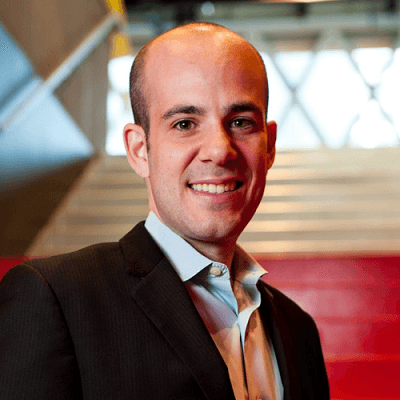
A 50-terabyte database migration should not take 12 hours of downtime. A backup and restore cycle that consumes most of a working day should not be the norm. Yet for Musab Umair Malik, senior database consultant at Saudi Arabia-based Alinma Bank, and Kurt Richards, database administrator at Penn National Insurance, those were not edge cases. They were Tuesday.
"Once we talk about the roadmap of around like 700 databases and couple of clusters, when we wanted to move from these databases to extend or decentralize, we couldn't do that because we didn't have enough time and it was too complex and too time consuming for us," Malik said during a press briefing at Nutanix's .NEXT 2026 conference.

The scale of the problem was not abstract. At Alinma Bank, building a single Windows Server failover cluster from scratch took two weeks under standard processes. The bank's largest database, a 60-terabyte system used for application logging, once generated disk latency readings of 15,000 milliseconds, the threshold at which SQL Server crashes. For Richards at Penn National Insurance, the daily backup and restore cycle was consuming six to eight hours, forcing project teams to wait and slowing testing schedules to a crawl.
Those numbers tell a story about enterprise database management that is playing out across industries. According to Ashish Mohindroo, general manager and senior vice president of the Nutanix Database Services platform, the erosion of hands-on DBA capacity is compounding the technical challenge.
"I've seen a lot of retirements in our company and I'm sure a lot of other companies are going through the same thing," Richards said, capturing a dynamic Mohindroo confirmed is reshaping the enterprise IT workforce. That knowledge walking out the door — familiarity with legacy storage architectures, institutional memory of how systems were provisioned — is not easily replaced.

For organizations in regulated industries, the obvious workaround of migrating to a cloud-managed database service is not available.
"In certain regulated industries, it's a mandate because of data residency laws and so on that you cannot even go to the cloud," Mohindroo said. "So that managed database option is not really even available to you as well."
Banking and insurance organizations, precisely those most likely to carry the largest and most complex database estates, are the same organizations most constrained in their infrastructure choices.
That is the operational context NDB was built to address.
"What we are really doing with NDB is giving that same cloud-like experience to our customers so they can get the database automation on their on-premises data centers or on the public cloud as well," Mohindroo said. Nutanix Database Services supports Oracle, SQL Server, Postgres, MySQL and MongoDB — the five most widely deployed enterprise databases.
The before-and-after numbers from Alinma Bank are striking. A migration that once required 12 hours of downtime now completes in under one hour. Average disk latency dropped from 1,000 milliseconds to 0.4 milliseconds. The bank now runs more than 30 applications logging through that central database with, as Malik put it, no downtime. Even patching — long one of the most risk-prone DBA activities — now succeeds roughly 90% of the time on the first attempt, and the 10% that do not succeed do so without triggering downtime.


At Penn National Insurance, the change was equally direct.
"Our 12-hour process to back up and restore these databases we're now taking just a few minutes, which really opened up things for us," Richards said.
Beyond raw performance, the shift that Mohindroo emphasizes is one of governance. Automating provisioning means every database is built to the same specifications from the start.
"Every time they set up a new database, it was set up to the right specs," he said. "That's when issues happen on databases, [when it’s] not provisioned right. You don't have enough memory, you don't have enough storage, whatever it may be, now you're enforcing that."


The long-term vision, as Malik described it, is simple to state and difficult to achieve.
"The long-term goal is to enable automation of all the manual tasks we used to do with the classic DBA."
That transition from a hands-on operator to a strategic architect overseeing automated operations is not just a workflow change. It is the prerequisite for any enterprise that wants its database infrastructure to keep pace with the AI workloads being layered on top of it.
Editor’s note: Watch the video and read the Nutanix Customer case study: Penn National Insurance Deploys Nutanix Hybrid Multicloud Platform Across On-Prem and AWS

Podcast transcript:
This Tech Barometer Podcast was recorded in April 2026 at the Nutanix .NEXT event in Chicago. Jason Lopez is host. Kurt Richards is database administrator, Penn National Insurance. Musab Umair Malik is senior database consultant, Alinma Bank. Ashish Mohindroo is general manager and SVP, Nutanix database services platform.
Kurt Richards: I've seen a lot of retirements in our company and I'm sure a lot of other companies are going through the same thing.
Jason Lopez: It's not about AI taking jobs and it's not about whether older workers can keep up. Those retirements can be translated to knowledge walking out the door, knowledge the IT team needs to deal with the complexity of databases.
Kurt Richards: Previously that storage guy, he retired long ago that was familiar with our old storage system. Had a couple DBAs retire. It's in every area. If I could sum it up, it's doing more with less now.
Jason Lopez: That's the voice of Kurt Richards, database administrator at Penn National Insurance. He was one of the featured speakers at Nutanix's 2026 NEXT conference along with Musab Umair Malik, senior database consultant for Saudi Arabia-based Alinma Bank. This is the Tech Barometer Podcast. I'm Jason Lopez. The life of a database administrator involves a lot of vigilance, which means patching, migrating, cloning, and recovering systems through processes that are often fragile and take a lot of time. And for DBAs, time is one of their top issues.

Musab Umair Malik: This kind of issues stopped us from growing. Once we talk about the roadmap of around like 700 databases and couple of clusters, when we wanted to move from these databases to extend or decentralize, we couldn't do that because we didn't have enough time and it was too complex and too time consuming for us.
Jason Lopez: Mosab says a database that could have taken hours was taking days. A migration that could have been routine had become a crisis.
Musab Umair Malik: It was around 50 terabytes. It used to have around 12 hours of downtime for the migration. We actually decentralized all the systems from a single Windows server failover cluster to around 25 Windows server failover clusters. There was like storage and infrastructure performance bottlenecks and we were not able to decentralize because a single Windows cluster would take around two weeks. This was the standard time to build the Windows clusters.
Jason Lopez: And then there was the latency. In database terms, latency is the lag between a request and a response. You can sense a lag of a thousand milliseconds, that's about a second, but at 15,000 milliseconds the system can crash.

Musab Umair Malik: The largest database we have is around 60 terabytes, 6-0. And this is a central database which is used for logging different applications. And previously when we used to have this database at around 10 terabytes, we had performance issues. The disk latency, the worst case was like 15,000 millisecond of latency and SQL Server Crash. This is the threshold for SQL Server.
Jason Lopez: The safety net you have to have in database operation, which is backup and restore, had become its own bottleneck. Kurt described his experience in terms of whole working days, keeping project teams waiting.
Kurt Richards: Backup was taking six, seven, eight hours. Then the restore was taking another amount of time like that and it just wasn't working. We needed to turn that around quickly every day and keep the project teams up on their testing schedules.
Jason Lopez: You can take your database to the cloud and have someone else deal with its complexity. There are managed database services such as AWS, Azure, and Google. You can take it to them, but not everyone has that option.

Ashish Mohindroo: In certain regulated industries, it's a mandate because of data residency laws and so on that you cannot even go to the cloud. So that managed database option is not really even available to you as well.
Jason Lopez: Ashish Muhindru, who leads Nutanix database services, told the gathering that databases are too critical and too complex to leave to improvisation. We're now at an inflection point, shifting the database administrator who's faced with doing more with less from a hands-on IT role to that of an architect of sorts, overseeing the operation. Solutions such as Nutanix's NDB were built to fill this need.
Ashish Mohindroo: What we are really doing with NDB is giving that same cloud-like experience to our customers so they can get the database automation on their on-premises data centers or on the public cloud as well and then be able to deliver the kind of productivity gains and cost savings that comes along with that. You can think about it as managed database services without the control of the cloud but the flexibility on their own terms. All of the top five most popular databases are supported on NDB today. So you can have Oracle, SQL Server, Postgres, MySQL, and MongoDB.
Musab Umair Malik: When we use the same database to migrate from the old infrastructure to NDB, it took less than one hour.
Kurt Richards: Our 12-hour process to back up and restore these databases we're now taking just a few minutes, which really opened up things for us and really allowed us to take the testing process a little bit further.
Musab Umair Malik: Now we have around 30 plus application logging everything and from the thousand average millisecond, now we have a 0.4 average millisecond of latency. That's a huge success for us and we are able to expand even further.
Jason Lopez: Beyond the improved stats, another change was the way the databases were maintained, less improvised and more consistent.

Musab Umair Malik: After moving to NDB, for the applications we don't have any downtime as of now. And it's not only that once we do the patching, it is always successful like 90% of the time it is successful, 10%. Even when it fails, there is no downtime.
Jason Lopez: That shift to automation that Musab and Kurt experienced shows it's not only about the performance leap and better uptime, but especially about supporting best practices. Every database adheres to the same standards.
Ashish Mohindroo: Every time they set up a new database, it was set up to the right specs. That's when issues happen on databases is not provisioned right. You don't have enough memory, you don't have enough storage, whatever it may be, now you're enforcing that.
Jason Lopez: As Musab put it, the goal is simple to describe and hard to achieve.
Musab Umair Malik: The long-term goal is to enable automation of all the manual tasks we used to do with the classic DBA.
Jason Lopez: Musab Umair Malik is a senior database consultant at Alinma Bank. Kurt Richards is the database administrator at Penn National Insurance. Ashish Muhindru is the general manager and SVP of the Nutanix databases services platform. Ashish has spent 30 years watching enterprise technology reinvent itself starting in CRM and e-commerce and for the last several years he's been helping shape what comes next at Nutanix. You might check out the article at the forecast entitled Mastering a Myriad of Databases in the AI Era, which features Ashish, as well as the video, how AI is reshaping database management. You can find those stories and more at theforecastbynutanix.com. That's the forecast by Nutanix, all one word.com.

Jason Lopez is executive producer of Tech Barometer, the podcast outlet for The Forecast. He’s the founder of Connected Social Media. Previously, he was executive producer at PodTech and a reporter at NPR.
Ken Kaplan contributed to this podcast. He is Editor in Chief for The Forecast by Nutanix. Find him on X @kenekaplan and LinkedIn.
© 2026 Nutanix, Inc. All rights reserved. For additional information and important legal disclaimers, please go here.
Related Articles