For the nearly 30 million people around the world who live within 10 kilometers of an active volcano, advance warning of an eruption can mean the difference between life and death. Researchers do their best to forecast upcoming events using seismic data collected at volcano observatories, and have started training AI predictive models to recognize signs like magma movement, gas buildup and rock fracturing.
Most volcanoes have few if any eruptions on record in the modern era, however, which means there isn’t much data to train predictive models on individual sites. That’s why an international team created a new AI tool to use data from active volcanoes to predict eruptions at less active ones.
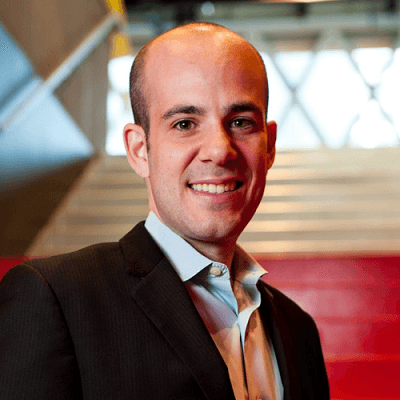
“People say that volcanoes have personality, which implies you need to develop a tailored [predictive] system for each one,” said Dr Alberto Ardid, who led the research at the University of Canterbury.

“We’re challenging that idea, looking at whether volcanoes share characteristics that can be exploited for the purpose of forecasting.”
The team looked at continuous seismic data from 24 volcanoes around the world, including 41 major eruptions over 73 years. The real-time and historical dataset, available from public servers, was resampled into a series of 10-minute averages, which reduced its size from gigabytes to about a hundred megabytes.

They used a technique called time series feature engineering to make the data more useful for model training, applying machine learning tools such as random forests to tease out which parameters out of hundreds were most relevant in the 48 hours leading up to an eruption.
“With most natural hazards, the real-time data looks chaotic, but AI helps us make sense of the apparent randomness, finding meaningful information in something that is just complex,” Ardid said.
Their results showed that eruptions at different volcanoes do share common precursors, meaning that a model trained on one group could successfully predict eruptions at another. For example, high-frequency oscillations that showed up before eruptions at Mt. St Helens in Washington also appeared before eruptions at Semisopochnoi and Augustine in Alaska.

Overall, the ML model results were as accurate as existing site-specific models and better than traditional tools like Real-Time Seismic Amplitude Measurement (RSAM).
“Just as doctors learn patterns of disease across populations to help diagnose an individual patient, we [can] train AI on many volcanoes so it can recognize warning signs even at a new one,” Ardid said.
These models could make it easier to forecast eruptions in regions that don’t have extensive historical records or monitoring networks, such as Indonesia, the Philippines and South America – even at volcanoes without any recorded eruptions. They could be especially useful with smaller eruptions, which are harder to predict since they don’t show as many precursors over time.
“We intentionally developed the tool to be simple so it can be implemented as quickly as possible,” Ardid said.

It was coded in Python and can be run on a laptop with data from a single seismic station. He is already working with observatories around the world to show them what the system can do and, most importantly, that it’s both easy to use and dependable.
“The real challenge is building trust,” Ardid said. “Most people at observatories aren’t AI experts. To be useful, these tools must simplify things for the people who are going to use it, not add more layers of complexity.”
“In the end, it’s about saving lives,” Ardid said. In New Zealand, that’s a very real concern. Ardid won the 2024 New Zealand Geophysics Prize for his research on seismic precursors of the 2019 Whakaari eruption that claimed 22 lives off the coast of the North Island.
Ardid also explored using AI to predict other natural disasters. Earlier this year, he co-authored a proof-of-concept paper using machine learning and weather station data–temperature, humidity, wind speed and direction for real-time wildfire forecasting on Australia’s Sunshine Coast.

He said the principle is essentially the same as with volcanoes and the technique seems to work as well or even better.
“The models can identify subtle precursors to ignition risk that traditional daily indices miss, and they significantly outperform existing fire danger indices.”
Ardid has also done preliminary work on floods. Earthquakes are another story, since they are usually preceded by an absence of precursors: a geologic fault locks up and accumulates stress until everything moves all at once.
“My view is that earthquake prediction at short horizons is not currently feasible,” Ardid says.
In the meantime, he said the goal is to get the new predictive tool into the hands of as many volcano observers as possible.
“By using AI to learn from many volcanoes at once, we can strengthen early warnings everywhere, turning scarce data into actionable knowledge that helps protect people and communities.”

Julian Smith is a contributing writer. He is the executive editor Atellan Media and author of Aloha Rodeo and Smokejumper published by HarperCollins. He writes about green tech, sustainability, adventure, culture and history.
© 2025 Nutanix, Inc. All rights reserved. For additional information and important legal disclaimers, please go here.
Related Articles