Technology like deep learning is capable of incredible things, including, perhaps, curing sick children.
Take focal cortical dysplasia, for example. It’s a genetic brain condition that causes drug-resistant epilepsy in children. The condition is serious, but treatable. If doctors identify the abnormalities in medical imaging scans, they can often remove the affected brain cells, reducing or even eliminating the child’s seizures. The problem is: There aren’t enough pediatric specialists to diagnose this and many other conditions.
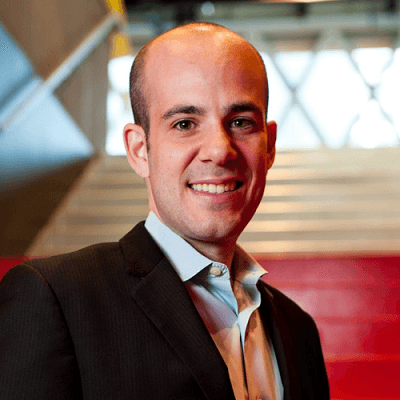
Artificial intelligence (AI) could help by automating and augmenting care that’s normally provided by human doctors, suggests former technology executive Dr. Timothy Chou. The first president of Oracle’s cloud computing business in the early aughts, he came out of retirement in 2020 to establish Project Moonshot, an initiative whose mission is using AI to reduce healthcare inequity, lower healthcare costs and improve patient outcomes for patients in children’s hospitals across the United States.

Under the auspices of Project Moonshot, Chou is now partnering with medical experts to revolutionize pediatric healthcare by building a distributed AI infrastructure to support applications that can detect common conditions and rare diseases in real time.
A Gap in Pediatric Expertise and in AI Infrastructure
Although many pediatric diseases are rare, early detection can make a life-changing difference in outcomes. It’s not just rare diseases that threaten pediatric patients, however. Kids also are dying from common, treatable diseases like pneumonia, which is the largest infectious cause of death in children worldwide, according to the World Health Organization.
“Sixty percent of the rural counties in the United States have zero pediatric expertise,” Chou said.
“Three states in the union have no pediatric emergency physicians whatsoever. There are only 3,000 pediatric cardiologists in the United States. If you go to India, there are 300. And if you go to Rwanda, there’s one in the whole country.”


Advanced technology, including neural networks and agentic AI, could help alleviate the pediatric expertise shortage. But first, the right infrastructure is needed.
“AI relies on massive amounts of data, fast processing power, and quick and easy integration with existing systems, all of which demand a robust and scalable infrastructure,” said Leah Gabbert, marketing director, global industry solutions, at Nutanix.
“Without it, AI tools can’t perform efficiently or securely, which is especially important when protected patient data and regulatory requirements are involved.”
The healthcare industry currently relies on fragmented systems and data silos. That makes it difficult to share data with the kinds of apps that could do valuable tasks like flagging medical images in which there are signs of disease.
“The data sizes are much larger [in healthcare],” said Chou, whose experience as a former tech executive and a longtime professor of cloud computing at Stanford University gives him the expertise to build a solution to the infrastructure challenges facing AI in healthcare. “Security requirements are much tougher, and privacy requirements are much stricter.”

In the typical AI ecosystem, for example, in consumer-facing generative AI tools like ChatGPT, algorithms ingest data from external sources for processing. But that kind of centralized approach doesn’t work for healthcare. And it’s especially maladaptive in situations such as ultrasound imaging, which provides real-time visualization of the heart.
“There are many key considerations when looking to build the right infrastructure, like scalability, data security and interoperability,” Gabbert said.
“What sets healthcare apart from other sectors, though, is the need for real-time processing. AI applications in healthcare require this real-time processing, like in diagnostics or patient monitoring. The infrastructure must handle this quickly and reliably.”
Building the Right Infrastructure for AI in Healthcare
Instead of moving external data into healthcare applications, Chou is bringing the applications directly to data sources.
“We have engineered a distributed AI cloud infrastructure, which literally puts a cloud server in the building at Children's Hospital of Orange County, for example,” he said. "The only way to get access to real-time data coming off of an ultrasound is to be on the network with the ultrasound.”
Because healthcare information is sensitive, Chou emphasizes the importance of privacy and security measures, such as putting Pediatric Moonshot’s servers on a separate virtual local area network (VLAN) within the clinic or hospital network and ensuring that data going out of the system is encrypted and sent over a virtual private network (VPN).

The infrastructure also includes digital twins that can replicate data from medical devices, capturing static, dynamic, environmental and actual imaging data. This allows the infrastructure to interface directly with medical devices. The digital twins present the data from different devices in a standardized format so applications can successfully analyze data from instruments like blood analyzers regardless of what company makes the device.
Infrastructure that’s engineered in this manner gives hospitals control over which AI applications they share data with, implementing “purpose limitation” to restrict how the data can be used. Chou and his colleagues are working with technology partners to add a federated learning component to the technology stack so AI models can learn without the data ever leaving the local environment. They also are working on providing inferencing services within their infrastructure to make it easier for applications to leverage techniques like distillation, quantization and pruning for running AI models in lower-resource environments like remote hospitals that have limited computational power.
The Future of AI in Healthcare
While there remain significant challenges with implementing AI in healthcare, collaboration between technical experts and medical professionals is making it possible to bring AI into healthcare facilities. By bringing AI applications to data instead of the other way around, Pediatric Moonshot’s distributed infrastructure helps overcome barriers that heretofore have limited AI adoption in medicine, including data privacy, security and real-time access.

Where this approach to infrastructure exists, AI already is helping address practical, everyday challenges.
“We see that AI-driven chatbots can handle administrative tasks, triage patient questions, provide basic care advice and help in managing chronic conditions like diabetes or hypertension,” Gabbert said.
“Likewise, AI-driven administrative automation can streamline administrative tasks such as billing and scheduling. Both opportunities can dramatically reduce administrative costs, ease the burden on healthcare professionals, minimize human error and improve the patient experience.”
This is only the beginning of an exciting time for ambitious healthcare goals, according to Chou, who stressed the enormity of the opportunity for AI in pediatric healthcare: With 1 million healthcare machines processing data securely in some 500 children's hospitals worldwide, there’s no limit to the good that technology can accomplish on behalf of young patients.

Kelly McSweeney is a science and technology writer who turns complex topics into compelling stories for B2B companies and scientific institutions. With a background in scientific publishing and a master’s in writing, she specializes in conducting engaging interviews and translating expert jargon into compelling stories.
© 2025 Nutanix, Inc. All rights reserved. For additional information and important legal disclaimers, please go here.
Related Articles