In the burgeoning femtech sector, technology leaders are finding that cloud computing provides both the power needed for the analytics Femtech users expect, but also the guaranteed security this, often very personal, information requires.
The rise of mobile devices, wearable technology, and the cloud computing infrastructure that supports these has led to the creation of Femtech, a portmanteau of female technology. Femtech uses technology to help women manage their health, including menstrual care, fertility, pregnancy and menopause. The term femtech, coined in 2016 by Clue Co-Founder Ida Tin, refers to products and services supporting women’s health, according to Innovation Magazine, which listed Levy Health, Allara Health, Comanche Biopharma, Hertility Health, Samphire Neuroscience , Vira Health as the six femtech startups to watch in 2025.
Interest and investment in this industry are growing tremendously, and the market is becoming more competitive, according to Roman Bugaev, CTO of Flo Health, which has been operating for 10 years.
“In order to succeed in this market, you need a good user interface, technology that provides value, and package it in a way that ensures success,” Bugaev said.

Often, femtech companies collect signals from wearable devices, such as body temperature, or enable users to discreetly log and track their bodies through the privacy of a mobile device. Data analytics then combines this data with existing data to provide the user with insight. That insight helps users understand their health and well-being.
The IT industry has evolved rapidly to address these data technology needs of women's wellness companies. For example, Apha 3 Cloud, a Rhoad Island-based IT services provider, created a FemTech Founder program to support FemTech startups with complementary IT guidance, cloud service vouchers, and tailored resources to excel in a competitive market. According to their Website, Alpha3 Cloud provides hybrid cloud, IaaS, and PaaS solutions that help organizations comply with strict data privacy regulations, protect their most sensitive data, control costs and minimize vendor lock-in. The service provider can help companies leverage emerging capabilities like blockchain, machine learning and artificial intelligence.
Reinvestment
By 2034, the Femtech sector is predicted to be worth $75.3 billion, and in 2024, it was valued at $22.1 billion, according to investment research firm Emergen Research. An increased awareness of the importance of female health has spurred venture capital firms to increase their investment in Femtech. Emergen Research found the main reason for Femtech adoption was pregnancy, as mothers-to-be used apps to track ovulation cycles, or artificial intelligence (AI) based tools as part of IVF programmes.

The majority of Femtech services are a direct-to-consumer (DTC) model, which again has promoted adoption, as it has fewer barriers than getting services from health or insurance providers. That said, it is likely that the increased adoption of Femtech will see the sector form close and important partnerships with adjacent sectors such as the pharmaceutical industry, health, and tech providers.
“We are finding investors who understand digital health,” said Jo Goodall, CTO and co-founder of Luna, which helps teenage girls track and learn about periods.
“We initially came up against a lot of resistance, and our area is underfunded compared to fertility, but perhaps that is because it is a longer opportunity for investors.” Luna
Big Data for Managing Personal Health
Femtech companies often collect a wide range of data, especially those apps focused on fertility. Bugaev, CTO of Flo Health, said his organisation used to struggle with different data formats and technologies.
“We have three petabytes of data as we have a large global audience of 80 million active monthly users,” he said.
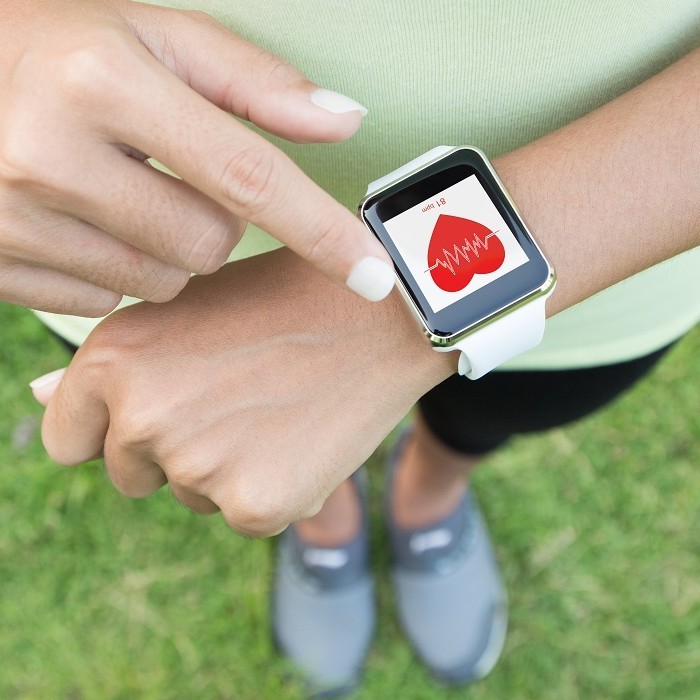
Bugaev said recent developments in wearable technology will benefit the femtech sector, but also increase the levels of data collected. Ring-based devices are not only more attractive than watches but also more comfortable, which means they can be worn in bed, providing femtech with a steady flow of data that can be analyzed for greater accuracy. Behind the devices and apps, AI is helping femtech firms be more proactive in analysing data and sending insights to users.
Safety
As femtech providers collect data of a very personal nature, it is imperative that they guarantee that the data is secure and cannot be compromised, and does not cause anxiety to women.
“Data privacy is a very important part of what we do, as our ethos is built on trust,” said Goodall of Luna.
Luna relies on Google Cloud services for data storage. Goodall believes the success of the femtech sector depends on trust and data security, especially for teenagers.
“There is so much misinformation,” Goodall said. “In the last 15 years, they have gone from no information to a sea of information, and they need to know which information they can trust.”
This has been further exacerbated by the rise of ChatGPT, which samples the internet and reports back in an authoritative voice, yet can and often is hallucinating.
Cloud computing enables Femtech apps to accurately analyse information and send insights and recommendations to the users. Bugaev says this can only be done on the cloud, as it would be too slow if done on the app. He says an optimised cloud infrastructure prevents latency and is configured to respond to the analytical algorithms.
Data privacy will become even more important as Femtech firms use AI. CTO Bugaev believes the sector will not be a rapid adopter of the much vaunted technology.
“I believe it will take time, as we don’t want to use the user’s data,” Bugaev said.
“This is an added layer of complexity because you are protecting privacy, and you want to make sure that you are medically correct and safe.”


He expects Femtech firms to invest in machine learning (ML) and to set strict quality benchmarks.
AI does provide Femtech users with a real opportunity, though, as it increases the number of languages an app can be used in, therefore making Femtech available to a wider audience. The CTOs say this will empower more women.
Powered by Cloud
As Flo Health saw its data sets grow and increase in complexity, it realised the cloud was the only way it could scale and continue to meet the needs of its users.
“As we required more and more sophisticated tools to investigate, build insight, and protect privacy, we looked to the cloud market,” said Bugaev.

This enabled his team to consolidate a disparate environment of different databases, technologies, and hosting into a single data lake using the Databricks technology, hosted on AWS. This provides a single place for historical data and the new data that Femtech customers are generating. A business benefit of a single cloud environment for this data is the ability to analyse all the data and increase the personalization and alerting available to users.
A wave of new devices, analytics, and productivity technologies, powered by the cloud, is set to make Femtech one of the most important technology trends of the second half of this decade.

Mark Chillingworth writes about leaders in business and technology. He’s a regular contributor to Digimonica. Find him on LinkedIn.
© 2025 Nutanix, Inc. All rights reserved. For additional legal information, please go here.
Related Articles