No hypervisor and little to no budget for a pivot to cloud. For a specialty healthcare provider operating on grant funding, where every dollar spent must yield a measurable return, that challenge to build a reliable, scalable IT system is no small feat. Alabama-based Five Horizons Health Services provide it’s not impossible.
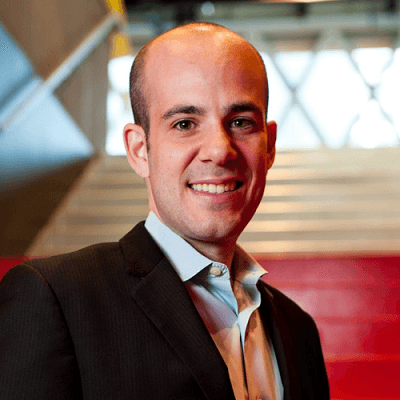
Benjamin Urquhart, CTO of Five Horizons, took that challenge with brave curiosity and decisiveness. In a video interview with The Forecast recorded at the April 2026 NEXT in Chicago, he explained that the healthcare IT modernization strategy was less about chasing the latest platform and more about choosing the right, reliable and scalable system to fit their budget. Urquhart tells how Nutanix Cloud Infrastructure software was an enabler.

Healthcare IT modernization is the process of upgrading clinical and administrative technology systems. Urquhart told the story of how Five Horizons chose an IT platform built on hyperconverged infrastructure (HCI) hardware and software that It could run on-premises.
"Being in the nonprofit sector where we are, we're a specialty healthcare provider, so we have a lot of grant limitations on how we can spend our resources," Urquhart said.
"Because of that, we can't really go, let's go throw them in the cloud, let's do this, let's do that. We had to really look at it from a strategic aspect and go, well, what's my ROI coming back in on this?"
What Made Hyperconverged Infrastructure the Right Fit?
Five Horizons serves more than 3,000 clients across its coverage area and has opened four new facilities in Mississippi and Alabama in the last 18 months, according to Urquhart. The organization now runs more than 53 virtual machines on its Nutanix environment, supporting both research and day-to-day operations. A lean team can spin up a new VM in about 15 minutes.
The decision came down to economics and simplicity. Urquhart had never deployed HCI before, but the model appealed to a team.
"It gives us our hardware, it gives us a hypervisor," he said. "Licensing became much more simplified."


That simplicity matters because Five Horizons has a lean staff that supports not just the Nutanix environment but also backup systems and everything layered on top. HCI collapsed what would have been separate hardware, hypervisor, and management decisions into a single decision. The result was a foundation sturdy enough to absorb rapid growth.
How Did an Acquisition Reshape the Infrastructure Plan?
The growth was not planned. It arrived through a rescue, Urquhart explained. In the fall of 2022, Five Horizons and its board acquired the assets of a failing organization where Urquhart was working. The deal preserved patient care for more than 3,000 clients and retained key staff. Crucially, it also carried over an infrastructure stack that was only half-built.
The three years poured into that infrastructure stack gave the combined team only a tiny head start.
"Hey guys, we're halfway there. We have the cores," Urquhart recalled with a chuckle.
Rather than rebuild, the team changed domains, simplified systems and kept building. The acquisition turned a greenfield project into a brownfield one, and HCI's modular nature let the organization add blocks and clusters as it expanded.
"Now we're at the point where we're looking at additional blocks and clusters because we continue to expand," Urquhart said. "Not necessarily a bad thing."
What Comes After the Foundation?
With the foundation set, Urquhart is thinking about evolution. The next phase leans into virtual desktop infrastructure, containerization and deeper security and compliance work tailored to the healthcare industry. The goal is to squeeze more from the existing hardware by tuning storage, RAM and compute allocation.
"We build an infrastructure to get our foundation and make sure it's scalable" Urquhart said. “We build for today and tomorrow.”
“I have this foundation. I need to kind of break it up and evolve it."
The analogy he reaches for is architectural. First you pour the foundation. Then you stop treating it as a single slab and start raising buildings on top of it.
Video transcript:
Benjamin Urquhart: Nutanix for us was honestly a little bit of an easy call. Organizationally, we had no infrastructure in place as far as server backends, everything like that. Being in the nonprofit sector where we are, we're a specialty healthcare provider, so we have a lot of grant limitations on how we can spend our resources. Because of that, we can't really go, let's go throw them in the cloud, let's do this, let's do that. We had to really look at it from a strategical aspect and go, well, what's my ROI coming back in on this? What type of solutions are we trying to do that's still going to allow us to be scalable and grow? We've opened up four new facilities in the last 18 months between Mississippi and Alabama right now. So being able to have something in house with Nutanix for us was great. It was HCI platform, something I'd never done, but let's go.
It gives us our hardware, it gives us a hypervisor. It's different, but let's give it a shot. Licensing became much more easier or simplified. There we go. Nutanix allowed us to go from really not having an internal infrastructure to running over 53 VMs right now internally from different internal resources, whether they're part of our research environment or our true day-to-day activity. So it's been a great marriage from that aspect, I would say, like partnership. It's allowed us to grow and be scalable, but also secure and understanding where our data is and how it lives within our ecosystem.
Ken Kaplan: From that time that you've got things going to the 57 VMs out there, what was that time span and how did things change?
Benjamin Urquhart: So it was a very unique instance actually. I was working for another organization very similar to five Horizons Self-Services and that particular organization was failing. Five Horizons and their board and our CEO, they came in. We had over 3000 clients in our coverage area for that particular organization. They bought all of our assets, everything like that. We retained certain staff members and we didn't close the doors once in the fall of 2022. So from that angle, it was great because we have this infrastructure here that we had already started building with this company. Now we're going to Five Horizons because they've acquired our assets and being able to keep the doors open for patient care.It was almost like having where the starting line was on your infrastructure instead of completely starting over again like I had the three years before that. Oh hey guys, we're halfway there. We have the cores. We're changing domains. We were changing simplified things. So for us it's just allowed that ability. The biggest push because we already had it was now we're at the point where we're looking at additional blocks and clusters because we continue to expand. Not necessarily a bad thing, but it allows us that ability to keep everything in a manner that we know we can do. We have a very lean team that really have to support not just our Nutanix environment, but our backup environment and everything else on top of it. And Nutanix has really simplified that. I mean they can spin up a new VM now in about 15 minutes from them, which is fantastic. There's a lot less time and delay because of how HP operates.
Ken Kaplan: Now you're like a veteran almost with HCI and what have you learned and what do you want to try next?
Benjamin Urquhart: So some of those things are coming from here right now this week and some of that is kind of going more into the VDI world maybe on top of the Nutanix platform running into HV, doing some more virtualizational pieces around our security and compliance that would help dealing with the industry we're in. Looking at things like that, the containerization aspect, allowing us to spin up more things from an application aspect and having a better use case of our hardware equipment or allocation of whether we're talking storage or our RAM compute, allowing us to trim line those into things like that is really, I guess evolutionary. It's like we build an infrastructure to get our foundation and make sure it's scalable. We build for today and tomorrow where we're going, make sure it's a foundational piece. Well now you also have to look at it and go, I have this foundation.
I need to kind of break it up though and let's evolve it. Let's allow that foundation to evolve and now we're just building buildings out of our infrastructure stacks.
Related:

Jason Lopez is executive producer of Tech Barometer, the podcast outlet for The Forecast. He’s the founder of Connected Social Media. Previously, he was executive producer at PodTech and a reporter at NPR.
Ken Kaplan contributed to this story. He is Editor in Chief for The Forecast by Nutanix. Find him on X @kenekaplan and LinkedIn.
© 2026 Nutanix, Inc. All rights reserved. For additional information and important legal disclaimers, please go here.
Related Articles