Today, a flurry of international currencies transact digitally in a blink of an eye.
Although blinking takes less than a second, even that’s too long a wait for foreign exchange traders to receive market intelligence. While international currencies do not shift much on a macro scale in a matter of minutes, FX trading — using a technique called tick to trade — capitalizes on both micro movements and volume. And when trillions of dollars are at play, even the smallest changes can produce substantial profits for those who make the right moves.
Singapore-based Spark Systems understands this need for speed. As an FX aggregator, it gathers currency pricing from a number of financial institutions for FX traders to act on. Traders choose Spark because it provides them with the rapid-fire intelligence that they need.
But traders don’t just turn to Spark because it provides them with rapid-fire intelligence that they demand.
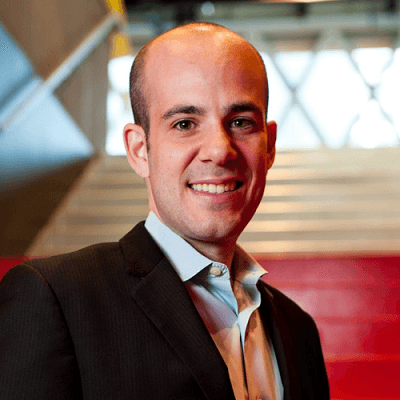
“We need to be in the sub-millisecond space,” Spark Systems Chief Operating Officer Chaitanya Peddada told The Forecast in a video interview at the 2025 .NEXT conference in Washington DC.
“Customers want the best tick-to-trade ratio and the best available price.”
He said Spark Systems modern IT capabilities, which it manages, make it happen securely and reliably. Confidence in their IT system’s ability to scale is driving their company to grow.
Location, Location, Location
Peddada said Spark Systems is based in Singapore for strategic business reasons. After all, the city-state recently toppled San Francisco to become the world’s top hub for hypergrowth startups, according to the 2025 Hypergrowth Startup Index. Government initiatives have buoyed growth with a keen focus on startups.
The startup ecosystem in Singapore and the wider Asia Pacific region includes exactly the B2B customers Spark serves: hedge funds, financial institutions and brokers. Locating Spark in Singapore helps these regional clients. After all, FX trades that originate in Singapore would otherwise have to travel to London or New York and back — a trip that can take upward of 300 milliseconds. A similar round trip to Tokyo is shorter but still upward of milliseconds.

Because FX trading can’t afford such latency, “having the right platforms in place and being at the right locations … is extremely important,” Peddada said.
Additional Constraints
Low latency might be everything in the FX trading market, but it’s by no means the only challenge Spark Systems faces.
FX trading markets are open 24 hours a day, five days a week — which actually translates to five and a half days for global traders, who typically trade across multiple time zones. Maintaining latency without downtime for nearly six days a week is not easy and requires resilient software, operating systems and virtual machine (VM) infrastructure. Upgrades, if any, need to occur within a very narrow window.
Because the financial sector is a tightly regulated space, Spark also must comply with government regulations. Banking clients impose additional security and data storage requirements. To comply with their mandates, Spark hosts its own hardware and customer data on-premises rather than in the cloud.

Stringent regulations mean “it’s very important that we work with the right partners from the operating system to the VM level through the entire infrastructure stack,” Peddada said.
Partnering with Nutanix
To maintain its edge, Spark Systems needed to modernize their IT infrastructure powering its software-as-a-service (SaaS) FX trading solutions. Peddada explained that as operations continually scaled, the three-tier infrastructures across its data centers were becoming increasingly complex to manage.
Peddada said Spark chose Nutanix to help it move from a three-tier IT model to a more compact hyperconverged infrastructure (HCI) platform. The company wanted a flexible architecture that simplified management, improved scalability, reduced costs, complied with financial services regulations, and laid a foundation for future hybrid cloud setups.
The move has delivered significant advantages.
“It has enabled us to get rid of all our data storage costs and leverage what Nutanix can provide,” Peddada said. “This has also allowed us to free up rack space within our data centers and we’re now able to put in at least double the amount of servers in the same rack, which saves us a lot of time.”

He said without Nutanix, his team would have had to host another rack and stand it up completely to onboard new customers.
“We saved about six months of time, and that’s allowed us to service our clients and internal sales team much quicker,” Peddada said.
He told The Forecast that his team used Nutanix Move to manage the migration off of legacy systems to new HCI-powered systems. This was executed over the course of six weekends, during the FX markets’ one-day downtime, went flawlessly.
“We’ve gone issue-free so far, which is a first, probably, in my career,” Peddada said.
Lofty Ambitions
With its modernized IT operations, Spark Systems is drawing up plans to double its trade volume. It is also working on new predictive algorithms that will use artificial intelligence to give customers proactive trading signals. Knowing what’s around the corner would be a tremendous advantage in high-stakes FX trading. The algorithms will leverage large volumes of market data from Spark and its customers.
That could mean a new direction for Spark, according to Peddada, including, perhaps, a foray into cloud services to bank its hefty machine learning algorithms more cost-effectively, since the algorithms are less sensitive than the regulated workloads that it currently manages.
“Even in the cloud, I think Nutanix is probably the right partner for us to have on-prem as well as cloud services using the same technology stack,” concluded Peddada
He said the migration from a three-tier model to a modern HCI platform is helping Spark Systems take on new challenges that will help FX traders make better and faster decisions than ever before.
“The traders are the people who come up with the ideas, but we need to be ready to implement those ideas as soon as possible,” he said.

Editor’s note: Read the case study Spark Systems Modernizes High-Velocity FX Trading with Nutanix.
Poornima Apte is a trained engineer turned technology writer. Her specialties include engineering, AI, IoT, automation, robotics, climate tech and cybersecurity. Poornima's original reporting on Indian Americans moving to India in the wake of the country's economic boom won her an award from the South Asian Journalists’ Association. Poornima is a proud member of the Cloud (the sky, not the tech kind) Appreciation Society. Find her at wordcumulus.com.
Jason Lopez and Ken Kaplan contributed to this story.
© 2026 Nutanix, Inc. All rights reserved. For additional information and important legal disclaimers, please go here.
Related Articles