The average human born today is expected to live for at least 70 years. That’s double what the typical life expectancy was just 200 years ago.
Such a miraculous and significant extension of the human lifespan is in no small part due to transformational breakthroughs in medicine like vaccines and antibiotics. But as decades of outstanding progress in life expectancy begins to stall, the question begs: What will be the next great medical breakthrough that helps future generations live longer, happier and healthier lives?
Artificial intelligence might have the answers. By applying AI’s immense processing power and unique learning capabilities to the world of healthcare, medical researchers are on the brink of discovering new medicines to treat deadly diseases, detecting cancers in their earliest and most curable stages and personalizing treatments for all manner of ailments, according to Taran Loper, director of communications at AI-powered drug discovery company Recursion.
All of this could help extend or save lives.

“There are innovations happening literally across the whole spectrum of healthcare,” said Loper, who foresees a powerful new era in health, wellness and longevity thanks to AI in medicine — from which an accelerated data-to-discovery pipeline already is emerging.
AI-Powered Drug Discovery
Recursion is one of several companies deploying AI to tackle complex biological problems with the hopes of uncovering the next game-changing and life-saving pharmaceutical.
“We use AI and machine learning to find a better way to discover and develop new medicines,” Loper said.
“Today, 90% of all medicines that go into clinical trials ultimately fail. We believe that by leveraging technology, we can take a more unbiased and data-driven approach to designing drugs, accelerating those discoveries for patients in a much more efficient and cost-effective way with a hopefully higher probability of success.”

Because AI is only as effective as the information that’s used to train it, Recursion is focused on building a robust and comprehensive dataset around human biology.
“We have spent a lot of time generating this really massive dataset,” Loper said.
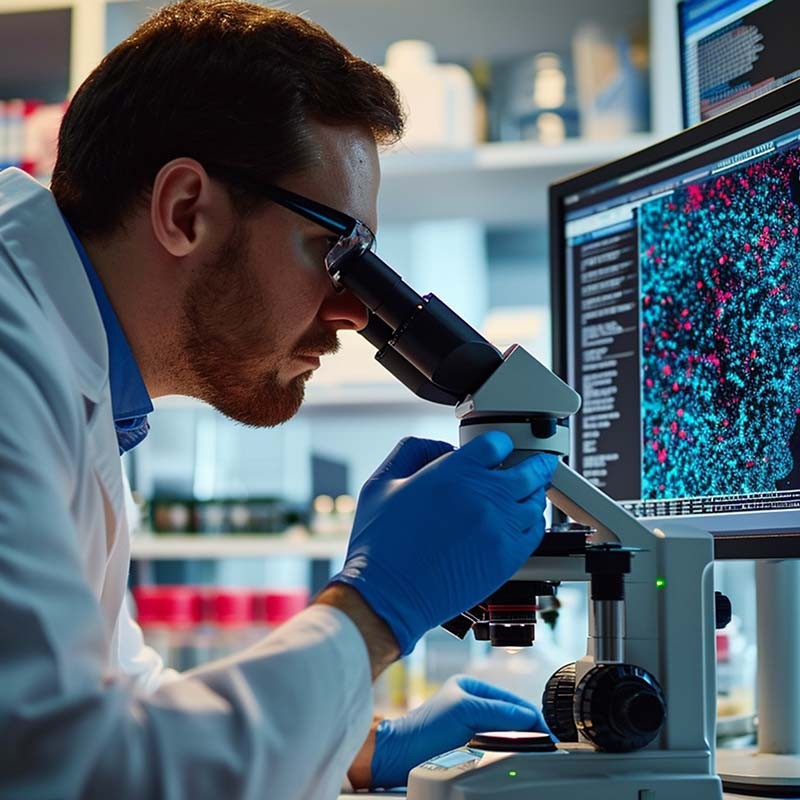
“We take pictures of cells where we've done something to the biology. We use CRISPR to knock out individual genes in a cell and then take a picture of that. We do that millions of times until we've knocked out every gene in the human genome and imaged that cellular output. Then we use machine learning algorithms to understand: ‘If I knock out this gene, the cell looks like this. And actually, these outputs look very similar, so maybe there’s some sort of relationship between these genes that we can explore further.’”
As a result of this research process, Recursion has five potential therapeutics focused on cancer and rare diseases that are currently in human trials.
“Traditional methods have relied on trying to understand disease and biology in a really reductionist way,” Loper said.
“A lot of research today is into one specific and narrow slice of biology. Ultimately, biology is just so much more complex than that. There are 20,000 genes in our DNA that are encoding for hundreds of thousands of proteins, and all of those things are interacting in different ways. It’s really a problem that’s fit for AI and machine learning to help us understand the system at a more holistic level.”
Using its generative AI, Recursion can design novel chemical entities that can address a particular illness while also meeting the long list of specifications required of safe and effective drugs.
Empowering Early Disease Detection
Using machine learning and AI in medicine “will definitely drive and accelerate health,” said Avital Rabani, vice president of marketing at Imagene AI. “No doctor or researcher can grasp as much data and information as AI can. The fact that these great models go through millions of data points in order to understand, show and highlight interactions is something that humans cannot do.”
Imagene AI empowers healthcare researchers to interact with its model by asking it biology questions and using it as a sounding board for discovery — much in the same way that the average person uses ChatGPT. But the applications don’t end there.


One especially promising use case for AI in medicine, for example, is early disease detection using Imagene’s LungOI, an AI-based multi-gene test that helps doctors identify specific forms of lung cancer in their patients.
“With LungOI, we can read and understand biopsy images within minutes,” Rabani said. “It gives an indication if there's a cancer gene mutation and can assign treatment based on the genomic profile of the cancer genes.”
Using AI, providers can detect and treat cancer earlier than ever and with the kind of precision that leads to much better results, according to Rabani.
“With precision oncology, you can develop treatments that are targeted specifically to the bad cancerous mutations, while your other cells are not getting hurt,” he continued. “The outcomes are amazing.”
This potential extends far beyond cancer. According to research, AI can detect early signs of thousands of different diseases and do so faster and more accurately than humans.
Unlocking Personalized Healthcare
Precision medicine that’s personalized to the individual patient has been a healthcare holy grail for generations. AI algorithms can finally unlock that kind of personalized healthcare at a scale that wasn’t previously possible, which could lead to better, more effective treatments and improved patient experiences, according to physician Casey Means, chief medical officer and co-founder of metabolic health company Levels.
Companies like Levels are employing AI to help their users track behaviors and achieve healthier diets tailored to their unique lifestyles and physiology. In Levels’ case, its glucose monitor and app use AI to analyze the role food, stress, sleep and exercise play in an individual’s blood sugar, providing information that can help people lose weight, lower their risk of disease and make healthier choices in general.
“Machine learning … is going to revolutionize [blood glucose monitoring] and sort of hand to a person on a silver platter: ‘Every time you eat those apples with peanut butter, you’ll have a 15-point lower glucose response.’ And, ‘Every time that you don’t eat these foods — X, Y and Z — after 6 p.m., your deep sleep is 20% better,’” Means told cardiologist Bret Scher during a 2020 episode of his podcast, the Diet Doctor Podcast. “That’s where I think we’re going to see people being able to have … actionable insights.”
It’s proof that AI can be used not only for developing drugs and detecting diseases, but also for achieving more optimal health overall.
Transforming Data into Discoveries
With an incredible immensity of data feeding every machine learning algorithm in healthcare, cloud computing becomes essential, according to Loper. “We have a hybrid cloud approach, so we store a significant portion of our data in the cloud as well as on-premise,” he said.
For Recursion, however, it’s not enough to harness the crucial computing strength of the cloud. Given the volume of data it handles, the company has had to take its information processing a step further than that.
“We made a decision to build our own supercomputer,” Loper said. “And when it was completed, it was actually in the top 50 most powerful supercomputers in the world. We felt it was really important for us to be able to have that capability in-house and be able to use it for … training [all of our new and foundational AI models].”

The economics of AI in healthcare will be consequential, Loper suggested.
“The process of discovering a new medicine is really involved,” he said.
“There’s so much money that goes into running these clinical trials that end up failing, and that contributes to the overall cost of medicines that are on the market. As you can imagine, there are hundreds of different steps that you’ve got to do, and AI can be applied to supercharge each of these steps. We feel like AI is really positioned to help us understand the system and, if fed the right data, these trials will fail less. Theoretically, it can cut the price of medicines in half.”
The ultimate promise of so much data is not merely the discoveries it could generate with the help of AI, but rather the potential lives those discoveries could save, improve and perhaps even extend.
“We believe that this is just going to increase in utility and applications,” Loper concluded.
“This is the way that it’s going to be done in the future, as the promise to do it more efficiently and have a higher probability of success is definitely there.”

Chase Guttman is a technology writer. He’s also an award-winning travel photographer, Emmy-winning drone cinematographer, author, lecturer and instructor. His book, The Handbook of Drone Photography, was one of the first written on the topic and received critical acclaim. Find him at chaseguttman.com or @chaseguttman.
© 2026 Nutanix, Inc. All rights reserved. For additional information and important legal disclaimers, please go here.
Related Articles